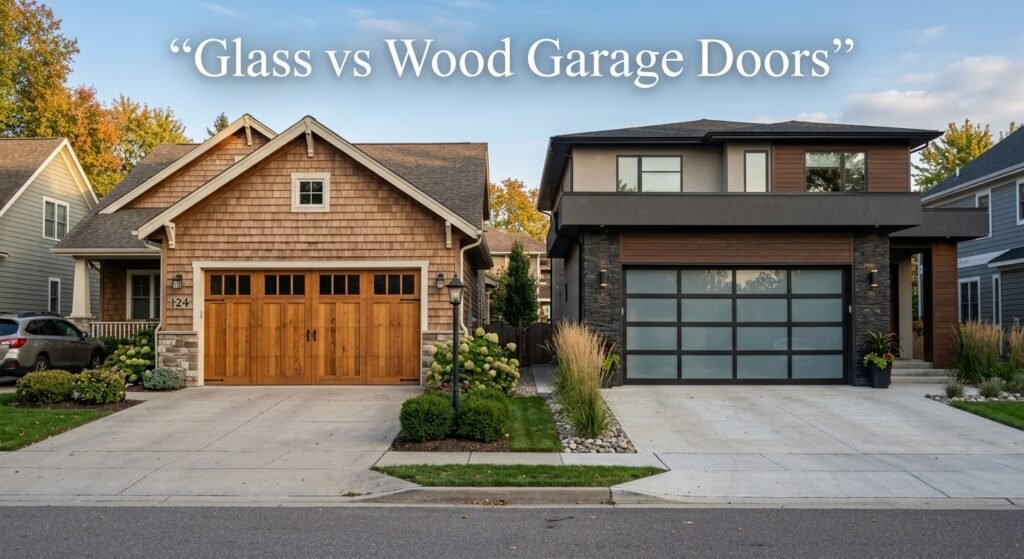
If you’re comparing Glass vs wood Garage Doors, wood usually wins for natural character, privacy, and custom designs, while glass is a better fit when you want natural light and a clean, modern look. Neither is automatically the best garage door material for every home. The right choice comes down to your budget, climate, how you use the garage, insulation needs, and the style of your house. Both wood garage doors and glass garage doors can look great, but they solve different problems.
Wood vs. Glass Garage Doors at a Glance
Choosing between these two can get confusing pretty quickly. This garage door material comparison makes the main differences easier to see. Wood garage doors tend to stand out for warmth, privacy, and traditional curb appeal, while glass garage doors bring in natural light and suit modern homes. Cost and maintenance can also vary quite a bit depending on the door’s construction, finish, and features.
| Factor | Wood | Glass |
| Appearance | Warm, natural, classic | Clean, modern, upscale |
| Cost | Usually varies with wood species and customization | Varies with glass type, frame, and features |
| Maintenance | More upkeep; may need staining, sealing, or repainting | Mostly regular glass and frame cleaning |
| Insulation | Can perform well when properly built and insulated | Depends heavily on the glazing and door construction |
| Natural light | Limited unless windows are added | Excellent; lets daylight into the garage |
| Privacy | Naturally provides strong privacy | Depends on clear, frosted, tinted, or other glass |
| Durability | Strong, but moisture can cause warping or decay if finish is neglected | Durable when properly built, but glass panels can crack or break from impact |
| Weather resistance | Needs good sealing and regular care, especially in wet climates | Aluminum frames resist moisture well; glass choice still matters |
| Customization | Excellent range of stains, colors, panels, and hardware | Many choices in glass finishes, frame colors, and panel layouts |
| Energy efficiency | Can be good with proper insulation and sealing | Varies widely by glass type, insulation, and seals |
| Best home styles | Craftsman, farmhouse, traditional, rustic | Modern, contemporary, mid-century, minimalist |
| Best garage uses | Storage, traditional homes, private garages | Workshops, gyms, studios, bright multi-use spaces |
Wood Garage Doors: Benefits and Drawbacks
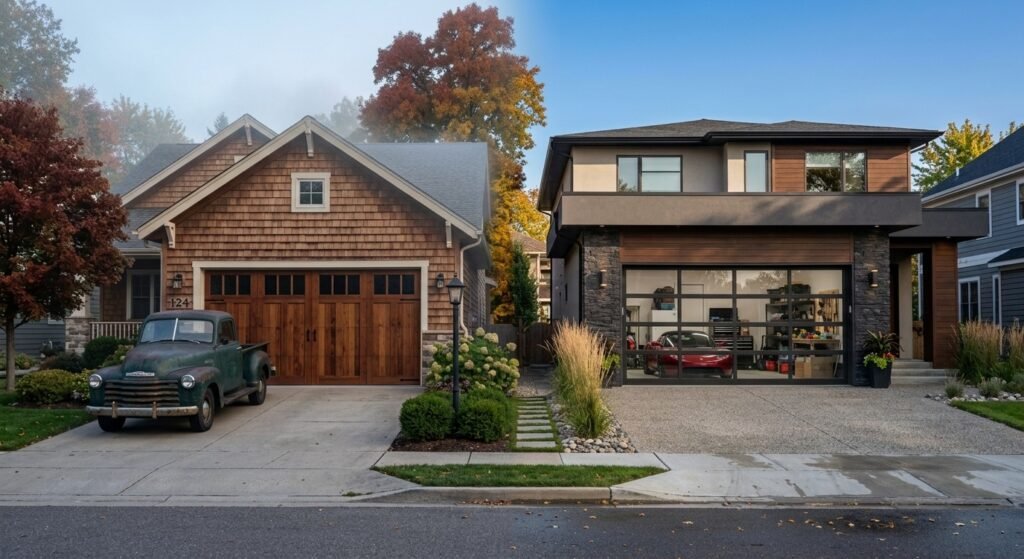
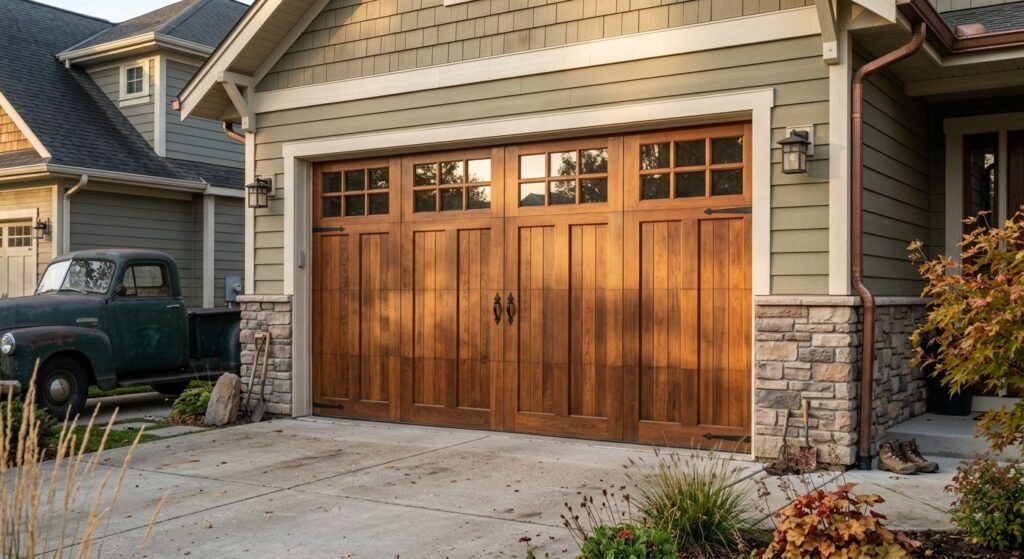
Wood garage doors have a look that’s hard to fake. Real natural wood adds warmth, texture, and a bit of personality to the front of a house. Wooden garage doors can also be built in many styles, from simple raised panels to detailed custom wood garage doors with unique finishes and hardware.
The trade-off is upkeep. Unlike some low-maintenance materials, wood needs protection from moisture, sunlight, and everyday wear. If it’s looked after properly, though, a well-built wood door can stay attractive for years.
Why Homeowners Choose Wood
A big reason people choose wood is the natural character. Every piece has its own wood grain, color, and texture, so the door doesn’t have that overly uniform look you sometimes get with manufactured materials.
For homeowners who care about appearance, wood also gives you plenty of room to play around. You can choose:
- Different wood species and grain patterns
- Paint or custom finishes
- Stains that bring out the natural wood
- Decorative panels and decorative hardware
- Different window and panel layouts
- A fully custom garage door design
Traditional wood garage doors work especially well with a traditional home, Craftsman home, farmhouse, or rustic style property. They can also add serious curb appeal when the finish and design match the rest of the house.
Another plus is the premium appearance. A good wood door doesn’t just fill the garage opening; it can become one of the main visual features of the front of the home.
Wood Garage Door Maintenance
Here’s the part you shouldn’t overlook: wood garage door maintenance is real maintenance. It’s not just wiping the door down once in a while.
The exact schedule depends on the wood, finish, weather exposure, and manufacturer, but homeowners generally need to keep an eye on the finish and deal with small problems before they become bigger ones.
Typical upkeep can include:
- Staining or refreshing the finish when it starts to fade
- Sealing exposed areas against moisture
- Painting when the existing coating starts peeling or wearing
- Refinishing the surface when needed
- Checking edges and joints for moisture damage
- Looking for early signs of warping
- Repairing small areas of cracking
- Checking for rotting wood around vulnerable spots
- Watching for damage caused by insects
The finish is especially important. Once moisture gets into unprotected wood, problems can spread faster than you’d expect. A small crack or worn patch isn’t something I’d ignore for months.
How Climate Affects Wood Doors
Your local weather can make a big difference in how a wood door performs. That’s why wood garage doors climate considerations matter when you’re comparing materials for a U.S. home.
Humid and Rainy Climates
In a humid climate or rainy climate, moisture is the main concern. Repeated exposure to damp conditions can contribute to swelling, finish breakdown, warping, and eventually decay if the wood isn’t properly protected.
Good sealing and regular inspections become more important in these areas.
Hot and Sunny Climates
A hot climate brings a different set of challenges. Strong sunlight and UV exposure can fade finishes and gradually wear down protective coatings. If the finish starts breaking down, the wood becomes more exposed to moisture and other weather-related damage.
That’s why a good exterior finish and occasional touch-ups matter in sunny areas.
Cold or Changing Weather
In places with large temperature swings, wood can expand and contract over time. That movement may contribute to cracking or gaps if the door isn’t properly built and maintained.
The takeaway is pretty simple: wood isn’t automatically a bad choice for a difficult climate. It just needs the right protection, finish, and maintenance routine for the conditions it will face.
Glass Garage Doors: Benefits and Drawbacks
Glass garage doors have become a popular choice for homeowners who want something brighter and more modern than a traditional solid door. Residential glass garage doors are usually built with an aluminum frame and large glass panels, giving the whole front of the garage a clean, open feel.
A full-view glass garage door can look fantastic, but it isn’t perfect for every home. Privacy, heat, insulation, and the type of glass you choose all matter. So while modern glass garage doors can be a great upgrade, it’s worth looking beyond the appearance before making the final call.
Why Homeowners Choose Glass
The biggest attraction is simple: natural light. A glass door can bring natural daylight into a garage that would otherwise feel dark and closed off. You may find yourself turning on the lights less often during the day, and the space can feel much more inviting.
There’s also the style factor. Full-view panels give the garage a sleek appearance that works especially well with contemporary homes and modern architecture. If your house has clean lines, simple finishes, or a minimalist design, a glass door can fit right in instead of looking like an afterthought.
And glass isn’t just about looks. Think about how you use the space.
A brighter garage can be useful as a:
- Garage workshop where good daylight helps you see what you’re working on
- Home gym that feels less closed in
- Studio for hobbies, photography, or creative work
- Entertainment space when the garage is part of your home’s usable living area
That extra daylight can make a surprisingly big difference.
Another reason homeowners like glass is modern curb appeal. A well-designed door can give an older exterior a fresh look without changing the entire house.
Of course, the benefits depend on the glass itself. Clear panels give you the most light but the least privacy, while frosted or tinted options can soften that trade-off. So before choosing a full-view design just because it looks great in a photo, think about how much light, privacy, and heat control you actually want.
Glass vs. Wood Garage Door Cost
Cost can be a big deciding factor when you’re choosing between these two materials. The wood garage door cost and glass garage door cost can both vary a lot, so there isn’t one price that fits every home. Door size, construction, customization, insulation, glass type, and installation all change the final garage door price.
Upfront Purchase and Installation Cost
The first number you’ll probably look at is the door itself, but that’s only part of the bill. The garage door installation cost depends on several details.
Things that can push the price up or down include:
- Door size: A larger garage door needs more material and can cost more to install.
- Customization: Custom wood designs, special finishes, and unusual layouts usually add to the price.
- Windows and glazing: On a glass door, the type of glazing can make a noticeable difference. Clear, tinted, frosted, insulated, and other options don’t all cost the same.
- Insulation: Better insulation can increase the initial price but may be worthwhile for an attached or frequently used garage.
- Hardware: Springs, tracks, rollers, handles, and other hardware are part of the overall system.
- Installation: Labor can vary based on the door size, existing opening, location, and how much preparation is needed.
So, don’t compare a basic wood door with a highly customized full-view glass door and assume the material alone caused the price difference. You’re really comparing the complete door system and its features.
The same applies if you’re budgeting for a garage door replacement cost. Removing the old door, preparing the opening, upgrading hardware, or changing the opener can affect the final amount.
Which Costs More Over Time?
This is where things get a little more interesting.
The cheapest door to buy today isn’t always the cheapest one to own for the next several years. That’s why looking at the total cost of ownership makes more sense than focusing only on the original price.
With wood, the long-term cost can include:
- Regular maintenance
- Staining or sealing
- Refinishing
- Painting or touch-ups
- Weather-related repairs
- Replacing damaged wood
- Eventual replacement
Glass generally doesn’t need staining, sealing, or refinishing. However, you’ll still have normal cleaning and maintenance, and a damaged glass panel may need replacement depending on the door design.
Climate matters here too. A wood door exposed to heavy moisture or strong sun may need more attention than one in a mild, sheltered location. On the other hand, a glass door with upgraded glazing can cost more upfront, but that upgrade may make sense if insulation and comfort are important to you.
Insulation and Energy Efficiency: Which Performs Better?
When comparing garage doors, garage door insulation matters more than the material name alone. A wood door isn’t automatically better insulated than a glass door, and a glass door isn’t automatically inefficient. The actual thermal performance depends on the door’s construction, thickness, insulation, glazing, and seals.
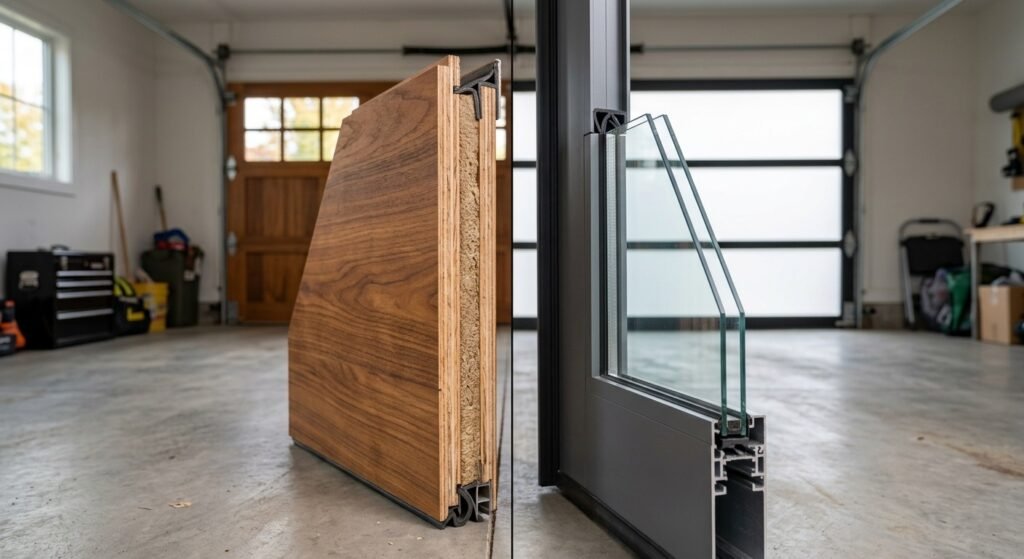
A properly built door can help reduce unwanted heat transfer and make the garage more comfortable, especially when the space is attached to your home or used as a workshop, gym, or office.
Does Wood Insulate Better Than Glass?
It’s tempting to assume that insulated wood garage doors will always outperform glass, but it’s not quite that simple.
The garage door R-value is a better starting point when you’re comparing insulation performance. A higher R-value generally means greater resistance to heat flow, but the whole door assembly matters too.
Things that affect performance include:
- The thickness and construction of the door
- Type and amount of insulation
- Quality of the seals
- Panel design
- Weatherstripping around the door
- For glass doors, the type of glazing used
A well-built insulated door can perform very differently from a basic, uninsulated one, even when they’re made from the same material.
Wood does have natural insulating properties, but that doesn’t mean every wood door will provide strong energy performance. Likewise, insulated glass garage doors can be designed with glazing that improves their thermal performance.
So if insulation is high on your list, don’t just ask, “Is it wood or glass?” Check the actual R-value, insulation package, glazing, and sealing system.
What Makes a Glass Door More Energy Efficient?
Not all glass is the same. This is especially important if you’re considering a large full-view door.
Using insulated glass can improve thermal performance compared with basic single-pane glass. Double-pane glass creates an additional layer between the panes, which can help slow heat transfer.
Another option is low-E glass. Its coating is designed to manage radiant heat and can help reduce unwanted solar heat gain, which is useful in areas where the garage gets strong direct sunlight.
The frame and seals matter too. Even good glazing won’t perform as well if air can easily move around the edges. Proper weatherstripping helps close those gaps and reduces unwanted air leakage.
For a more energy-efficient garage door, look at the complete system rather than the glass alone:
- Insulated glass
- Double-pane construction
- Low-E glazing
- Properly sealed frames
- Quality weatherstripping
- Suitable door construction
- The door’s overall R-value
Maintenance and Cleaning: Wood vs. Glass
Every garage door needs some basic care, but the amount of work can be pretty different between wood and glass. Garage door maintenance for wood usually involves protecting the surface from weather, while glass garage door maintenance is more about keeping the panels and frame clean and checking the seals.
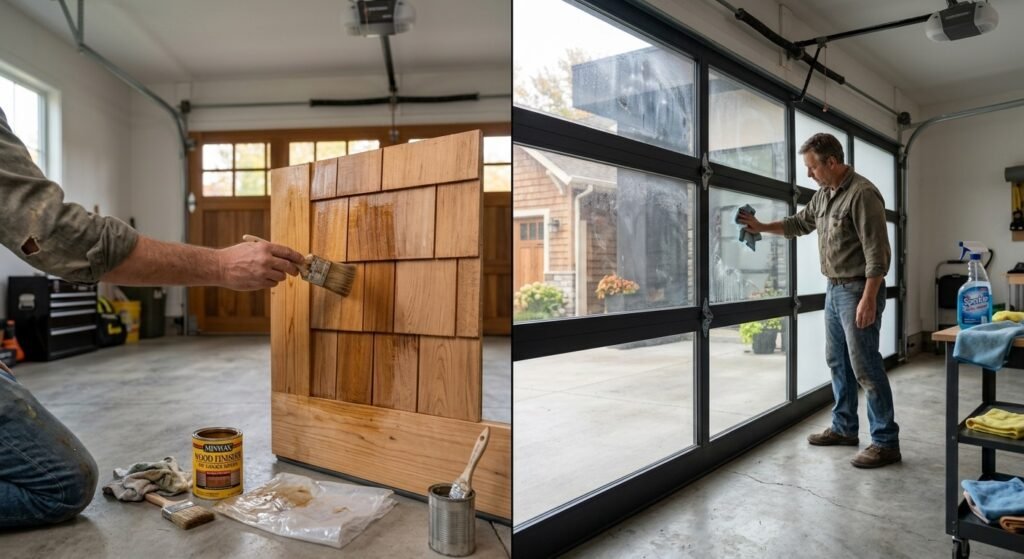
If you don’t want a door that needs much attention, this is one area where glass has a pretty clear advantage.
Maintaining a Wood Door
Wood garage door maintenance is mostly about keeping the wood protected. The finish does a lot of the heavy lifting, especially when the door is exposed to rain, humidity, or strong sunlight.
Depending on the door and its finish, maintenance may include:
- Regular garage door cleaning to remove dirt and buildup
- Sealing the wood when the protective finish starts wearing down
- Staining to refresh the color and protect the surface
- Repainting when painted finishes begin to fade or peel
- Refinishing when the surface needs more than a simple touch-up
- Checking for cracks, moisture damage, or worn areas
- Inspecting weatherstripping around the door for gaps or damage
The important thing is not to wait until the finish is completely gone. A little maintenance along the way is usually easier than dealing with badly weathered wood later.
Maintaining a Glass Door
Glass garage door maintenance is generally simpler. The glass panels mainly need regular cleaning, while the aluminum or other frame material should be checked for dirt, damage, and wear.
For normal upkeep, you may need to:
- Clean the glass panels when they become dusty or marked
- Wipe down the frame and tracks as needed
- Check weatherstripping for cracks or gaps
- Inspect the panels for chips or damage
- Keep moving parts maintained according to the manufacturer’s instructions
Glass doesn’t need staining, sealing, or repainting like a wood surface does. That’s a big plus if you’re looking for a cleaner, lower-effort option.
One thing to remember, though: large glass panels can show fingerprints, dust, and water spots more easily. If your garage faces a busy street or gets a lot of outdoor dirt, you’ll probably notice it sooner.
Which One Needs Less Upkeep?
For most homeowners, glass needs less material-specific upkeep than wood.
Wood requires ongoing attention to its finish, including sealing, staining, painting, or refinishing when needed. Glass mainly needs cleaning and routine checks of the frame and weatherstripping.
Durability and Lifespan
When it comes to garage door durability, the material matters, but it’s not the only thing that decides how long a door stays in good shape. Construction quality, installation, climate, maintenance, and everyday use all play a part.
A wood door and a glass door can both last a long time when they’re properly made and cared for. The bigger question is what kind of wear your garage door will deal with.
Wood vs. Glass: How They Handle Everyday Wear
Wood has a natural advantage when it comes to handling minor bumps and everyday use. A small mark or surface cracking doesn’t necessarily mean the whole door needs replacing. Depending on the damage, the affected area may be repaired, refinished, or replaced.
The downside is that wood is sensitive to moisture and changing weather. If water gets into unprotected areas, it can contribute to swelling, warping, or decay over time. Strong sun and UV exposure can also wear down the finish and change the appearance of the wood.
Glass has its own strengths. Quality glass panels can handle normal garage-door operation and outdoor conditions, but impact resistance depends heavily on the type of glass used. A hard hit from a ball, tool, vehicle, or other object can potentially result in damaged glass.
That’s why the type of glazing matters. Tempered or laminated options can provide different levels of protection compared with basic glass, depending on the door system.
Weather and Moisture Resistance
Your local weather can have a big effect on garage door lifespan.
For wood, moisture is usually one of the bigger concerns. Homes in wet or humid areas need to pay closer attention to moisture resistance, protective finishes, and areas where water can collect.
Glass itself doesn’t absorb water, so the panels aren’t going to rot or swell from rain. However, the frame, seals, hardware, and surrounding components still need proper care.
In sunny areas, UV exposure can gradually affect wood finishes, while glass may experience heat and solar exposure depending on its type and orientation.
So there’s no single winner for every climate. A door that’s perfect for a dry region may need a different setup in a wet or very sunny area.
What About Garage Door Lifespan?
It’s difficult to give one fixed wood door lifespan or glass door lifespan that applies to every home. A well-maintained door in a mild climate can have a very different service life from one exposed to heavy rain, intense sun, salt air, or frequent impact.
Instead of focusing on a specific number of years, look at the things that affect the garage door lifespan:
- Quality of the original construction
- Professional installation
- Frequency of use
- Local weather conditions
- Moisture exposure
- Sun and UV exposure
- Regular maintenance
- Quality of springs, rollers, tracks, and other hardware
- Accidental impact and physical damage
Privacy and Security
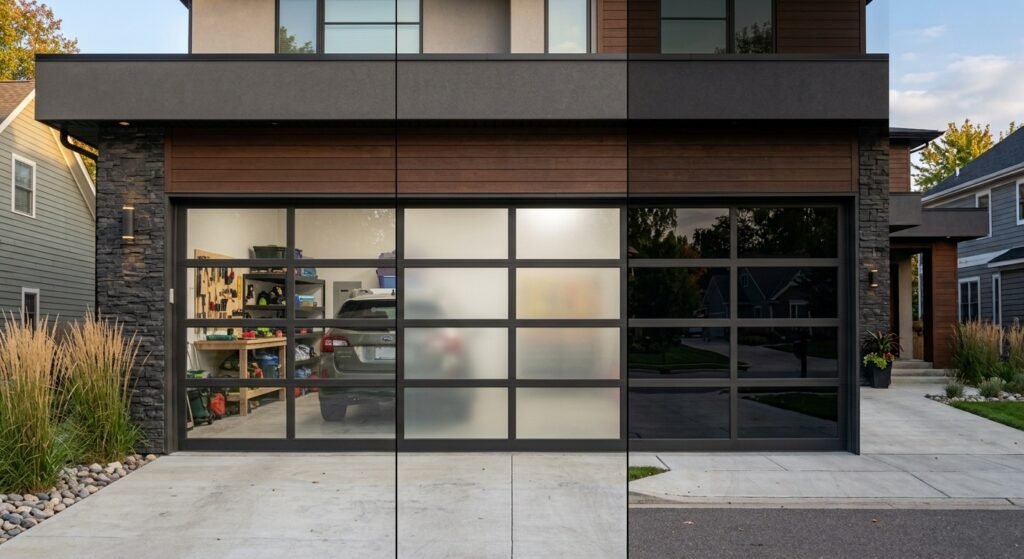
Privacy and security are two different things, and it’s worth keeping them separate when choosing a garage door. A solid wood door naturally blocks the view into your garage, while a glass door can be customized to control how much people can see. But the type of glass, locking hardware, and overall door construction matter more than the material name alone.
Are Glass Garage Doors Private?
A clear glass garage door gives you the most natural light, but it also gives people outside a pretty clear view of what’s inside. That’s not ideal if your garage stores tools, bikes, a vehicle, or other belongings.
The good news is that glass garage door privacy doesn’t have to mean giving up the glass look. You can choose different glazing options depending on how much visibility you want.
- Frosted glass: Lets light in while making objects and details harder to see.
- Tinted glass: Reduces visibility and can also change the amount of light entering the garage.
- Mirrored glass: Makes the outside view more difficult in certain lighting conditions while keeping a modern appearance.
- Privacy glass: Available in different patterns and finishes to reduce visibility without making the door completely solid.
- Clear glass: Gives you the best view and most daylight, but offers the least privacy.
So if you like the look of a full-view door but don’t want the garage on display, frosted glass or another privacy-focused option is worth considering.
One thing I’d keep in mind is that privacy can change with lighting. A glass finish that looks fairly private during the day may look different at night when the garage lights are on.
Is Wood More Secure Than Glass?
This is where the difference between privacy and security becomes important.
A solid wood door offers strong visual privacy because people can’t simply look through it. But that doesn’t automatically mean a wood door is more secure than a glass one.
Garage door security depends on the complete system, including the door construction, locks, opener, tracks, hardware, and installation. With glass, the type of glazing also matters. Laminated glass, for example, is designed differently from ordinary glass and can provide a different level of protection when broken.
The garage door locking system is another important part of the picture. A strong door with weak hardware isn’t much help, and the same goes for a high-quality door that’s poorly installed.
So, if privacy is your main concern, wood has a natural advantage. If you prefer glass, you can improve privacy with frosted, tinted, mirrored, or other privacy-focused glazing. For security, look at the entire garage door system, not just whether the door is made from wood or glass.
Natural Light vs. Heat Gain
One of the biggest reasons people choose a glass garage door is natural light. Large glass panels can bring plenty of natural daylight into the garage, making the space feel brighter and more open. That’s especially useful if you use the garage as a workshop, gym, studio, or another space where you actually spend time.
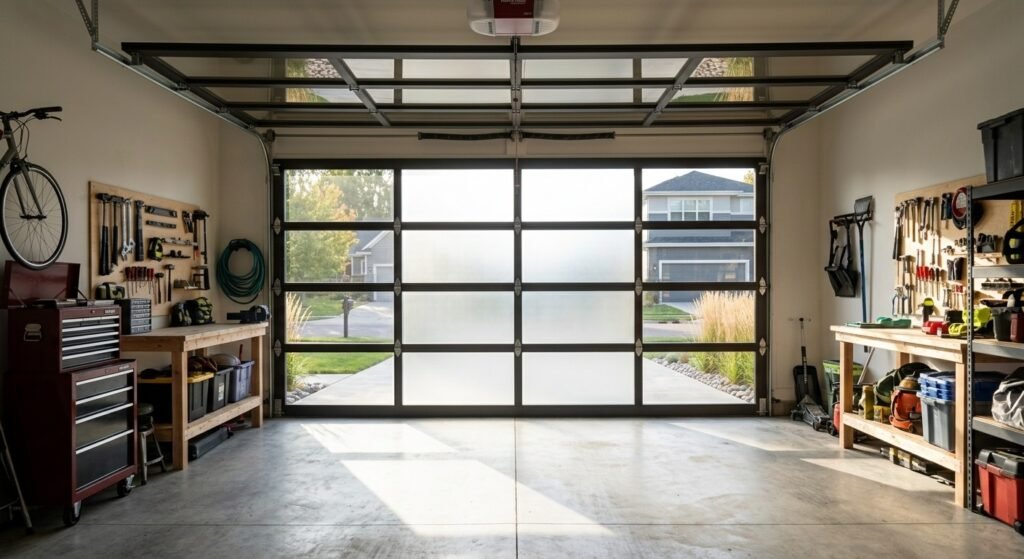
But there’s a trade-off. More glass can also mean more exposure to sunlight, and that can affect garage temperature. The amount of solar heat gain depends heavily on the type of glazing, the direction the garage faces, and how much direct sun the door receives.
More Glass Means More Daylight — But Not Always More Comfort
A clear glass door can let in a lot of daylight, which sounds great until strong afternoon sun starts hitting the garage. In a hot, sunny location, that extra sunlight can raise the temperature inside and create uncomfortable glare.
This doesn’t mean glass is a bad choice for warm climates. It just means you need to think about the type of glass you’re buying.
For example:
- Clear glass provides excellent daylight but allows more sunlight through.
- Tinted glass can reduce visible light and help limit some solar exposure.
- Low-E glass uses a special coating designed to manage heat transfer and can help control unwanted solar heat.
- Privacy or specialty glazing can change both the amount of light and heat entering the space.
How Glazing Affects Garage Temperature
The glass itself isn’t the whole story. Glazing selection can make a noticeable difference in how much sunlight and heat enter the garage.
If your garage gets strong UV exposure or direct afternoon sun, choosing the right glass can help balance daylight with comfort. A tinted or low-E option may make more sense than basic clear glass, especially if the garage is frequently used.
Orientation matters too. A garage door that faces strong afternoon sunlight may experience more heat and glare than one that’s mostly shaded.
So, if you want plenty of natural daylight, don’t automatically choose the clearest glass available. Think about how much sunlight your garage gets, how you use the space, and how you want the garage temperature to feel throughout the day.
Which Material Is Better for Different U.S. Climates?
There isn’t one best garage door for every U.S. climate. A door that works well in a dry, sunny area may need a different setup in a wet or snowy region. Wood and glass can both work, but weather resistance, insulation, glazing, finishes, and how much moisture or UV exposure the door gets all matter.
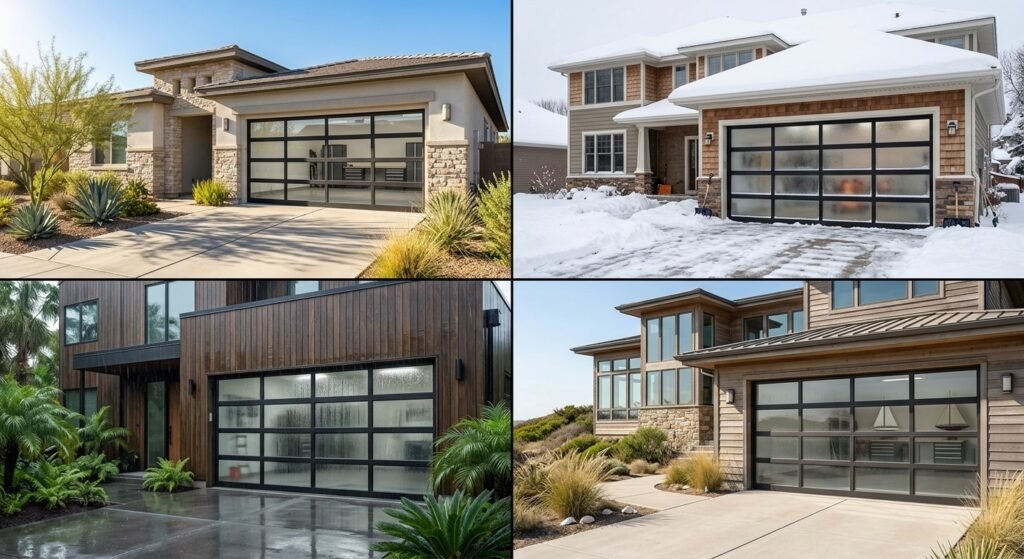
Hot and Sunny Climates
If you’re looking for the best garage door for hot climate, don’t judge it by the material alone. A glass door can work well in a hot area when it’s paired with the right glazing.
Strong sunlight can increase heat inside the garage, especially when the door faces the afternoon sun. UV exposure can also wear down finishes over time.
For these homes, consider:
- Tinted or low-E glass to help manage sunlight
- Good insulation where the garage is regularly used
- Quality weatherstripping around the door
- A durable exterior finish on wood
- Shade from an overhang or nearby structure when possible
A clear glass door may give you beautiful daylight, but if your garage gets blasted by direct sun all afternoon, you’ll want to think about heat control too.
Cold and Snowy Climates
For a best garage door for cold climate, insulation should be high on your list.
Cold air can make an attached garage uncomfortable and may also affect the rooms next to it. Look at the door’s insulation, R-value, seals, and overall construction instead of choosing based only on whether it’s wood or glass.
Wood doors can work well when they’re properly built and protected. Glass doors can also perform well when they use insulated glazing rather than basic single-pane glass.
Pay attention to:
- Garage door insulation
- R-value
- Double-pane or insulated glass
- Weatherstripping
- Air leakage around the door
- Moisture from snow and ice
Humid and Rainy Climates
In a humid climate, moisture is one of the bigger concerns for wood. Poorly protected wood can swell, warp, crack, or eventually develop decay.
For a garage door for rainy climate, regular inspection and a good protective finish are especially important if you choose wood.
Glass panels don’t absorb water, which is one advantage in wet areas. Still, don’t forget about the frame, seals, tracks, and hardware. Those parts can also collect moisture and need proper care.
If you’re choosing wood, focus on moisture protection and maintenance. If you’re choosing glass, focus on the quality of the frame, seals, and glazing.
Coastal Areas
A coastal climate can be tough on exterior materials because of humidity, moisture, salt air, and strong sunlight.
Wood needs a protective finish that can handle the local conditions, along with regular checks for signs of moisture damage. Glass itself won’t rust, but the metal frame and hardware still need to be suitable for the environment.
In coastal areas, look for:
- Corrosion-resistant frame and hardware
- Good seals
- Proper drainage
- Durable exterior finishes
- Protection from moisture
- Glazing suited to strong sunlight
The goal isn’t simply to pick wood or glass. It’s to choose a door system that can handle the conditions around your home.
Mixed Climates
Many U.S. homes deal with a little bit of everything: hot summers, cold winters, rain, and plenty of sun. In these mixed climates, the best choice depends heavily on how exposed the garage is and how you use it.
If the garage is attached to the home, insulation and air sealing may matter more. If it’s a detached garage used mainly for storage, appearance and maintenance may carry more weight.
For either material, look at the complete package:
- Insulation
- R-value
- Glazing
- Weatherstripping
- Frame construction
- Exterior finish
- Local weather resistance
- Expected UV exposure
- Moisture protection
Which Is Better for an Attached or Detached Garage?
The answer can change quite a bit depending on where the garage sits. An attached garage shares a wall with your home, so insulation, air leakage, and temperature control can affect the rooms next to it. A detached garage gives you more freedom to focus on how you use the space, its appearance, and how much daylight you want.
Attached Garage
With an attached garage, the door can play a role in the home’s overall comfort. Heat transfer through the garage and air leakage around the door can make temperature control harder, especially when the garage sits next to a bedroom, kitchen, or living area.
That’s why garage insulation deserves more attention here. A properly insulated door, good weatherstripping, and a well-sealed frame can help limit unwanted heat movement between the garage and the outside.
For an attached garage, look closely at:
- Insulation and the door’s R-value
- Seals and air leakage
- Heat transfer through the garage door
- Energy efficiency
- Weatherstripping around the edges
- How often the garage is opened and closed
- Whether the garage is used as a garage workspace
If you’re turning part of the garage into a gym, office, or workshop, insulation becomes even more useful because you’ll probably care more about indoor comfort.
Detached Garage
A detached garage isn’t directly connected to your home’s living space, so the priorities can be a little different. You may care more about the garage’s use, appearance, natural light, and how comfortable you want the space to be.
For example, a detached garage used mainly for storage doesn’t necessarily need the same setup as one that’s turned into a workshop or hobby room.
A glass door can be especially appealing if you want natural light inside a detached garage workspace. It can make a dark space feel much more open during the day. Wood, on the other hand, can be a better fit when you want a warmer appearance or more privacy.
Think about:
- How the garage will be used
- Whether you need a comfortable workspace
- How much natural light you want
- The home’s overall appearance
- Privacy requirements
- Storage needs
- Local weather conditions
Which Is Better for Your Garage’s Main Use?
The best choice can change depending on what you actually do in the garage. A door that works perfectly for garage storage may not be the best fit for a garage workshop or home gym garage. Think about the space first, then choose the material that makes sense for it.
For Storage
If your garage is mainly for garage storage, you may care more about privacy, durability, and keeping the space protected from weather than having lots of daylight.
A wood door can be a good fit because it gives you a solid, private appearance and works well with traditional homes. Glass can still work, but clear panels may not be ideal if you don’t want people seeing what’s stored inside.
Best fit: Wood for privacy and a traditional look; frosted or tinted glass if you want some daylight without a completely clear view.
For a Workshop
A garage workshop benefits from good lighting and a comfortable working space. This is where a full-view glass door can be pretty useful.
Large glass panels can bring in natural light during the day, so you may not need to rely on overhead lights as much. If the garage gets strong afternoon sun, though, tinted or low-E glazing can help manage glare and heat.
Wood can still be a good choice if insulation, privacy, or a more traditional appearance matters more to you.
Best fit: Glass if daylight is a priority; insulated wood if you want more privacy and a classic feel.
For a Home Gym
A home gym garage can feel much nicer when it isn’t dark and closed off. Glass can make the room feel bigger and bring in plenty of daylight, which is a nice bonus when you’re working out.
Just think about privacy. Clear glass may not be comfortable if the garage faces the street or neighbors. Frosted or tinted glass can give you a better balance.
Best fit: Glass with privacy-focused glazing for daylight and a more open feel.
For a Studio or Office
If you’re turning the garage into a garage studio or garage office, natural light becomes more valuable. A glass door can help the space feel less like a garage and more like a usable room.
For an office, studio, or creative workspace, consider:
- Natural daylight
- Privacy
- Insulation
- Temperature control
- Glare
- The direction the garage faces
Wood may make more sense if you need maximum privacy or prefer a quieter, more enclosed feel.
Best fit: Glass for daylight and a modern workspace; wood for privacy and a warmer appearance.
For Showing Off a Car
If your garage is basically a car display garage, this is one situation where a full-view glass door can really stand out. Large panels let more light into the space and allow the garage to feel more like a showroom.
It also works nicely for modern homes where the garage is part of the overall architectural design.
Wood can still look impressive, especially with a custom finish and decorative hardware, but it won’t give you the same open display effect.
Best fit: Glass for visibility and natural light; custom wood for a more private, high-end traditional look.
Quick Take
| Garage Use | Better Fit |
| Garage storage | Wood or privacy glass |
| Garage workshop | Glass for daylight, wood for privacy |
| Home gym garage | Glass with frosted/tinted glazing |
| Garage office | Glass for daylight, wood for privacy |
| Garage studio | Glass for natural light |
| Car display garage | Full-view glass |
The main idea is simple: choose based on how you’ll use the garage, not just which material looks better in a showroom.
Customization and Curb Appeal
Your garage door can take up a surprisingly large part of the front of your house, so garage door curb appeal matters more than people sometimes expect. Both wood and glass give you plenty of ways to match the door with the rest of the property, but they create very different looks.
A custom garage door can be built around your home’s architecture instead of simply picking a standard design off the shelf. Things like garage door styles, panel layout, color, windows, hardware, and finishes can completely change the final look.
Best Home Styles for Wood
Wood tends to work naturally with homes that already have warm, detailed, or traditional features. The wood grain adds texture, while a good wood finish can bring out the character of the material.
Wood works especially well with:
- Traditional home designs
- Craftsman homes
- Farmhouse exteriors
- Rustic properties
- Homes with stone, brick, or natural wood accents
You can also add decorative hardware, custom panels, windows, and different stains to make the door feel more personal.
For a Craftsman or farmhouse, for example, a simple wood door with the right finish can look much more natural than a very modern glass design. It’s really about making the garage door feel like it belongs there.
Best Home Styles for Glass
Glass has a completely different personality. Glass finishes, frame colors, panel sizes, and glazing options can create anything from a very clean minimalist look to something a little more dramatic.
It’s usually a strong match for:
- Modern home designs
- Contemporary home architecture
- Mid-century properties
- Minimalist exteriors
- Homes with clean lines and large windows
A full-view design can also echo other glass elements around the house, such as large windows or sliding doors. That can make the exterior feel more connected instead of having the garage look like a separate feature.
Can You Mix Traditional and Modern Styles?
Absolutely. You don’t have to make every part of the exterior follow one strict style.
A modern glass garage door can work on a more traditional house if the frame color, glass finish, and surrounding materials are chosen carefully. Likewise, a custom garage door made from wood can add warmth to a modern home without making the exterior look old-fashioned.
The trick is to find a connection between the door and the house. Maybe it’s the color, window shape, roofline, trim, or even the decorative hardware.
When choosing between wood and glass, don’t just ask, “Which door looks better?” Ask which design looks like it was meant to be in my house. That’s usually what makes the biggest difference to garage door curb appeal.
Weight, Hardware, and Garage Door Opener Considerations
There’s one practical detail that’s easy to overlook when comparing garage door materials: garage door weight. The material name alone doesn’t tell you which garage door opener you’ll need. A large custom wood door may weigh very differently from a lightweight glass-and-aluminum system, and even two doors made from the same material can have different weights.
That’s why the opener should be selected based on the actual door specifications, not simply because it’s a wood or glass door.
How Door Weight Affects the Opener
The garage door opener needs to be compatible with the door’s size, weight, construction, and operating system. Before buying one, check the manufacturer’s specifications for the particular door.
A few things can affect the setup:
- Garage door weight
- Door size and panel construction
- Type of garage door hardware
- Quality and condition of the tracks and rollers
- Springs and counterbalance system
- Door balance
- Required lifting capacity
- Opener compatibility
- Manufacturer recommendations
A properly balanced door shouldn’t rely on the opener to do all the heavy lifting. The springs and counterbalance system are there to help support the door’s weight during operation.
Wood vs. Glass: Does Material Decide Everything?
Not really.
A custom wood door can be heavier depending on its construction, thickness, size, and hardware. A glass door may use large glass panels with an aluminum frame, but its final weight still depends on the glass and overall design.
So don’t assume, for example, that every glass door needs a lighter opener or every wood door needs the strongest one available. The actual door weight and manufacturer specifications matter more.
This is also why replacing a garage door without checking the existing opener can cause problems. The old opener may not be suitable for the new door, even if the new door fits the same opening.
Don’t Forget the Hardware
The door itself is only one part of the system. Garage door hardware, including tracks, rollers, springs, hinges, and the counterbalance system, all work together.
If the door isn’t properly balanced, the opener may have to work harder than it should. That’s not something you want to ignore.
During garage door installation, the installer should check the door balance, hardware, spring system, and opener compatibility rather than simply hanging the new door and connecting the old motor.
Simple rule: choose the door first, confirm its actual weight and specifications, then select compatible hardware and an opener. That’s a much safer approach than choosing an opener based only on whether the door is wood or glass.
Repair and Replacement Considerations
Even a well-made garage door can eventually need some attention. The good thing is that a small problem doesn’t always mean you need a completely new door. The repair options can be quite different depending on whether you’re dealing with wood or glass.
Repairing a Wood Garage Door
With wood, garage door repair can sometimes be more flexible because individual areas may be repaired or restored instead of replacing the entire door.
For example, wood door repair may involve fixing a damaged section, replacing a worn component, or doing wood refinishing to bring the surface back into better shape.
Depending on the damage, you might be dealing with:
- Small cracks or surface damage
- Worn or peeling finishes
- Moisture-damaged areas
- Damaged panels or sections
- Hardware problems
- Faded or weathered wood
A door with minor surface wear may only need refinishing or a localized repair. More serious damage, especially structural damage or extensive decay, can be a different story.
Repairing a Glass Garage Door
Glass doors have a different repair process. If one panel becomes damaged, glass panel replacement may be possible without replacing the entire door, depending on the manufacturer’s design and how the panels are constructed.
For example, damaged glass from an accidental impact may be replaceable as an individual panel. The exact option depends on the door system, frame design, glass type, and availability of replacement parts.
You may also need other repairs involving the frame, hardware, tracks, seals, or moving components.
So don’t assume a cracked panel automatically means a complete garage door replacement. Check whether the manufacturer or installer offers replacement panels for that particular system.
Which Is Easier to Repair?
There’s no universal winner.
Wood can offer more opportunities for wood door repair and refinishing when the damage is limited to the surface or certain sections. Glass may allow individual glass panel replacement, but that depends heavily on the specific door system.
Before replacing the whole door, it’s worth asking:
- What exactly is damaged?
- Can the affected panel or section be replaced?
- Are replacement parts still available?
- Is the frame or structure also damaged?
- Would repair cost more than replacement?
What If You Want the Look of Wood Without the Maintenance?
Maybe you like the warm appearance of wood, but you’re not excited about regular staining, sealing, painting, or refinishing. Fair enough. In that case, a wood alternative may give you a similar style without requiring the same level of upkeep.
There are several options worth looking at, including a wood-look garage door, composite garage door, faux wood garage door, and fiberglass garage door.
Wood-Look Garage Door Options
A composite garage door is one option for homeowners who want wood-style panels without using traditional timber throughout the door. Depending on the product, composite materials can be designed to mimic wood grain and traditional panel styles.
A faux wood garage door can also give you the appearance of painted or stained wood while reducing some of the maintenance associated with real wood. The exact durability and upkeep still depend on the material and manufacturer, so it’s worth checking the product specifications.
Another option is a fiberglass garage door. Fiberglass can be molded or finished to create a wood-like appearance, making it useful when you want a traditional look but don’t want to maintain natural wood in the same way.
Is a Wood Alternative Worth Considering?
If your main goal is the appearance rather than the actual material, a low-maintenance wood-look door can make a lot of sense.
You may get:
- A wood-style grain and texture
- Traditional or Craftsman-inspired designs
- Less surface maintenance than some real wood doors
- More options for colors and finishes
- A look that works with farmhouse, rustic, or traditional homes
But don’t assume every wood alternative performs exactly the same. Check how the specific product handles moisture, sunlight, impact, insulation, and repairs before buying.
So, Which Garage Door Should You Choose?
If you’re comparing Glass vs wood Garage Doors, the better choice depends on what matters most to you. There isn’t a universal winner here. Think about your home’s style, climate, budget, privacy needs, garage use, and how much maintenance you’re actually willing to handle.
Choose Wood When:
Wood is a strong choice if you want:
- Natural appearance that adds warmth and character
- A door that suits traditional architecture
- More customization with stains, finishes, panels, and hardware
- Better built-in privacy without changing the glazing
- A premium look and you’re willing to maintain the finish
Wood makes a lot of sense for Craftsman, farmhouse, rustic, and other traditional homes. Just be realistic about the upkeep. If you’re not willing to stain, seal, paint, or refinish when needed, the look may become more work than you expected.
Choose Glass When:
Glass is worth considering if you want:
- Plenty of natural light
- A clean, modern appearance
- Low material-specific maintenance
- A brighter workshop, studio, or gym
- A more open look without giving up privacy completely
You don’t have to use clear glass either. Frosted, tinted, or other privacy-focused glazing can reduce visibility while still letting daylight into the garage.
Glass is especially interesting for modern and contemporary homes, or for garages that are actually being used as part of the living or working space.
Consider Another Material When:
Sometimes neither option checks every box.
If wood feels too maintenance-heavy and glass doesn’t fit your budget, privacy, insulation, or performance needs, it makes sense to look at another garage door material.
For example, a wood-look or composite option may give you some of the appearance of wood with less upkeep. Other materials may also make more sense if your main priority is durability, insulation, or keeping the initial cost under control.
Quick Decision Guide
| If your priority is… | Consider |
| Natural, warm appearance | Wood |
| Traditional architecture | Wood |
| Maximum customization | Wood |
| Privacy | Wood |
| Natural daylight | Glass |
| Modern appearance | Glass |
| Lower material-specific upkeep | Glass |
| Workshop or studio | Glass |
| Home gym | Glass |
| Wood appearance with less upkeep | Wood-look/composite |
| Different budget or performance needs | Another material |
At the end of the day, don’t choose based on the material name alone. Look at how you’ll use the garage, your local climate, the home’s design, and the amount of maintenance you’re comfortable with. That’s what will lead you to the right door.
Frequently Asked Questions
These are the questions homeowners usually have after comparing wood and glass garage doors. The answers are kept practical, because the right choice depends on the door’s construction, climate, glazing, and how you use the garage.
Are glass garage doors more expensive than wood?
They can be, but there isn’t a fixed rule. The final price depends on the door size, glass type, frame, insulation, customization, hardware, and installation. A highly customized wood door can also become quite expensive.
Do wood garage doors provide good insulation?
They can. Wood garage doors have natural insulating properties, but the actual performance depends on the door’s construction, thickness, insulation, seals, and installation. If insulation matters, check the door’s R-value rather than judging it only by the material.
Are glass garage doors energy efficient?
They can be, especially when they’re built with insulated glass, double-pane glazing, low-E glass, and good weatherstripping. Basic single-pane glass won’t provide the same thermal performance, so the glazing specification matters quite a bit.
Can you see through a glass garage door?
With clear glass, yes. It provides excellent visibility into and out of the garage. If you don’t want the contents of your garage on display, you can choose frosted, tinted, mirrored, or other privacy glass instead.
Are frosted glass garage doors private?
They provide more privacy than clear glass because they make objects and details harder to see. They’re still able to bring natural light into the garage, which makes them a useful middle ground between a solid door and clear glazing.
Which garage door material needs more maintenance?
Generally, wood needs more material-specific maintenance. Depending on the finish and local weather, it may require staining, sealing, painting, or refinishing. Glass mainly needs cleaning, along with normal checks of the frame, seals, hardware, and weatherstripping.
Which lasts longer, wood or glass?
There’s no reliable universal lifespan for either one. Quality, installation, climate, maintenance, frequency of use, and accidental damage all affect garage door lifespan. A well-maintained wood door can perform for a long time, while a properly built glass system can also be durable.
Are glass garage doors good for hot climates?
They can be, but glazing matters. A clear glass door facing strong afternoon sun may allow significant solar heat into the garage. Tinted or low-E glass can help manage sunlight and heat gain. Insulation, shading, and weatherstripping also matter.
Are wood garage doors good for humid climates?
They can work in humid areas, but moisture protection becomes especially important. Proper sealing, a suitable exterior finish, and regular inspections can help reduce problems such as swelling, warping, cracking, and decay.
Is a glass garage door a good choice for an attached garage?
It can be, particularly if you want natural daylight or use the garage as a workspace. For an attached garage, pay close attention to insulation, glazing, weatherstripping, and air leakage because the garage shares a connection with your home’s living space.
Can you replace one damaged glass panel?
Sometimes, yes. Glass panel replacement may be possible without replacing the entire door, but it depends on the manufacturer, door design, frame system, glass type, and availability of replacement parts. It’s best to check with the manufacturer or installer before assuming the whole door needs replacement.
Can a wood garage door have windows?
Yes. Wood garage doors can include windows in many different layouts and styles. You can use small decorative windows for a traditional look or larger sections when you want more daylight. The window type and placement can also affect privacy, insulation, and the overall appearance of the door.
Conclusion
Choosing between these two garage door styles really comes down to what you want from the door. Wood is the stronger pick if you care about natural character, privacy, customization, and traditional curb appeal. It also works beautifully with Craftsman, farmhouse, rustic, and other classic home styles.
Glass makes more sense when natural light, modern design, and a more open feel are higher on your list. It’s especially useful for multi-use garages such as workshops, home gyms, studios, and car display spaces.
Before making the final call, don’t forget the practical stuff: insulation, glazing, local climate, maintenance, door weight, and total cost of ownership can all change which option makes more sense for your home.
There really isn’t one universal winner. The best door is the one that fits your house, your garage use, your budget, and the amount of upkeep you’re comfortable with. That’s the real Glass vs wood Garage Doors decision.