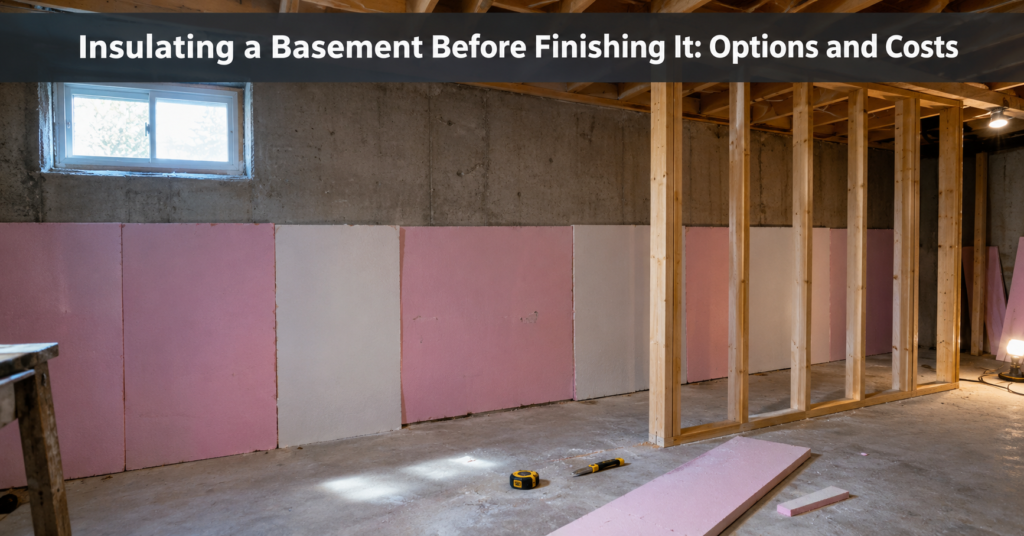
Wondering what to put on those bare concrete walls? Most people do best with rigid foam board and a framed wall over it. Spray foam is pricier but handles rough walls better. Budget about $1.50 to $6 per square foot. That’s the short version of insulating a basement before finishing it: options and costs. If you want to see the bigger picture, a basement finishing cost calculator helps you plan the rest of the budget.
Fix Moisture Before You Buy Anything
Insulation won’t fix a wet basement. It’ll just hide the problem until mold shows up behind your new drywall, and that’s an ugly (and pricey) surprise.
Signs You’ve Got a Moisture Problem
- White, chalky stuff on the concrete. That’s efflorescence, and it means water is moving through the wall.
- A musty smell that doesn’t go away.
- Dark stains or peeling paint near the floor.
- Puddles after heavy rain.
The Plastic Sheet Test
Tape a 2-foot square of plastic sheeting to a bare wall and the floor. Leave it for a few days. If water droplets form under the plastic, moisture is coming through the concrete. Look at gutters, downspouts, and the soil slope around your house first. If that doesn’t solve it, call a waterproofing pro.
Your Basement Insulation Options
Rigid Foam Board
Foam boards (XPS, EPS, or polyiso) get glued or fastened right to the concrete wall. They handle damp conditions better than fluffy insulation, and there are fewer gaps for cold air to sneak through.
R-value is about R-4 to R-5 per inch for most types. Tape the seams. Also, most local codes want foam covered with something fire-rated, like half-inch drywall, so you can’t leave it exposed.
Honestly, this is the one I’d pick for most DIYers. It’s simple, and it’s forgiving.
Closed-Cell Spray Foam
Spray foam sticks to everything and fills every little gap. It’s both insulation and an air barrier. Closed-cell types run around R-6 to R-7 per inch.
The downside is the price, and you need a trained installer. It really shines on stone foundations, bumpy walls, and rim joists where boards are a pain to cut.
Fiberglass or Mineral Wool Batts
Batts are cheap, and that’s why people love them. But stuffing them straight against a concrete wall is risky. Damp concrete can soak into the fibers and the insulation stops working well.
They’re fine as a second layer, though. Put foam against the concrete first, build a stud wall, then fill the cavity with batts. Mineral wool handles moisture better than fiberglass, but it costs a bit more.
Foam Plus a Stud Wall (the Hybrid)
This is what a lot of contractors suggest for cold areas. Foam stops moisture and cold at the concrete. The stud wall gives you space for batts and wiring. It costs more upfront, but the room feels warmer and you’ll probably be happier with it long term.
What Basement Insulation Really Costs
Prices change a lot by city, wall condition, and who does the work. Treat these as rough planning numbers and get local quotes before you commit.
| Option | Rough cost per sq ft of wall | Good for |
| Rigid foam board | $1.50 to $3 | DIY, mild climates |
| Closed-cell spray foam | $3 to $5+ | Uneven walls, rim joists |
| Batts in a framed wall | $1 to $2 (framing extra) | Dry basements, tight budgets |
| Foam plus framed wall | $3 to $6 | Cold climates |
A lot of basements have 1,000 to 1,500 square feet of foundation wall. So choosing one method over another can swing your bill by thousands of dollars. That’s the real story behind insulating a basement before finishing it: options and costs aren’t just about the material. Framing, drywall, and labor add up fast, which is why you should price the whole project, not just one line item.
Don’t Skip These Spots
The Rim Joist
That’s the wood band on top of your foundation wall. It leaks air like crazy. Cut foam board pieces to fit each section and seal the edges with caulk or spray foam. It’s cheap and you’ll notice the difference.
The Floor
Concrete slabs stay cold. A foam layer or insulated subfloor panels under your flooring help a lot, especially if you want carpet or vinyl plank.
The Ceiling
This one’s optional. But mineral wool between the floor joists cuts noise, which is nice for a movie room or a home gym.
Mistakes People Make
- Putting plastic sheeting on the walls the wrong way. It can trap moisture inside. Check your local code.
- Leaving gaps between foam boards. Small gaps hurt performance more than you’d think.
- Not sealing air leaks first. Seal around pipes and wires before insulating.
- Ignoring local rules. R-value, fire barriers, and permits depend on where you live, so call your building department.
- Skipping the moisture test. Everything else depends on it.
Which One Should You Pick?
Got a dry basement and a small budget? Go with foam board and a framed wall. Walls that are rough or uneven, or rim joists that leak? Spray foam is worth the extra money. Living somewhere cold and planning to use the space every day? The hybrid setup is probably your best bet.
Whatever you choose, ask for quotes on the whole job, not just insulation.
Final Thoughts
Check for moisture first, pick a method that fits your walls and climate, and don’t forget the rim joist. Get that right and the room stays comfortable for years. Do it wrong and you’ll be tearing out drywall. Keep these basics in mind when you’re insulating a basement before finishing it: options and costs vary, but a dry, well-sealed start always pays off. For more insulation guides, browse our Insulation Guides section.