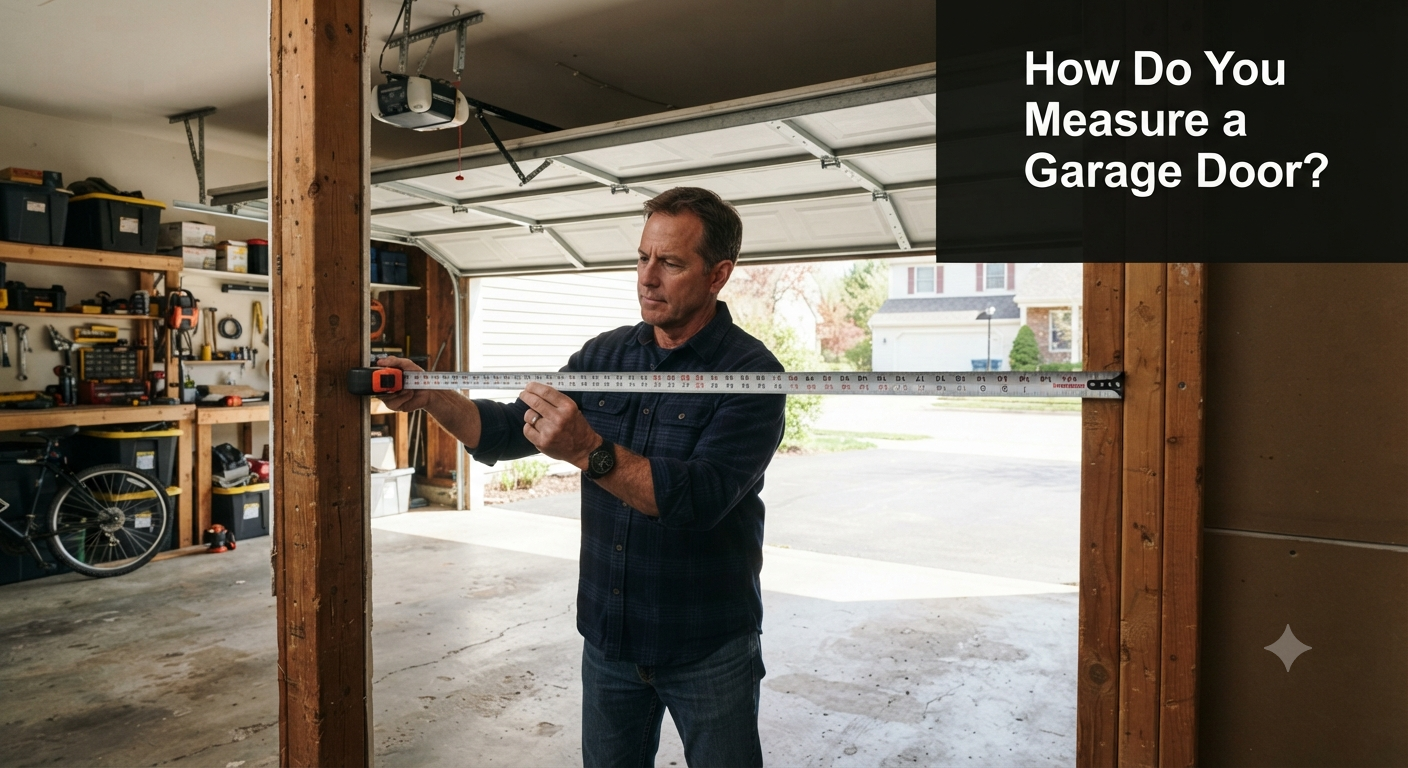
If you’re wondering how do you measure a garage door, start with the opening, not the old door itself. Measure the opening width and height, then check the sideroom, headroom, and backroom. It’s also worth looking for things like uneven flooring, wall or ceiling obstructions, and framing issues. These measurements give you a much better idea of what size garage door will fit before you order a new or replacement door.
What You Need to Measure a Garage Door
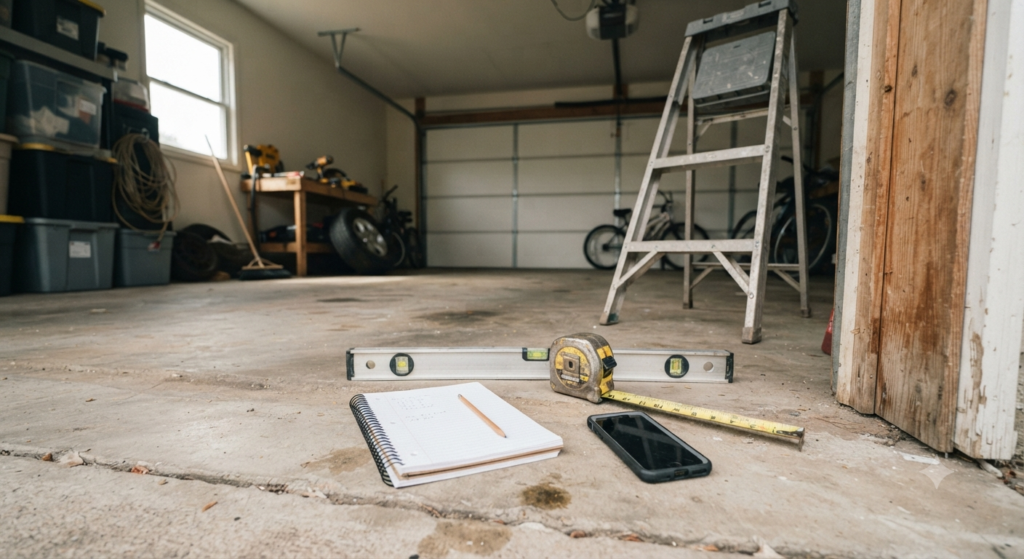
Before taking your garage door measurements, grab a few simple tools. A good measuring tape is the main one, but having a pencil, phone or notepad, and a step ladder nearby will make things easier. A level is also handy for checking the floor and garage door opening.
Tools You Need
- Measuring tape: For the width, height, headroom, and backroom.
- Pencil and notepad/phone: To write down each garage door measurement.
- Step ladder: Useful when checking headroom and ceiling obstructions.
- Level: Helps spot an uneven floor or opening.
How to Measure a Garage Door in 5 Steps
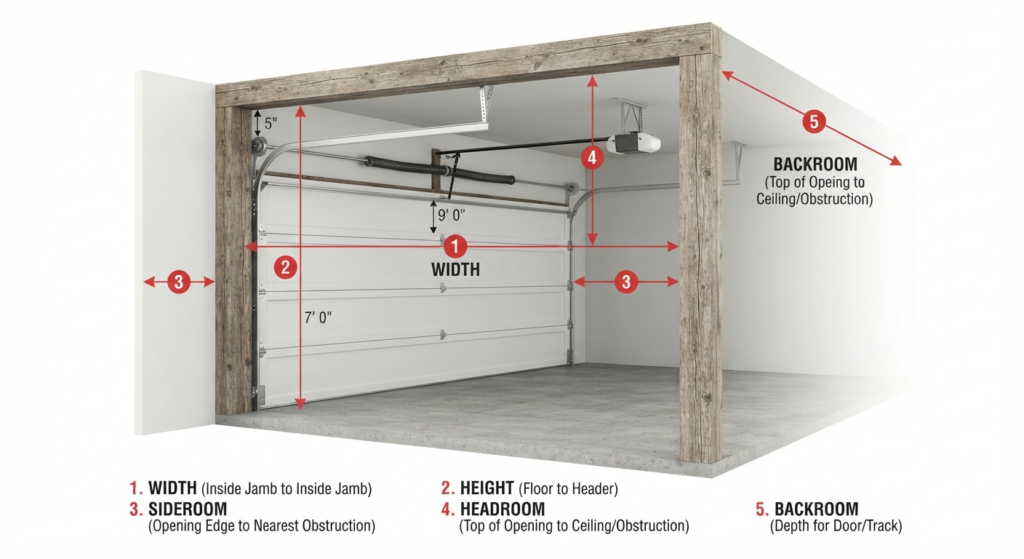
Measuring a garage door isn’t hard, but you need to check more than just its width and height. Follow these five steps and write down each measurement as you go.
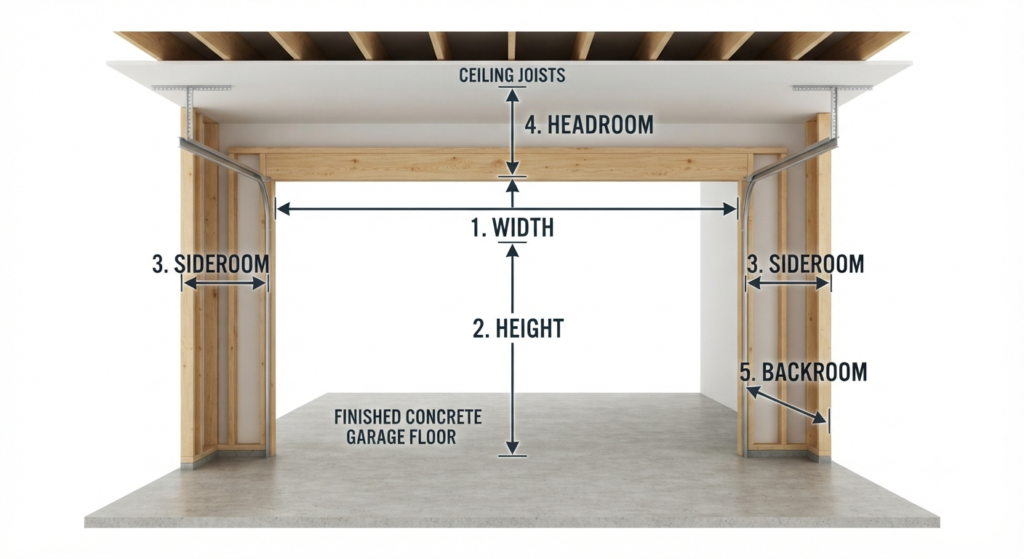
1. Measure the Garage Door Opening Width
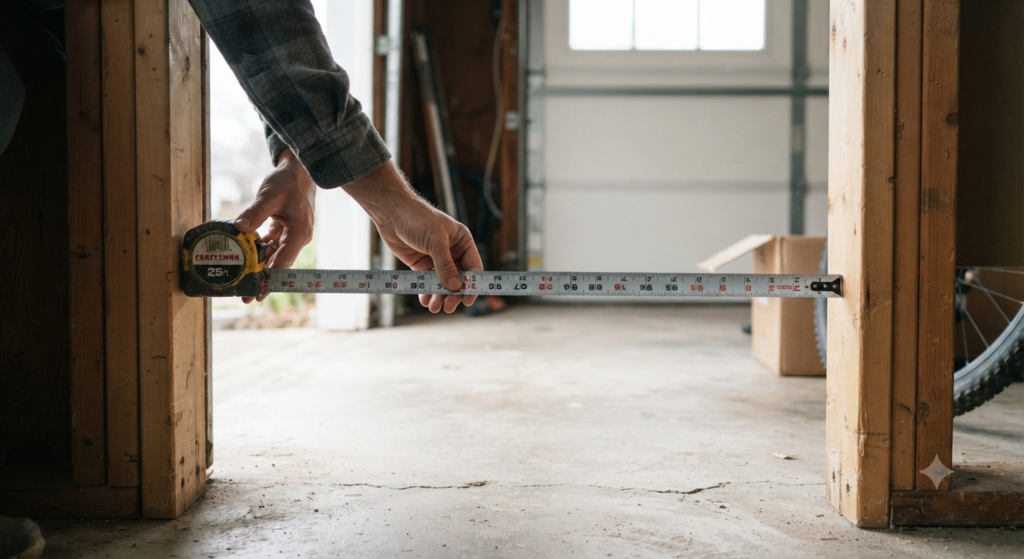
Start with the garage door opening width. Measure from the inside edge of the left door jamb to the inside edge of the right jamb. Take the garage door width at the top, middle, and bottom of the opening.
Write down all three measurements and check for any differences. Don’t just measure the existing door panel, since the opening is what matters when choosing a new door.
2. Measure the Garage Door Opening Height
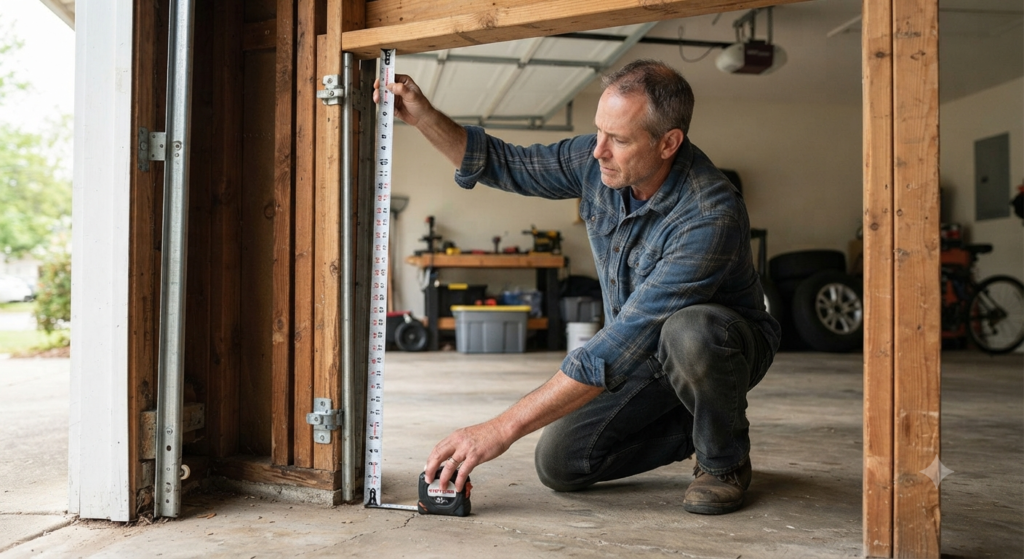
Next, measure the garage door height from the finished floor to the bottom of the header. Take the garage door opening height on the left, in the center, and on the right.
If the floor or header isn’t level, the numbers may vary a little. Record each one so you have an accurate picture of the garage door opening size.
3. Measure the Sideroom
Now check the sideroom on both sides of the opening. Measure from the inside edge of each jamb to the nearest wall or obstruction.
This space is needed for the garage door track and vertical track hardware. Don’t assume both sides have the same amount of garage door clearance measure each side separately.
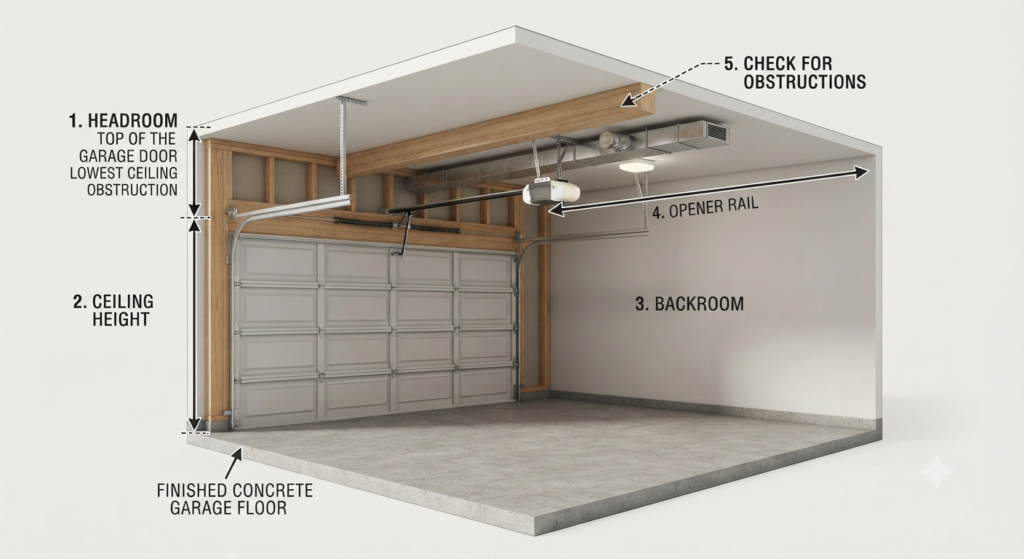
4. Measure the Headroom
Measure the headroom from the top of the garage door opening to the ceiling or the lowest obstruction above it. Look for beams, pipes, lights, ducts, or other items that could get in the way.
Your available ceiling height and garage door clearance can affect which track and garage door opener setup will work. Required headroom varies by the door and hardware, so check the manufacturer’s requirements before ordering.
5. Measure the Backroom
Finally, measure the backroom from the garage door opening to the back wall or nearest obstruction. This gives the horizontal tracks and door panels enough room to move when the door opens.
If you’re adding a garage door opener, check the space needed for the opener rail too. Also look along the ceiling for anything that could interfere with the garage door installation.
How to Check Your Garage Door Opening Before Ordering
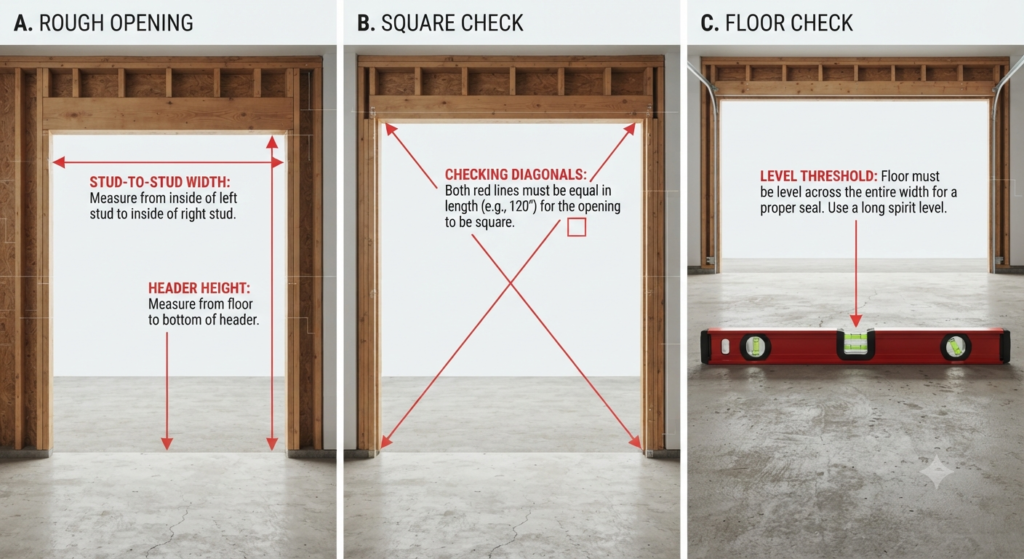
Before ordering a new door, take a minute to check the garage door opening itself. Good garage door measurements are important, but the framing, floor, and shape of the opening matter too.
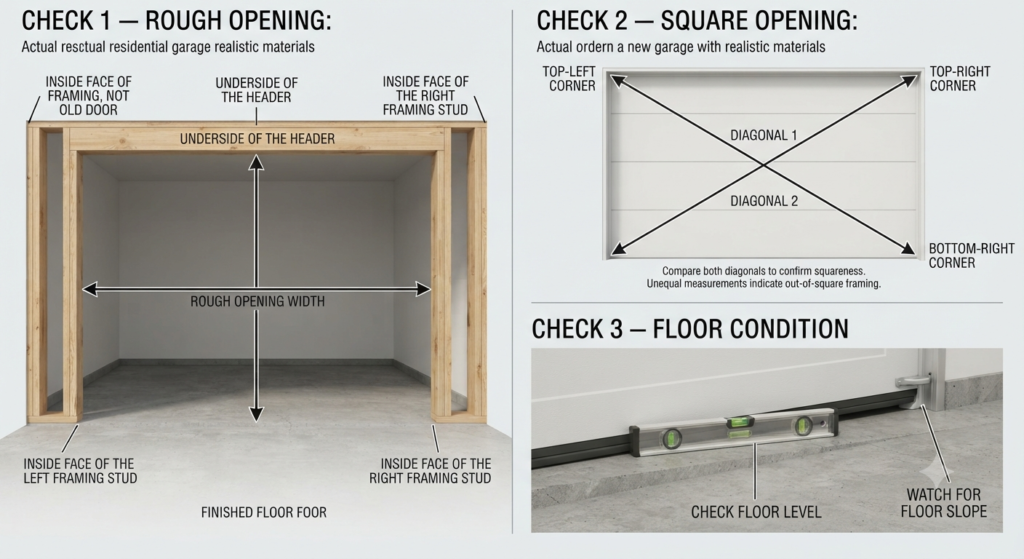
Check the Rough Opening
Look at the framing around the opening and check the stud-to-stud width. Make sure the header is in good shape and the finished opening matches the measurements you recorded.
If the rough opening is damaged, badly uneven, or much different from the finished opening, it’s better to sort that out before ordering the door.
Check if the Opening Is Square
A quick diagonal check can tell you if the opening is square. Measure from the top-left corner to the bottom-right, then from the top-right to the bottom-left.
If the two diagonal measurements are noticeably different, the opening may be out of square. That can cause fitting and tracking problems, so don’t ignore a big difference.
Check the Floor
Look across the garage floor where the door will close. Uneven concrete or a noticeable floor slope can leave gaps under the bottom seal.
A small uneven spot may be manageable, but a larger slope can affect the garage door opening size, sealing, and overall fit.
How Do You Measure for a Replacement Garage Door?
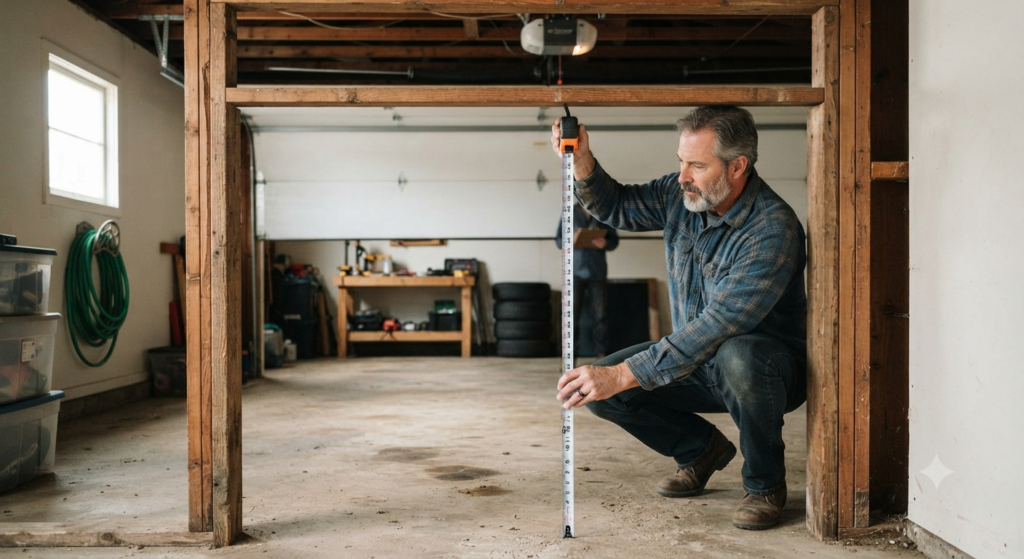
When measuring for a replacement garage door, don’t simply copy the size of the old door. The better approach is to check the opening and the space around it before choosing a new garage door.
For how do you measure for a replacement garage door, record these measurements:
- Width and height of the opening
- Sideroom on both sides
- Headroom above the opening
- Backroom behind the door
- Condition of the existing framing
- Any pipes, beams, lights, or other obstructions
These same checks are useful when figuring out how do you measure for a new garage door. Having complete garage door measurements makes it much easier to match the door with the opening and available installation space.
What Is the Standard Garage Door Size?
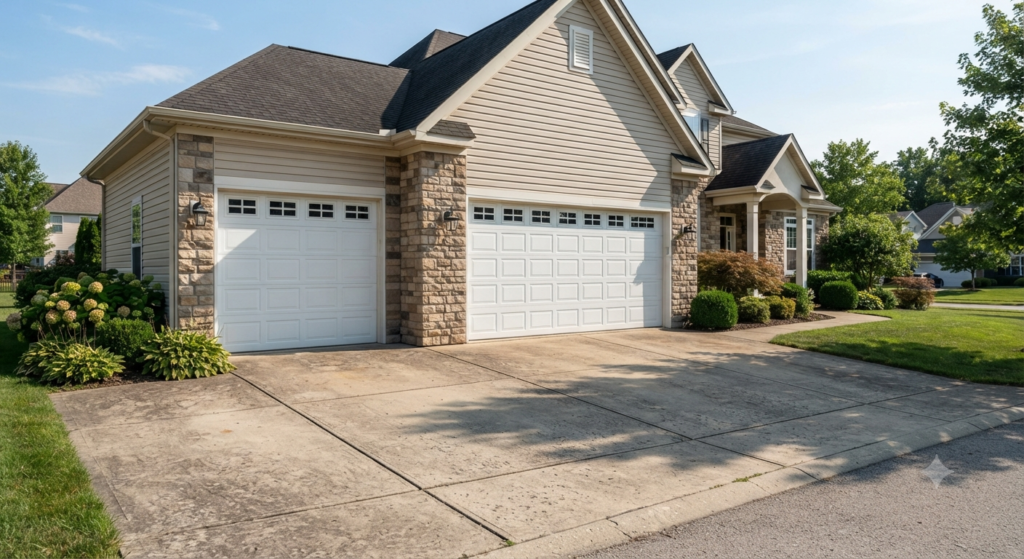
There isn’t one standard garage door size that fits every home. Common standard garage door sizes depend on the garage layout, vehicle size, and the manufacturer. Here’s a quick garage door size chart with some common options:
| Garage type | Common sizes |
| Single-car | 8×7, 9×7, 10×7 |
| Two-car | 16×7, with other sizes available |
| Taller or oversized | Depends on the vehicle and opening |
These are common examples, not a rule for every garage. Your actual garage door opening size should be measured before ordering, even if you think you know the garage door size you need.
Is an 8×7 Garage Door Common?
Yes, an 8×7 garage door is a common option for smaller single-car garages. It can work well for many standard residential openings, but always check the actual opening measurements first.
How Do You Measure for a Garage Door Opener?
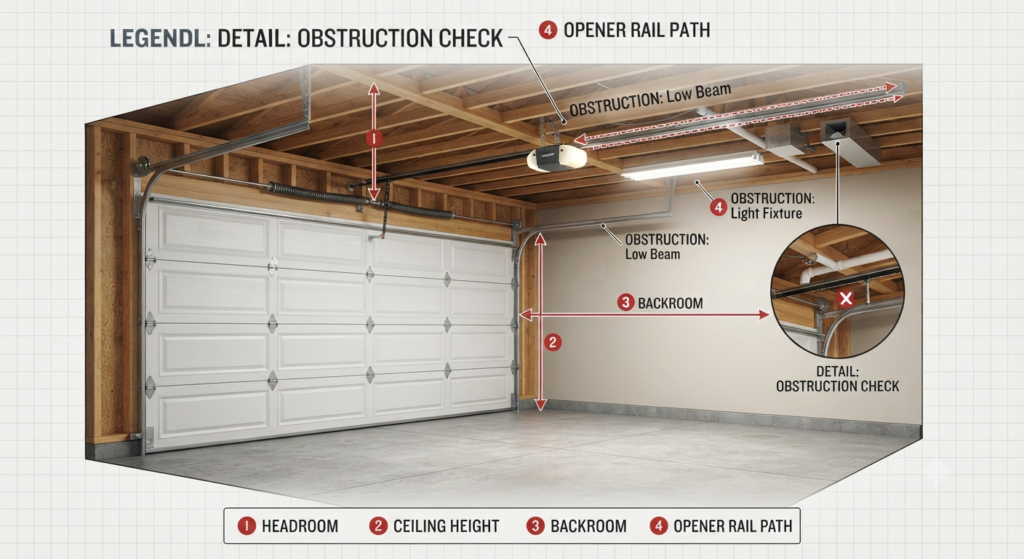
If you’re figuring out how do you measure for a garage door opener, you don’t need to measure the opener itself. You mainly need to check the space around the door.
Check these measurements before choosing a garage door opener:
- Headroom: Measure the space above the door.
- Ceiling height: Check the distance from the floor to the ceiling.
- Backroom: Make sure there’s enough room for the opener rail.
- Door height: Note the height of the garage door.
- Rail path: Look for beams, lights, pipes, or other obstructions.
- Garage door clearance: Make sure the opener and moving parts have enough room to operate.
What If Your Garage Door Measurements Don’t Match a Standard Size?
If your measurements don’t match common standard garage door sizes, don’t try to force a standard door into the opening. A different garage door size may be needed, especially with older homes, custom-built garages, or unusual garage door opening size.
A custom garage door may make sense if you have:
- An oversized vehicle or RV garage
- A very wide or tall opening
- An older or custom-built home
- An unusual opening shape
- Limited headroom for the track system
For a replacement garage door, it’s best to have the measurements checked by a professional when the opening is unusual, the framing needs work, or the available headroom is very limited. This helps you avoid ordering a door that simply won’t fit.
Common Mistakes When Measuring a Garage Door
Small measuring mistakes can cause a big headache when ordering a replacement garage door. Before you finalize your garage door measurements, watch out for these common ones:
- Measuring the old door instead of the garage door opening
- Taking only one measurement
- Forgetting the sideroom, headroom, or backroom
- Ignoring pipes, beams, lights, or other ceiling obstructions
- Overlooking uneven flooring
- Assuming a standard size will fit without checking
- Forgetting to check the available garage door clearance
- Mixing up feet and inches when writing measurements down
Garage Door Measurement Checklist
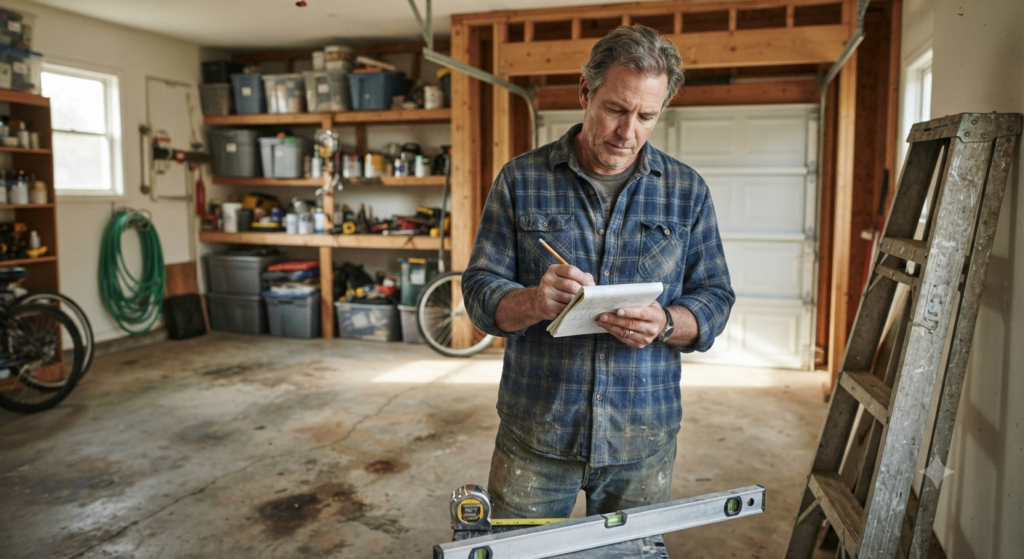
Use this quick list while measuring. It makes it much easier to keep your garage door measurements in one place.
| Measurement | Your Measurement |
| Opening width | ___ ft ___ in |
| Opening height | ___ ft ___ in |
| Left sideroom | ___ in |
| Right sideroom | ___ in |
| Headroom | ___ in |
| Backroom | ___ ft ___ in |
| Ceiling height | ___ ft ___ in |
| Obstructions | Yes / No |
| Floor condition | Level / Uneven |
Frequently Asked Questions
Do I measure the garage door or the opening?
Measure the garage door opening, not just the old door. Check the width and height, then measure the sideroom, headroom, and backroom before ordering a replacement.
How do you measure a garage door opening?
Measure the opening width from one inside jamb to the other, then measure the height from the finished floor to the bottom of the header. Check both at several points for differences.
What Is the Most Common Garage Door Size?
Common residential sizes include 8×7, 9×7, and 16×7 feet. The right size depends on your garage and opening, so always take your own measurements first.
How Much Headroom Does a Garage Door Need?
Headroom requirements vary by the door, track, spring system, and opener. Measure from the top of the opening to the ceiling or lowest obstruction, then compare it with the manufacturer’s requirements.
How Much Sideroom Does a Garage Door Need?
Sideroom is the space beside the opening where the vertical tracks and hardware sit. The amount needed can vary, so measure both sides and check the requirements for your chosen door.
Can I Measure a Garage Door Myself?
Yes, you can measure a standard garage door yourself with a tape measure. If the opening is unusual, out of square, damaged, or has very limited clearance, professional measurement is a safer choice.
Conclusion
So, how do you measure a garage door? Start with the opening width and height, then check the sideroom, headroom, and backroom. Don’t forget to look at the framing, floor condition, and any obstructions around the opening.
Before ordering, go over every measurement one more time. A few extra minutes of checking can save you from ordering the wrong door or running into installation problems later.