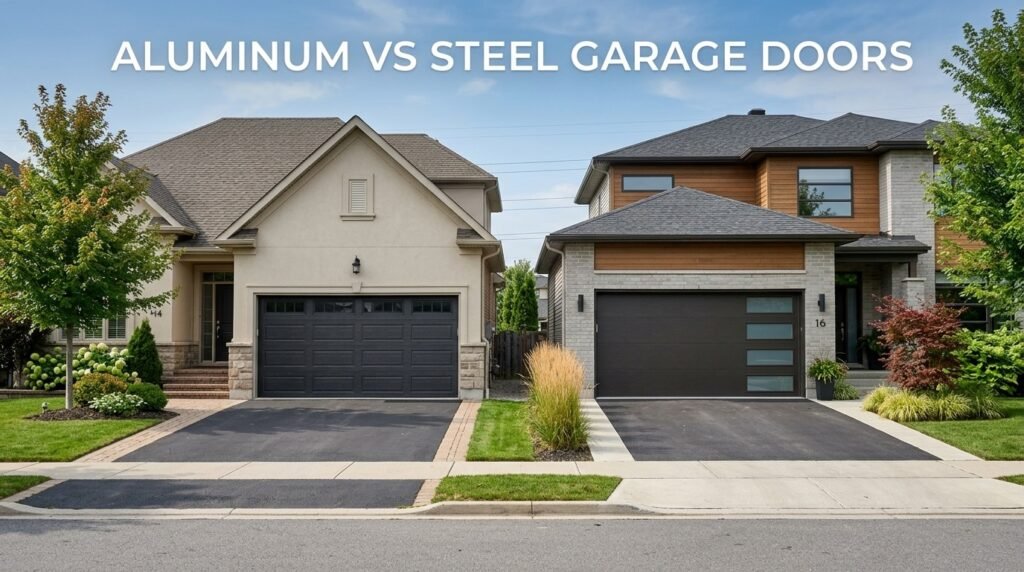
Aluminum vs Steel Garage Doors can be a tough choice, but it mostly comes down to what matters most to you. Steel garage doors are usually the stronger option for durability, security, and better insulation choices. Aluminum garage doors, on the other hand, are much lighter, resist corrosion well, and give your home a clean, modern look. Your climate, budget, garage use, and design preferences all matter too. For most homeowners, steel is the better all-around choice, while aluminum can be a smart pick for coastal homes or modern designs.
Steel Garage Doors: Strength, Durability, and Value
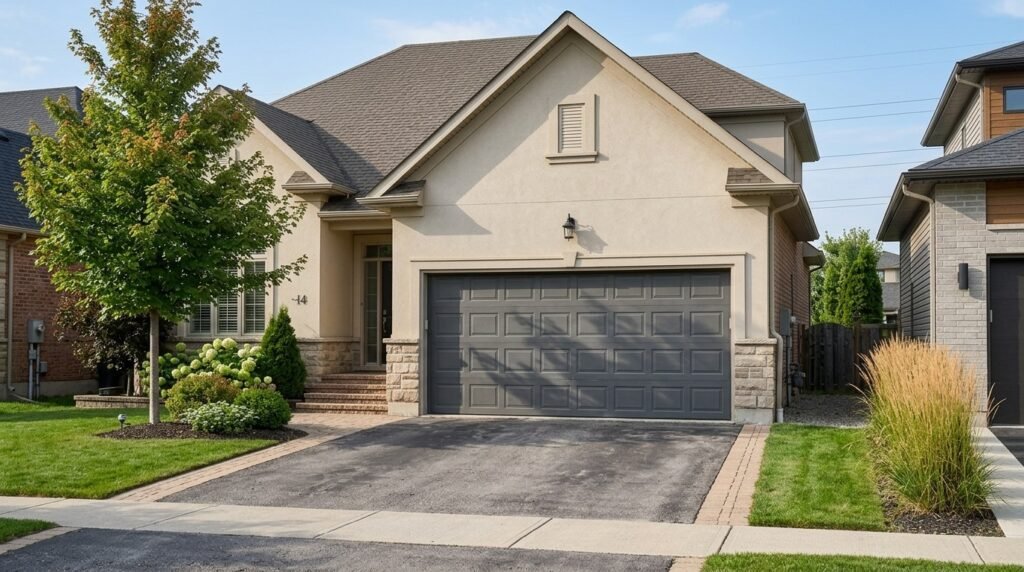
Steel garage doors are a popular choice for homeowners who want something tough without going for a more expensive or high-maintenance material. Most residential doors use galvanized steel, which has a protective zinc coating to help slow down rust and corrosion. The real advantage, though, is steel garage door strength. A well-built steel door can handle daily use, minor impacts, rough weather, and years of opening and closing without much trouble.
For homeowners who care about steel garage door security, durability, and long-term value, steel is hard to beat. That said, it isn’t perfect. Steel is heavier than aluminum, and damaged coatings can leave the metal more exposed to rust, especially around moisture and salty air.
Advantages of Steel Garage Doors
Strong and durable: One of the biggest steel garage door pros is its strength. Steel panels generally handle bumps and everyday wear better than softer materials. A properly constructed door can stand up well to regular use, making it a good fit for busy households.
Better dent resistance: Steel isn’t dent-proof, but it usually handles impacts better than aluminum. The thickness of the panel matters here, too. A heavier-gauge or reinforced steel door can offer better protection against dents caused by small impacts, sports equipment, or the occasional mistake with a car.
Good security: Strength matters when you’re thinking about garage security. Steel garage door security is one reason many homeowners choose this material. Stronger panels are harder to bend or damage, although the door’s locks, opener, tracks, reinforcement, and installation also play a big role.
Lots of design choices: Steel doesn’t have to look plain or industrial. Today’s durable steel garage doors come in many colors, finishes, window styles, and panel designs. You can even find wood-look finishes that give you a traditional appearance without the upkeep of real wood.
Good insulation options: Steel itself shouldn’t be treated as insulation. What makes a steel door thermally efficient is its construction. Many galvanized steel garage doors are available with insulation, including polyurethane or polystyrene cores. If your garage gets very hot in summer or cold in winter, look at the door’s insulation and R-value rather than choosing based on material alone.
Handles tough weather: Steel doors can perform well in rain, snow, strong winds, and changing temperatures. With a good protective finish and proper maintenance, they can stay in service for many years. For severe weather, though, don’t judge a door only by its material. Wind rating, reinforcement, tracks, and installation matter too.
Strong long-term value: A steel door can make sense if you’re looking beyond the initial purchase. Its strength, wide range of designs, and available insulation can make it a practical long-term investment, especially for garages that get heavy daily use.
Disadvantages of Steel Garage Doors
Heavier than aluminum: Weight is the most obvious tradeoff. Steel garage doors are heavier, which means the springs and other hardware have to be correctly sized and installed. A properly balanced door shouldn’t make the opener do all the heavy lifting, but the overall system still needs to be designed for the door’s weight.
Rust and corrosion can happen: Galvanized steel offers good protection, but it doesn’t make steel completely immune to corrosion. If the protective coating or paint gets scratched, chipped, or damaged, moisture can reach the steel underneath. That’s when rust can become a problem.
Salt air needs extra attention: Homes near the coast face a bigger challenge because salty, humid air speeds up corrosion. Steel can still work in these areas, but you’ll need to pay more attention to cleaning, coatings, and early signs of rust. For some coastal homeowners, an aluminum door may be the easier option.
Thin panels can still dent: It’s easy to assume that steel can’t dent, but that’s not true. Thinner steel panels can still be damaged by a hard impact. The steel gauge, panel construction, and reinforcement all affect how well the door handles bumps.
More load on the hardware: Because steel is heavier, the garage door’s springs, opener, rollers, hinges, and other moving parts need to be matched to the door. This isn’t necessarily a problem when the system is installed correctly, but poor setup or neglected maintenance can cause problems over time.
Coating damage means more maintenance: Steel garage door maintenance is fairly simple, but it’s worth keeping an eye on scratches, chips, and exposed areas. Regular cleaning helps remove dirt and road salt, while dealing with small coating problems early can help prevent a much bigger rust issue later.
Overall, steel is a strong choice when strength, durability, security, and insulation options are high on your list. Its main drawbacks—weight and corrosion risk—are manageable in many homes, but they become more important in coastal or very humid environments.
Aluminum Garage Doors: Lightweight, Corrosion-Resistant, and Modern
Aluminum garage doors have a different set of strengths than steel. They’re light, naturally resistant to corrosion, and especially popular with homeowners who like a clean, modern look. Lightweight aluminum garage doors can also be a practical choice when reducing the load on the garage door system matters. But there’s a tradeoff: aluminum is softer than steel, so it can dent or bend more easily.
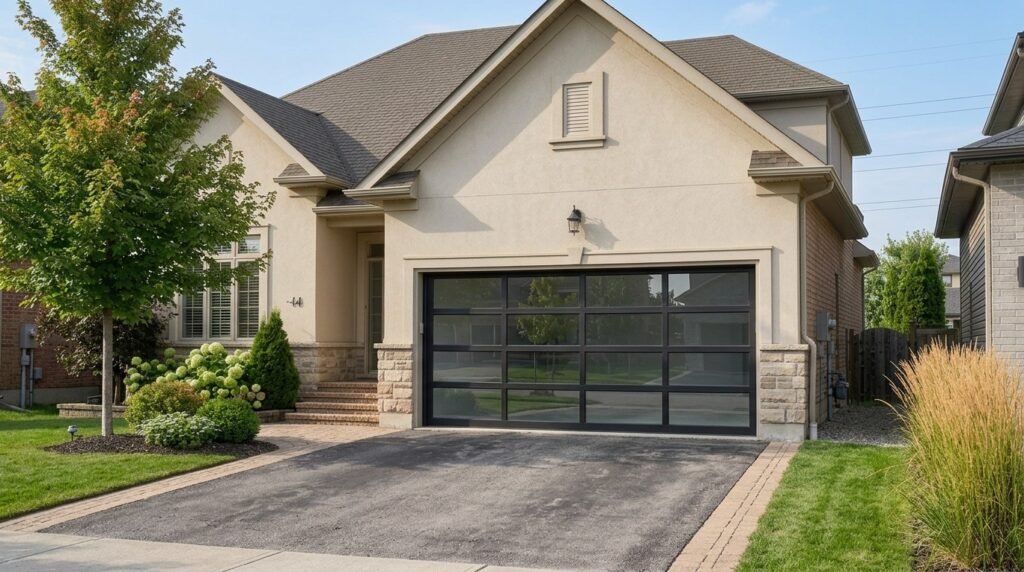
For the right home, though, aluminum can be a really good option. It’s particularly worth considering in coastal or humid areas, where moisture and salt air can make steel maintenance more of a headache.
Advantages of Aluminum Garage Doors
Lightweight construction: The biggest benefit is right in the name of many aluminum garage door pros—they weigh much less than comparable steel doors. That makes them easier for the garage door system to move and can also make manual operation easier in some situations.
Strong aluminum garage door corrosion resistance: Aluminum naturally develops a thin oxide layer when exposed to air. This helps protect the surface from further oxidation and means it doesn’t develop rust in the same way steel does. That makes aluminum appealing where moisture is a constant concern.
A good choice for coastal homes: If you live near the ocean, salt air can be rough on metal. Aluminum garage door corrosion resistance gives it an advantage in coastal and humid environments. It still needs cleaning, especially when salt and grime build up, but you don’t have the same rust concern as you do with exposed steel.
Easy, smooth operation: Because aluminum doors are lightweight, they can be easier for the garage door system to move. This can be useful for homeowners who want a lighter door or are replacing an older door while keeping the existing setup, although opener and spring compatibility should always be checked rather than assumed.
Modern appearance: One reason modern aluminum garage doors have become so popular is their appearance. Aluminum works especially well with clean lines, dark frames, large windows, and contemporary home designs. It doesn’t have to look like a traditional garage door.
Excellent for glass and full-view designs: Aluminum frames pair naturally with glass, which is why you’ll often see full-view aluminum garage doors in modern homes. Large glass panels can bring natural light into the garage and create a much more open feel. For a garage that’s also used as a workshop, gym, or hobby space, that can be a nice perk.
Low routine maintenance: Among the aluminum garage door pros, low maintenance is another big one. There’s no steel surface underneath that can develop traditional iron rust, and regular washing can remove dirt, dust, and salt deposits. You still need to inspect the hardware, seals, rollers, and panels, though. Low maintenance doesn’t mean no maintenance.
Disadvantages of Aluminum Garage Doors
Softer than steel: This is one of the main aluminum garage door cons. Aluminum is generally softer than steel, so it doesn’t handle hard impacts as well. A door that gets hit by a vehicle, sports equipment, or another heavy object may show damage more easily.
More likely to dent: Aluminum panels can dent from impacts that might leave little or no mark on a thicker steel panel. This doesn’t mean every aluminum door is fragile. Construction, panel thickness, reinforcement, and the type of door all matter.
Can bend under a hard impact: A strong hit can do more than leave a small dent. Aluminum panels or frames may bend, and repairing that damage can sometimes mean replacing the affected panel rather than simply pushing the dent back into shape.
Basic designs may offer weaker insulation: Aluminum isn’t automatically a poor choice for an insulated garage, but basic aluminum doors often have less thermal protection than well-insulated steel models. If temperature control matters, look at the actual R-value, insulation core, panel construction, and weather seals instead of judging the door by material alone.
Some designs can get expensive: A simple aluminum door can be competitive in price, but the cost can climb quickly when you add large glass panels, custom finishes, special frames, or a full-view design. So don’t assume aluminum is always the cheaper option.
Glass can affect privacy and heat: Those big glass panels look great, but they come with a few things to think about. Clear glass may give people outside a view into your garage, while large windows can also increase solar heat gain depending on the glass and climate. Frosted, tinted, insulated, or privacy glass can help, but they may add to the overall cost.
Overall, aluminum is a strong contender if lightweight construction, corrosion resistance, low maintenance, and modern design are your priorities. Its softer panels and potential insulation limitations are the main things to weigh before making the final choice.
Steel vs. Aluminum Garage Doors: Side-by-Side Comparison
Looking at both materials side by side makes the choice a lot easier. Steel usually has the edge when strength, dent resistance, security, and long-term durability are the main concerns. Aluminum stands out for its lightweight design, corrosion resistance, and modern appearance. Still, there isn’t one winner for every home. Your climate, garage use, insulation needs, and budget can change the answer.
| Factor | Steel | Aluminum |
| Strength | Excellent | Good |
| Weight | Heavier | Much lighter |
| Dent resistance | Better | More prone to dents |
| Rust resistance | Good with protective coating | Excellent |
| Corrosion resistance | Moderate to good | Excellent |
| Insulation options | Excellent | Available, varies by design |
| Maintenance | Low to moderate | Low |
| Security | Excellent | Good to excellent, depending on construction |
| Design | Very versatile | Excellent for modern and full-view styles |
| Coastal use | More corrosion concern | Strong choice |
| Cost | Often more affordable | Varies widely |
| Best use | Durability and value | Lightweight, modern, or coastal homes |
Strength and Dent Resistance
When it comes to steel vs aluminum garage door strength, steel normally comes out ahead. A properly constructed steel door can take more everyday abuse and is generally better at resisting dents from minor impacts.
Aluminum is softer, so a hard hit can leave a dent or even bend part of the panel. That doesn’t mean aluminum is weak overall. It’s just more forgiving when it comes to weight than impact.
One thing people sometimes overlook is steel gauge. A thin steel panel and a heavier-gauge steel panel won’t have the same dent resistance. So if durability is your priority, look at the actual door construction rather than simply seeing the word “steel” on the product description.
Weight and Garage Door Operation
This is where aluminum has a clear advantage.
Steel garage doors are heavier, while aluminum doors are much lighter. That difference can affect the overall garage door system, including the springs, opener, and other moving parts.
A properly balanced door should be easy for the opener to move regardless of the material. Still, the lighter weight of aluminum can be useful for certain designs and applications, especially larger doors or full-view models.
Rust and Corrosion Resistance
If you’re comparing rust resistance and corrosion resistance, aluminum has the easier story.
Steel usually relies on galvanizing, paint, or another protective coating to reduce corrosion. If that coating gets scratched or damaged, moisture can eventually reach the steel underneath and cause rust.
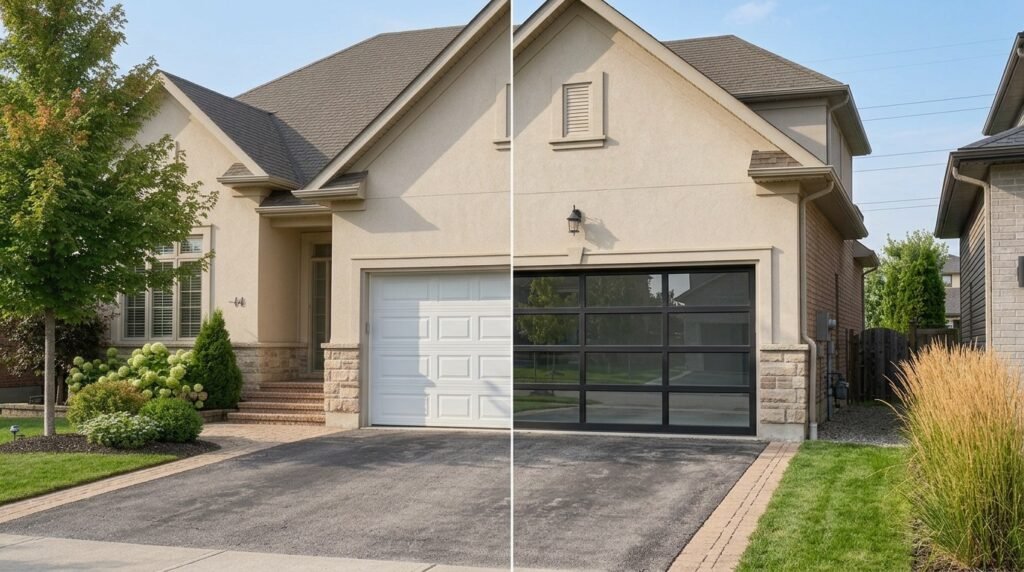
Aluminum doesn’t rust like steel because it doesn’t contain iron. Its surface naturally forms a thin oxide layer that helps protect it from further corrosion.
That makes aluminum especially useful for homes exposed to humidity, moisture, or salt air.
Insulation and Energy Efficiency
This is one area where it’s easy to get the wrong idea.
Steel doesn’t automatically mean better insulation, and aluminum doesn’t automatically mean a poorly insulated door.
The real factors include:
- Insulation type
- R-value
- Panel construction
- Insulation thickness
- Weather stripping
- Bottom seal
- Windows and glazing
- Air leakage
A well-insulated steel garage door can offer excellent thermal performance. But insulated aluminum garage doors are available too, and their performance depends on the specific design.
So when comparing steel vs aluminum garage door insulation, check the door’s actual R-value and construction instead of choosing based on the metal alone.
Maintenance Requirements
Both materials are fairly low-maintenance compared with some traditional garage door materials.
Steel needs occasional cleaning and should be checked for scratches, chips, and early signs of rust. This becomes more important in areas with high humidity or road salt.
Aluminum doesn’t have the same rust problem, so its routine care is usually simple. You’ll still want to wash off dirt and salt, check the panels for dents, and keep the moving parts maintained.
In short, aluminum has an advantage for corrosion-related maintenance, while both can be relatively easy to care for when installed and maintained properly.
Security and Strength
For garage door security, steel generally has the advantage because its stronger panels are harder to damage or force through.
But material isn’t the only part of the security equation. The locking system, opener, reinforcement, tracks, windows, and installation all matter. A well-built aluminum door can still provide good security when the entire system is designed properly.
So it’s better to think of security as a door-system feature, not simply a material feature.
Design and Curb Appeal
Steel is surprisingly versatile. You can find traditional raised panels, modern designs, window combinations, different colors, and even wood-look finishes.
Aluminum is especially popular for contemporary homes. Its slim frames and glass panels make it a natural fit for full-view garage doors and modern architecture.
If your main goal is a classic garage-door appearance, steel gives you plenty of choices. If you want something sleek, open, and modern, aluminum has a strong advantage.
Which Is Better for Coastal Areas?
For coastal homes, aluminum deserves serious consideration.
Constant exposure to salt air and humidity can increase corrosion problems with steel, even when the door has a protective coating. Aluminum’s natural corrosion resistance makes it a practical choice in these environments.
That said, the entire garage door system still needs attention. Tracks, springs, fasteners, and other hardware can also be affected by coastal conditions, regardless of whether the door panel is aluminum or steel.
Which One Offers Better Value?
Steel is often the better value when you want strength, durability, and a wide range of insulation options without paying extra for a highly specialized design.
Aluminum can offer good value when lightweight construction, corrosion resistance, or a modern full-view design is more important to you.
The cheapest door upfront isn’t always the cheapest over its entire life. Installation, maintenance, repairs, insulation, and the local climate all deserve a place in the decision.
The Bottom Line
There isn’t a universal winner in the steel vs. aluminum garage doors debate.
Choose steel when you care most about strength, dent resistance, security, and long-term durability. Consider aluminum when you want a lighter door, strong corrosion resistance, or a modern design with glass.
And don’t stop at the material. Door gauge, insulation, R-value, construction quality, hardware, weather exposure, and installation can make just as much difference to how the door performs over the years.
Which Is Stronger: Steel or Aluminum?
When people compare steel vs aluminum garage door strength, steel usually comes out on top. It has higher strength and better impact resistance, so it can handle everyday bumps better than most aluminum panels. That’s one reason steel is often considered the strongest garage door material for residential use.
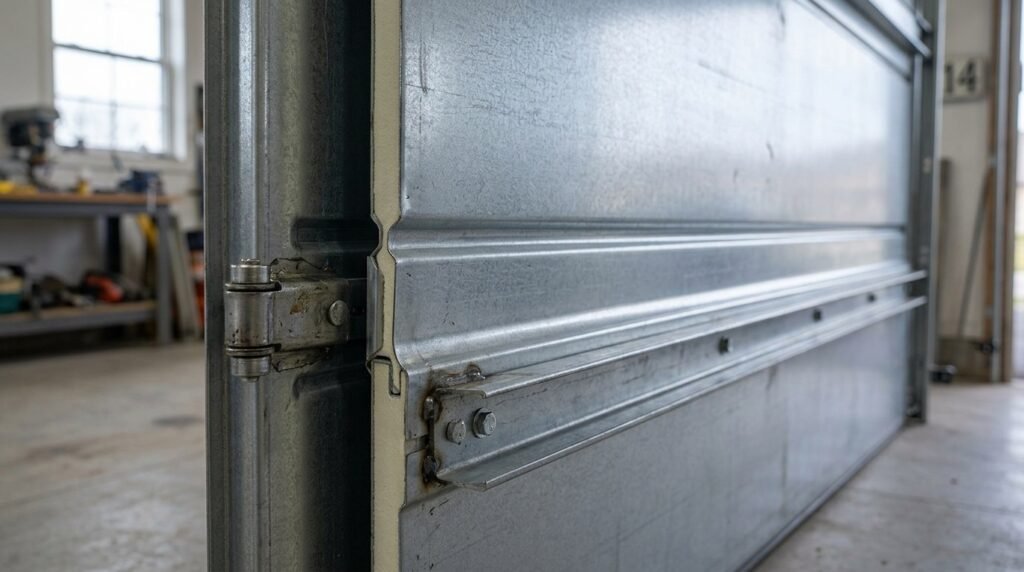
But there’s a catch: not every steel garage door is equally strong. The panel thickness, gauge, construction, and reinforcement can make a big difference. So simply choosing “steel” doesn’t tell you the whole story.
Why Steel Is Usually Stronger
Steel has a natural advantage when it comes to strength. Compared with aluminum, it can take more force before bending or deforming. That’s useful for a garage door that deals with daily opening, closing, wind, and the occasional accidental hit.
Panel construction matters, too. A single-layer steel panel won’t perform the same way as a multi-layer door with insulation and reinforcement. Heavier construction can improve the door’s overall rigidity and dent resistance.
Then there’s the gauge.
Steel garage doors are commonly described by gauge numbers such as 24, 25, 26, or 27 gauge. The gauge tells you about the thickness of the steel sheet, and in this numbering system, a lower gauge number generally means thicker steel.
Reinforcement can also make a difference. Larger or wider garage doors may need additional reinforcement to prevent the panels from flexing or bowing. That’s especially important when the door is exposed to strong winds or heavy daily use.
So, while steel garage door strength is a major advantage, the construction behind that steel matters just as much.
Does Steel Gauge Matter?
Yes, steel gauge matters when you’re comparing garage doors.
You’ll commonly see these gauges:
- 24 gauge: Thicker and generally stronger, making it a good choice when durability and impact resistance are priorities.
- 25 gauge: A middle-ground option that can provide a useful balance between strength, weight, and cost.
- 26 gauge: Thinner than 24- or 25-gauge steel and commonly used in residential garage doors.
- 27 gauge: Thinner steel that may be suitable for lighter-duty applications, depending on the door’s overall construction.
The important part is not to assume that a lower gauge automatically means a better door. Manufacturers may use different panel designs, layers, coatings, insulation, and reinforcement, so two doors with similar gauge numbers can still perform differently.
Thicker steel generally offers better resistance to dents and bending, but it can also add weight and cost. A thinner panel may be perfectly suitable for a typical residential garage if the rest of the door is well designed.
And this is the big point: don’t judge a door only by its material name.
A well-built aluminum garage door can be a better fit for a coastal home or a modern full-view design, while a properly constructed steel door can be the better choice for homeowners who want maximum strength and impact resistance.
If you’re specifically worried about aluminum garage door dents, remember that aluminum is softer than steel. A strong impact can leave a visible dent more easily. But the thickness and design of the aluminum panel still matter, so the material alone doesn’t tell the complete story.
For a homeowner choosing between the two, look at the panel gauge, construction, reinforcement, insulation, wind rating, hardware, and warranty along with the material. That’s a much better way to judge how strong the finished garage door will actually be.
Which Garage Door Is More Durable?
When it comes to garage door durability, steel usually has the edge if the door will face lots of daily use, bumps, or rough weather. But aluminum has one big advantage: it doesn’t develop rust like steel. So the better material can change depending on where you live and how you use the garage.
A door’s long-term durability isn’t decided by the metal alone. Impact, daily operation, climate, corrosion, maintenance, and construction quality all affect how long it stays in good working condition.
Impact and Daily Wear
Steel generally handles wear and tear better because it’s harder and stronger than aluminum. A properly built steel panel is less likely to bend after an accidental bump, which can be useful in a busy household.
Aluminum is softer, so repeated impacts or one strong hit can cause dents more easily. That doesn’t make aluminum a bad choice, but it does mean you may need to be a little more careful with it.
Daily operation matters, too. Garage doors can open and close thousands of times over their service life. Springs, rollers, hinges, cables, tracks, and the opener all experience wear during that time. A strong panel won’t prevent these parts from wearing out.
Climate and Corrosion
Your local climate can change the durability equation.
In dry or moderate climates, a properly coated steel door can last for many years with relatively little trouble. But moisture, humidity, road salt, and coastal air can increase the risk of corrosion if the protective coating gets damaged.
Aluminum performs well in these conditions because it naturally resists corrosion. That’s one reason an aluminum garage door lifespan can be quite good in coastal or humid areas, even though aluminum isn’t as strong as steel.
Steel can still work near the coast, but it may require more attention to cleaning, coating damage, and early rust spots.
Steel Garage Door Lifespan vs. Aluminum
There’s no single number that applies to every garage door. The steel garage door lifespan and aluminum garage door lifespan depend heavily on the quality of the door and how it’s treated.
A high-quality steel door that’s installed correctly and maintained properly can provide a long service life. The same is true for a well-built aluminum door, especially when it’s used in an environment where corrosion resistance matters.
In other words, don’t buy a door based only on the material and expect a specific number of years.
Maintenance Makes a Difference
Neither material is maintenance-free.
For steel, keep an eye out for:
- Scratches or chips in the protective coating
- Early signs of rust
- Dirt and road salt buildup
- Damaged weather seals
- Loose or worn hardware
For aluminum, check for:
- Dents or bent panels
- Surface damage
- Dirt and salt buildup
- Loose hardware
- Worn seals and moving parts
Regular cleaning and basic garage door maintenance can catch small problems before they turn into expensive repairs.
Construction and Installation Matter
This is one of the biggest points homeowners often overlook.
Two garage doors made from the same material can have very different long-term durability. Panel thickness, insulation, reinforcement, hardware quality, finish, and overall construction all affect performance.
Installation matters just as much. A door that’s poorly balanced or has incorrectly adjusted springs can put unnecessary stress on the opener and other components. Even a high-quality door won’t perform at its best if the installation is done poorly.
So think of durability as a combination:
Material + construction + installation + maintenance = expected service life
Steel is usually the better choice when impact resistance, heavy use, and strength are your priorities. Aluminum can be the smarter option when corrosion resistance, lighter weight, and a coastal environment matter more.
The right choice isn’t simply the material that lasts the longest on paper. It’s the one that fits your climate, garage use, door construction, and maintenance habits.
Steel vs. Aluminum Garage Door Cost
Price is one of the first things most homeowners look at when choosing a new garage door. But comparing aluminum vs steel garage door cost isn’t as simple as checking the price tag. A cheaper door upfront can end up costing more if it needs frequent repairs or doesn’t provide the insulation you need.
When looking at steel vs aluminum garage door cost, think about the full picture: purchase price, installation, maintenance, repairs, energy performance, and eventually replacement. That’s your total cost of ownership, and it’s more useful than the starting price alone.
Which Is Cheaper Upfront?
In many cases, a basic steel garage door can be more affordable than a comparable aluminum door. But there’s no fixed rule. The final garage door price can change quite a bit depending on what you choose.
Here are the main things that affect the price:
- Size: A single-car door will usually cost less than a large double or oversized door.
- Design: Simple raised-panel doors are generally less expensive than custom or full-view designs.
- Insulation: Adding insulation increases the purchase price but can improve comfort and energy performance.
- Windows: Standard windows may add a little, while large or specialty glass can add considerably more.
- Gauge: With steel doors, thicker panels can affect the price.
- Hardware: Springs, rollers, tracks, openers, and other components all contribute to the final cost.
- Brand: Different manufacturers have different price points, warranties, and construction quality.
- Installation: Labor rates vary by location, door size, complexity, and the condition of the existing garage opening.
Aluminum doors can become particularly expensive when you choose large glass panels, custom frames, specialty finishes, or modern full-view designs. A basic aluminum door and a high-end architectural aluminum door are two very different products.
So if you’re comparing garage door price, make sure you’re comparing similar doors. A basic insulated steel door shouldn’t be compared with a custom aluminum-and-glass model and called a fair price comparison.
Which Costs Less Over Time?
This is where the initial price becomes less important.
Think about your long-term cost in stages:
Purchase → installation → maintenance → repairs → energy considerations → replacement
A steel door may offer good value over time because of its strength and wide range of construction options. It generally handles impacts and everyday wear better, which can help reduce certain repair costs.
Aluminum can save money in areas where corrosion is a major concern. Since it naturally resists corrosion, homeowners in coastal or humid locations may spend less time dealing with rust-related problems.
However, aluminum’s softer panels can be more vulnerable to dents and bending. If the door gets hit often, those repair costs can add up.
Installation Cost
The installation cost isn’t determined by the door material alone.
Door size, existing tracks, hardware, opener compatibility, removal of the old door, and the complexity of the installation can all affect the final labor bill.
Aluminum doors are lighter, which can make handling easier during installation. But a large full-view aluminum door with heavy glass isn’t necessarily a simple or inexpensive installation.
Steel doors are heavier, so the installer needs to make sure the springs and other hardware are correctly matched to the door.
Maintenance and Repair Cost
Both materials can be fairly low-maintenance, but they have different trouble spots.
Steel may require:
- Cleaning to remove dirt and road salt
- Touch-ups when the protective coating is damaged
- Rust prevention in moisture-prone areas
- Occasional repairs after impacts
Aluminum may require:
- Cleaning, especially near coastal areas
- Panel repairs after impacts
- Replacement of badly bent sections
- Routine hardware and seal maintenance
The maintenance cost can therefore depend more on your environment and how the door is used than on the material itself.
Energy Costs Can Change the Picture
Don’t forget energy performance when calculating the total cost of ownership.
An insulated garage door can help reduce heat transfer between the garage and outside. This can matter even more when the garage shares walls with living areas or when you use the space as a workshop, office, gym, or other usable room.
Instead of asking whether steel or aluminum is automatically more energy efficient, compare the door’s R-value, insulation type, panel construction, and weather seals.
A well-insulated aluminum door can outperform a poorly insulated steel door. The construction matters.
Replacement and Total Cost of Ownership
Eventually, every garage door reaches the end of its useful life. The goal is to get as much useful service from your investment as possible.
That’s why total cost of ownership includes more than what you pay on installation day. Consider:
- Purchase price
- Installation cost
- Routine maintenance
- Repair cost
- Energy performance
- Expected service life
- Replacement cost
For a homeowner who wants a tough, practical door for everyday use, steel often offers a strong balance between price and performance.
For someone living near the coast, choosing aluminum may make more sense even if the upfront cost is higher. Avoiding corrosion problems can be worth the extra money over the years.
So, which is cheaper? Steel is often the better value for a standard residential garage door, while aluminum can make more financial sense for specific needs such as coastal exposure, lightweight construction, or modern full-view designs. The best choice depends on what you’re actually paying for—not just the number on the quote.
Which Material Is Better for Garage Door Insulation?
If garage temperature matters to you, don’t choose a door based on the metal alone. The real difference comes from the door’s insulation, R-value, panel construction, and weather sealing. In the steel vs aluminum garage door insulation comparison, insulated steel doors often have more readily available high-performance options, but an insulated aluminum door can also provide good thermal performance when it’s built properly.
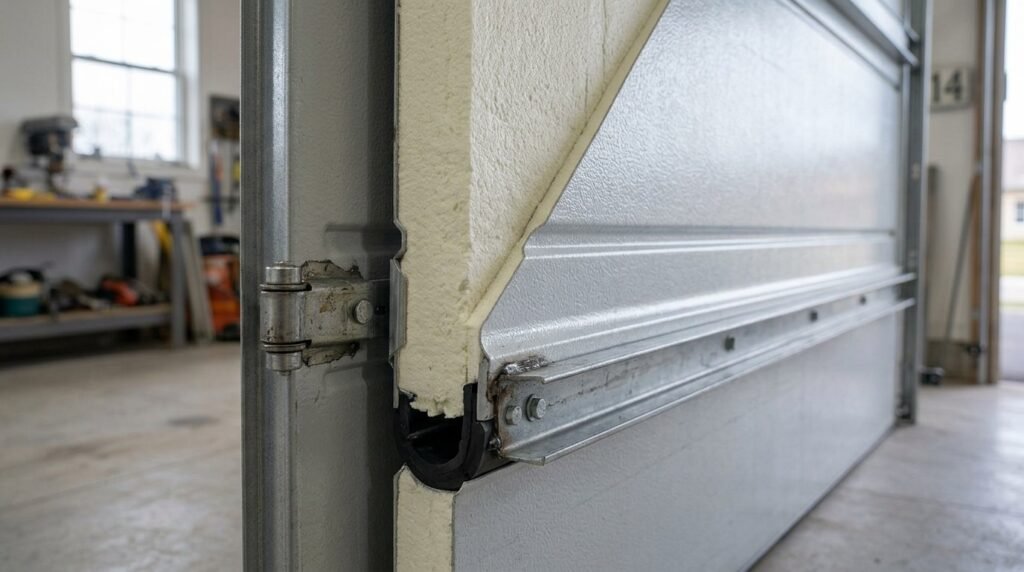
This matters if your garage gets extremely hot in summer, cold in winter, or shares a wall with your home. The right construction can reduce heat transfer and make the space more comfortable.
When comparing garage door insulation, don’t look at the metal alone. Insulation level, R-value, weather seals, windows, and air leakage can all affect how well the door performs. ENERGY STAR also uses performance ratings such as U-factor and, where applicable, Solar Heat Gain Coefficient (SHGC) when evaluating energy-efficient doors.
Does Steel Naturally Insulate Better Than Aluminum?
Not exactly.
Steel itself isn’t an insulation material, and neither is aluminum. In fact, both metals conduct heat. What makes a garage door insulating is what sits between the panels and how well the entire door is sealed.
That’s why comparing an uninsulated steel door with a properly insulated aluminum door isn’t really fair.
Look at these factors instead:
Insulated vs. uninsulated construction: An uninsulated metal door can allow heat to move through the panels fairly easily. Insulated steel garage doors use an insulation layer inside the panel to slow that transfer.
R-value: The R-value tells you how well an insulation system resists heat flow. Generally, a higher R-value means better resistance to heat transfer. When comparing doors, check the manufacturer’s stated R-value rather than assuming one material is automatically better.
Insulation core: Two common materials you’ll see are polyurethane insulation and polystyrene insulation. Polyurethane is injected into the door and can fill much of the panel space, while polystyrene is commonly used as rigid insulation boards. Their construction and stated performance can differ, so compare the actual product specifications.
Panel construction: A multi-layer insulated door can perform very differently from a thin, single-layer metal panel. The number of layers, insulation thickness, and how those layers fit together all matter.
Weather seals: Even a well-insulated panel can lose performance if air moves around it. Good bottom seals, side seals, top seals, and properly fitted sections help limit unwanted air movement.
So when someone asks whether steel naturally insulates better than aluminum, the better answer is: the insulation system matters more than the metal skin.
What Actually Makes a Garage Door Energy Efficient?
Good energy efficiency comes from the whole garage door system working together.
1. Insulation
Start with the insulation inside the door. If temperature control is important, an insulated model is usually worth considering instead of a basic hollow or uninsulated door.
2. R-value
Check the door’s stated R-value. It gives you a more useful way to compare thermal resistance between different models.
Just make sure you’re comparing products using the same testing or rating method, because manufacturers don’t always present insulation performance in exactly the same way.
3. Weather seals
Don’t overlook the seals. A small gap around the edges can let outside air into the garage even when the panels themselves are well insulated. Good weather sealing around the bottom, sides, and top helps reduce drafts and unwanted air movement.
4. Proper installation
A high-quality door won’t perform properly if it’s installed poorly. Gaps, misaligned sections, damaged seals, or an improperly fitted bottom seal can all reduce thermal performance.
5. Windows
Garage door windows can also affect insulation. Large or single-pane windows may allow more heat transfer than insulated glazing. If you want natural light without giving up too much efficiency, look for energy-efficient or insulated glass options.
6. Air leakage
This is a big one. Insulation slows heat transfer through the door, while sealing helps stop outside air from getting around it. You need both.
For example, imagine an insulated garage door with a good R-value but a large gap underneath. The insulation may be doing its job, but outside air can still enter through the opening.
Steel vs. Aluminum: What Should You Look For?
If you’re comparing aluminum garage door insulation with steel, don’t simply ask, “Which metal is better?”
Instead, compare:
- R-value
- Insulation type
- Insulation thickness
- Panel construction
- Weather sealing
- Window type
- Air leakage
- Quality of installation
A well-insulated steel door is often a great choice for homeowners who want strong thermal performance along with durability. But an insulated aluminum door can also work well when its construction and sealing are designed for energy efficiency.
For a garage that’s attached to your home, used as a workspace, or exposed to very hot or cold weather, these details become even more important.
Bottom line: the best-insulated garage door isn’t necessarily the one made from steel. It’s the one with the right insulation, R-value, panel construction, weather sealing, and installation for your climate and how you use the garage.
Which Is Better for Hot, Cold, Humid, or Coastal Climates?
Your local climate can change which garage door material makes the most sense. There isn’t one material that’s automatically best everywhere. In hot or cold areas, insulation, R-value, and weather sealing matter a lot. In humid and coastal locations, corrosion becomes a bigger concern.
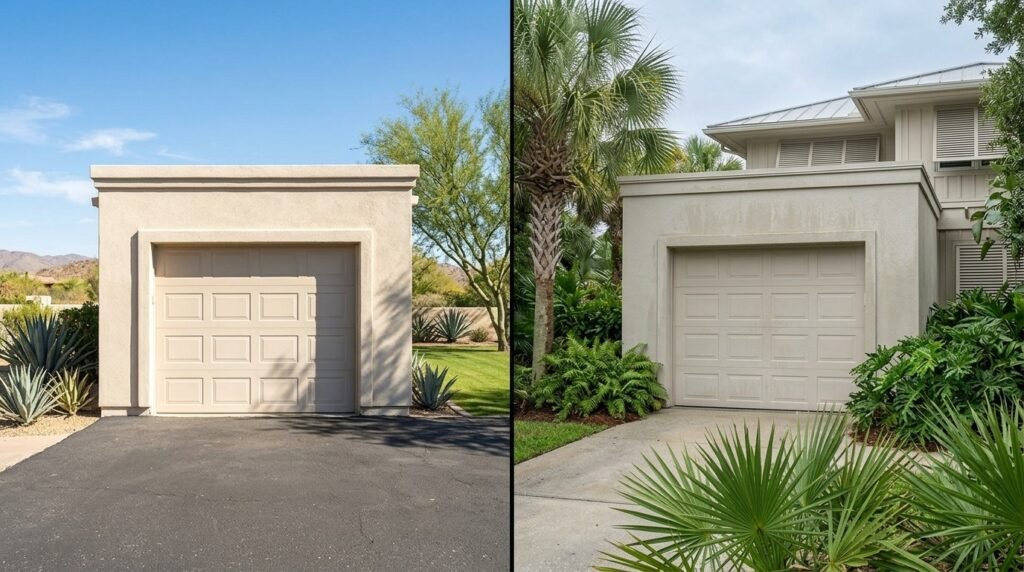
So if you’re looking for the best garage door for hot weather, best garage door for cold weather, or best garage door for coastal areas, think about the conditions the door will face every day—not just how the material looks.
Hot Climates
In very warm areas, the garage door can take a lot of heat from direct sunlight. Dark surfaces can absorb more solar heat, and a poorly insulated door can allow that heat to move into the garage.
For the best garage door for hot weather, pay attention to:
- Insulation: A properly insulated door can slow heat transfer between the outside and garage.
- R-value: A higher R-value generally means greater resistance to heat flow.
- Reflective finishes: Lighter or more reflective finishes can reduce the amount of solar heat absorbed by the door surface.
- Weather sealing: Good seals around the bottom, sides, and top help reduce hot outside air entering through gaps.
- Windows: If the door has large windows, insulated or energy-efficient glazing can help reduce unwanted heat gain.
Both steel and aluminum doors can work in hot climates when they’re properly insulated. The construction matters more than simply choosing one metal over the other.
For a garage that gets extremely hot during summer, I’d put insulation and weather sealing ahead of the material itself.
Cold Climates
Cold weather brings a different problem: heat loss.
If your garage is attached to your home, poorly insulated walls and a garage door can allow warm air to escape and cold air to enter. That’s where insulation becomes especially useful.
When choosing the best garage door for cold weather, look at:
- R-value
- Insulation type and thickness
- Panel construction
- Bottom seal
- Side and top weather seals
- Gaps around the door
- Air leakage
A well-insulated garage door can reduce heat transfer and help the garage stay closer to the temperature you want.
Again, don’t assume steel automatically wins because it’s stronger. An uninsulated steel door won’t provide the same thermal performance as a properly insulated door simply because the outer skin is steel.
If cold winters are your main concern, I’d focus on the complete insulated door system, not the metal alone.
Coastal and Humid Areas
This is where aluminum has a pretty clear advantage.
Homes near the coast deal with salt air, humidity, moisture, and corrosion. Salt carried in the air can make corrosion happen faster on susceptible metals, especially when protective coatings are damaged.
Aluminum naturally forms a thin oxide layer on its surface, which gives it strong corrosion resistance. That’s one reason aluminum is often a good choice for coastal homes.
But there’s an important distinction here:
Rust and corrosion aren’t exactly the same thing.
Rust specifically refers to the corrosion of iron and steel. Aluminum doesn’t develop that familiar reddish-brown iron rust, but aluminum itself can still experience corrosion or surface deterioration under certain conditions.
So it would be wrong to say that aluminum cannot corrode.
For a best garage door for humid climate or best garage door for coastal areas, aluminum can be a smart option because it doesn’t have the same rust problem as steel. It’s particularly useful where constant moisture and salt air are part of everyday life.
That doesn’t mean you can install it and forget about it, though. Salt and dirt should still be washed away regularly, and the hardware, fasteners, tracks, and other components need attention too.
What About Extreme Temperatures?
Both materials can work in extreme temperatures when the door is properly designed.
For very hot or very cold areas, focus on:
Insulation + R-value + weather sealing + proper installation
For humid or coastal areas, add:
Corrosion resistance + regular cleaning + suitable hardware
So, in simple terms:
- Hot climate: Prioritize insulation, reflective finishes, and good seals.
- Cold climate: Prioritize insulation, R-value, and reducing air leakage.
- Humid climate: Aluminum can be a strong choice because of its corrosion resistance.
- Coastal climate: Aluminum is often preferable because salt air creates more corrosion concerns for steel.
- Extreme temperatures: Focus on the complete door construction rather than choosing based only on steel or aluminum.
The climate doesn’t necessarily decide the winner by itself. It tells you which features should matter most when choosing the door.
Which Garage Door Is Better for Wind and Severe Weather?
If you live somewhere that gets strong winds, thunderstorms, or hurricanes, don’t choose a garage door based only on whether it’s steel or aluminum. Material alone doesn’t determine wind resistance. The door’s design, reinforcement, hardware, installation, and tested wind rating matter just as much.
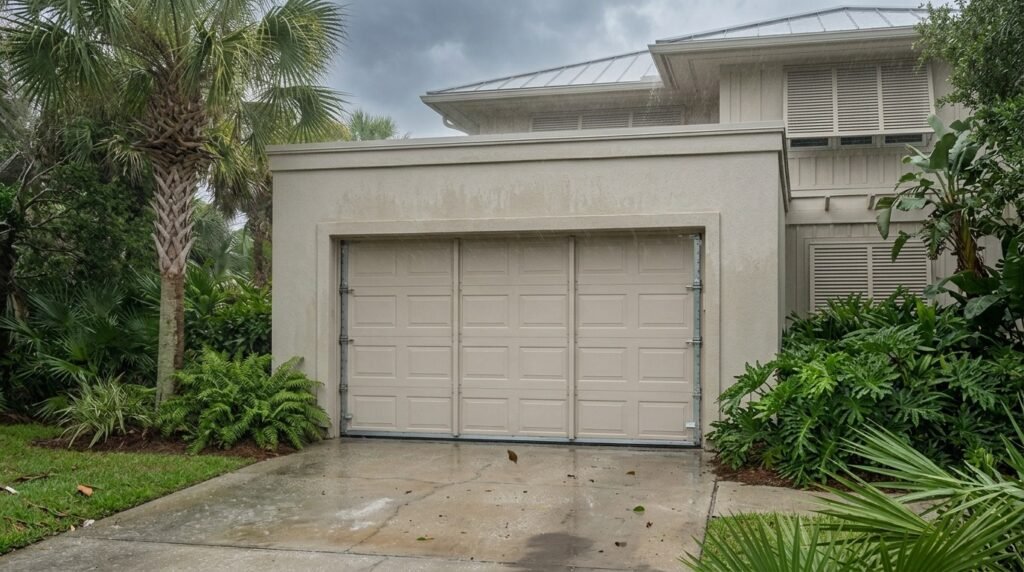
A strong wind-rated garage door is designed to handle a specific wind load, and that’s much more useful than simply calling a door “strong.” Steel may offer better impact resistance in many designs, while aluminum can also be used in properly engineered storm-resistant doors.
Wind Rating Matters More Than Material
A garage door’s wind rating tells you how much wind pressure the door is designed and tested to withstand.
This becomes especially important in areas where building codes require garage doors to meet specific wind-load requirements. The required rating can vary based on your location, building design, and exposure to wind.
So if you’re shopping for a hurricane garage door, check its actual wind rating instead of assuming steel is automatically the safer option.
Reinforcement Makes a Big Difference
A reinforced garage door has additional support designed to help the door resist bending and movement under heavy wind pressure.
Depending on the door, reinforcement may include:
- Stronger horizontal struts
- Reinforced end stiles
- Stronger tracks
- Heavy-duty brackets
- Additional structural supports
- Stronger hinges and fasteners
These components help keep the door sections in place when wind pushes against the large surface of the garage door.
A lightweight aluminum door with proper reinforcement and a certified wind rating can therefore outperform a basic, unreinforced steel door in a specific severe-weather application.
Tracks and Hardware Matter Too
It’s easy to focus on the door panels and forget about everything holding them in place.
During a severe storm, the tracks, rollers, brackets, hinges, springs, and fasteners all have to handle the forces acting on the door. If one part of the system isn’t properly rated or installed, the entire door can become vulnerable.
That’s why storm resistance should be looked at as a complete system rather than a material comparison.
Installation Is Part of Wind Resistance
Even a properly rated door won’t perform as intended if it’s installed incorrectly.
The tracks need to be securely attached, reinforcement needs to be installed correctly, and the hardware must match the door and the building structure.
This is particularly important for homes in hurricane-prone areas. A manufacturer can design a door for a certain wind load, but the installation still needs to follow the manufacturer’s requirements and applicable building codes.
Steel vs. Aluminum for Severe Weather
Steel has an advantage when you care about impact resistance and overall panel strength. It’s generally harder and better able to handle physical impacts than aluminum.
Aluminum, however, shouldn’t automatically be ruled out for severe weather. Properly engineered aluminum doors can include reinforcement and wind-rated construction designed for demanding conditions.
So the better question isn’t simply:
“Is steel or aluminum stronger?”
It’s:
“Which door is tested and rated for the wind conditions where I live?”
That’s the question that actually helps you make a safer choice.
Check Your Local Code Requirements
Before buying a door for an area with severe wind, check the local code requirements or ask a qualified garage door professional what wind rating is required for your property.
Requirements can vary by location, and some hurricane or high-wind zones have much stricter standards than others.
For homeowners in these areas, look for a door with:
- A suitable wind rating
- Proper structural reinforcement
- Strong tracks and hardware
- Correct installation
- Required impact or storm certifications, where applicable
- Compliance with local building requirements
Which Is Better for Security?
When it comes to garage door security, steel usually has an advantage because its panels are stronger and generally harder to damage. A properly built steel door can offer good impact protection and make forced entry more difficult.
But there’s no such thing as a completely “break-in-proof” garage door. The material is only one part of the security picture. Your locks, opener, reinforcement, windows, installation, and the overall condition of the door all matter too.
Why Steel Has an Advantage
Steel garage door security benefits from the material’s strength. A well-constructed steel panel can take more force than a similar lightweight aluminum panel, which makes it harder to bend or damage during an attempted forced entry.
Steel can also be reinforced for additional strength. A reinforced garage door may use stronger panels, structural struts, reinforced tracks, and heavy-duty hardware to make the complete system more resistant to damage.
That said, thicker or reinforced construction doesn’t mean someone can never break through it. It simply makes the door more difficult to damage compared with a weaker construction.
Security Depends on More Than the Door Material
A strong panel won’t do much if the rest of the garage door system is poorly secured.
Locks: A reliable locking system helps prevent the door from being opened when the opener isn’t being used. Some modern garage door openers also include features that make unauthorized access more difficult.
Garage door opener: Your opener is an important part of garage security. Modern openers can use rolling-code technology and other security features to reduce the risk of someone using an old or copied access code.
Reinforcement: Wide doors and doors in areas with severe weather may benefit from additional reinforcement. Stronger struts, tracks, brackets, and hardware can help the door resist physical damage.
Installation: Even a high-quality door can have security weaknesses if it’s installed incorrectly. Properly secured tracks, hardware, and panels are important for the door to perform as intended.
Windows: Garage door windows can affect privacy and security. Large clear windows may allow someone outside to see into the garage. Privacy glass, frosted glass, or placing the windows higher on the door can help limit visibility.
Door condition: Don’t overlook an old or damaged garage door. Bent panels, loose hardware, damaged locks, worn hinges, or gaps around the door can create problems regardless of whether the door is steel or aluminum.
Steel vs. Aluminum for Security
If you’re choosing strictly for impact resistance and panel strength, steel is usually the safer bet. Its stronger construction can make physical damage and forced entry more difficult.
Aluminum can still provide good security when it’s properly designed and reinforced. The difference is that aluminum is softer, so it may be easier to dent or bend under a strong impact.
So rather than asking which material is automatically more secure, look at the complete garage door system.
For better security, pay attention to:
- Strong panel construction
- A reliable locking system
- A secure garage door opener
- Proper reinforcement
- Strong tracks and hardware
- Appropriate window design
- Professional installation
- Regular maintenance
Does Garage Door Weight Matter?
Yes, garage door weight matters, but probably not in the way most homeowners think. Steel doors are usually heavier, while aluminum doors are much lighter. That difference can affect installation, manual operation, and the type of hardware needed.
A lightweight garage door can put less load on the door’s moving components, but the material isn’t the only thing that determines how hard the system works. The garage door opener, springs, tracks, rollers, and overall door balance all play a part.
Steel vs. Aluminum Weight
In a basic comparison:
- Steel → heavier
- Aluminum → lighter
Steel’s extra weight comes with a benefit: the material is strong and can provide a solid, durable panel. But that weight has to be properly supported by the complete garage door system.
Aluminum is easier to handle because it’s much lighter. This can be useful for larger doors, certain modern designs, and manual operation.
But don’t assume that every aluminum door is automatically lightweight. A full-view aluminum door with thick glass, for example, can weigh considerably more than a simple aluminum-panel door.
The actual garage door weight depends on the size, panel construction, insulation, windows, glass, and hardware.
Does a Heavier Door Wear Out the Opener Faster?
It can put more demand on the system, but there’s an important detail here.
A properly installed garage door opener isn’t supposed to carry the full weight of the door by itself. The spring system counterbalances the door, allowing the opener motor to move it without doing all the heavy lifting.
If a heavy steel door is properly balanced, the opener should still be able to operate it normally.
Problems start when the door becomes difficult to lift because of:
- Weak or damaged springs
- Poor balance
- Worn rollers
- Track problems
- Excessive friction
- Incorrect opener setup
- A door that is simply too heavy for the opener’s rated capacity
In those situations, the opener motor may have to work harder than it should. Over time, that can contribute to extra wear.
So it’s not simply “steel is heavy, therefore the opener will wear out.” The condition and balance of the complete system matter much more.
Why Springs Matter More Than Most Homeowners Realize
This is one part of garage doors that often gets overlooked.
The torsion springs help counterbalance the weight of the door. When the system is correctly adjusted, a properly balanced garage door should feel much easier to lift manually than you’d expect from its actual weight.
A simple test is to disconnect the opener and carefully lift the door by hand. A properly balanced door should move smoothly and shouldn’t feel extremely heavy. If it shoots upward, drops quickly, or feels unusually difficult to lift, the spring system may need professional attention.
Don’t try to adjust torsion springs yourself. They’re under significant tension and can cause serious injury if handled incorrectly.
Does Lightweight Always Mean Better?
Not necessarily.
A lighter aluminum door can be easier to operate and may reduce the physical load on some components. But a heavier steel door can offer advantages in strength, durability, impact resistance, and insulation options.
The goal isn’t to find the lightest door possible. You want a door that’s properly matched to its opener, spring system, tracks, and hardware.
That’s why when comparing steel and aluminum, look beyond the material’s weight. Check the complete door system and make sure the opener and springs are correctly sized for it.
Which Material Is Easier to Maintain?
Both materials are fairly easy to look after, but the type of maintenance is a little different. Steel garage door maintenance is more focused on protecting the finish from rust and dealing with scratches or damaged coatings. Aluminum garage door maintenance is usually simpler because aluminum doesn’t develop iron rust like steel, but its softer surface needs more attention if the door gets dented or bent.
For most homeowners, the difference isn’t huge. A quick inspection and regular cleaning can prevent many small problems from turning into expensive repairs.
Steel Garage Door Maintenance
Steel is tough, but moisture can become a problem when the protective coating is damaged.
Good steel garage door maintenance includes:
- Cleaning: Wash away dirt, road salt, and other debris from the panels, especially after storms or winter weather.
- Coating inspection: Look for scratches, chips, peeling paint, or areas where bare steel is exposed.
- Rust prevention: Deal with damaged spots early instead of allowing moisture to sit on exposed metal.
- Scratches: Small scratches shouldn’t simply be ignored. If the protective finish is broken, moisture can eventually reach the steel underneath.
- Repainting: Depending on the finish and condition of the door, repainting may be needed to restore protection and appearance.
This is particularly important in humid areas or places where roads are treated with salt. Good rust prevention can add years to the useful life of a steel door.
Aluminum Garage Door Maintenance
Aluminum generally needs less corrosion-related attention than steel, which is one of its biggest maintenance benefits.
Aluminum garage door maintenance usually involves:
- Cleaning: Remove dirt, dust, salt, and grime from the panels and hardware.
- Checking for dents: Aluminum is softer than steel, so inspect the panels after bumps, hail, or other impacts.
- Surface damage: Look for bends, scratches, or damaged finishes that could affect the appearance or function of the door.
- Corrosion and surface oxidation: Aluminum can still experience surface oxidation or corrosion in certain conditions, especially when exposed to harsh environments.
If the home is near the coast, regular cleaning is especially useful. Washing away salt deposits helps with corrosion prevention and keeps the finish looking better.
Which One Needs Less Maintenance?
If your main concern is avoiding rust-related work, aluminum has an edge. It doesn’t require the same level of rust prevention as steel.
Steel, on the other hand, isn’t a high-maintenance material. A properly coated steel door can last for years with basic care. The main thing is to catch scratches, chips, and coating damage before they become bigger problems.
So I’d put it this way:
Aluminum → easier corrosion maintenance
Steel → slightly more attention to coating and rust prevention
Either way, don’t forget the parts beyond the panels. Hinges, rollers, tracks, springs, seals, and the opener also need regular inspection. Keeping the entire system clean, lubricated where appropriate, and properly adjusted is a big part of good garage door maintenance.
Which Garage Door Looks Better?
Looks are subjective, so there’s no single winner here. The better-looking garage door usually depends on your home’s architecture and the style you’re trying to create. Both steel and aluminum offer plenty of custom garage door designs, but they tend to shine in different types of homes.
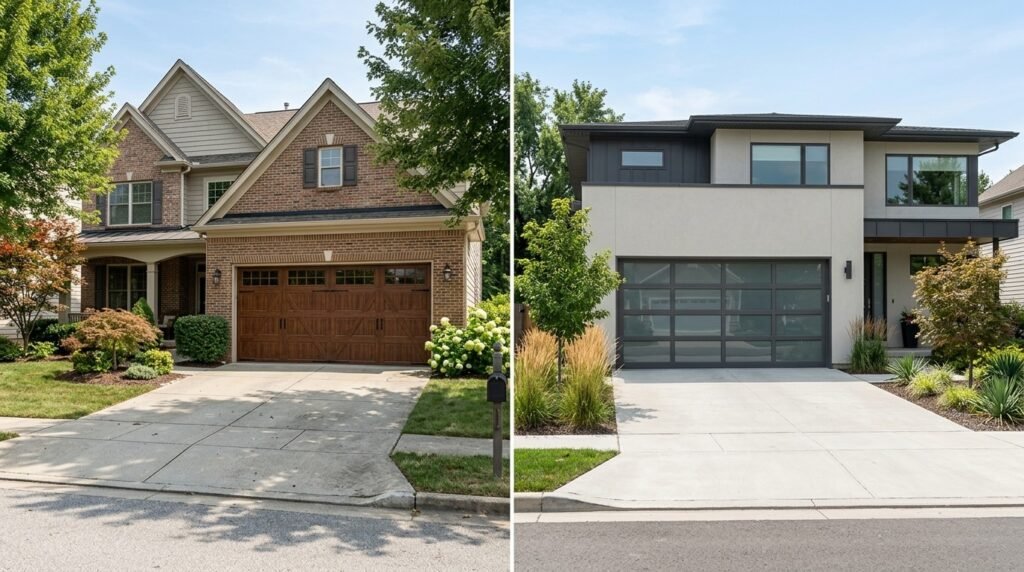
If you’re mainly thinking about garage door curb appeal, steel gives you more traditional choices, while aluminum is especially popular for clean, modern designs.
When Steel Looks Better
Steel works really well when you want a classic or traditional appearance. It’s available in a huge range of panel styles, colors, finishes, and textures, so you’re not limited to a plain metal look.
For example, wood-look steel garage doors can give you the appearance of real wood without the same level of upkeep. That’s a pretty useful option if you like the warm look of wood but don’t want to deal with regular staining and refinishing.
Steel is a good fit for:
- Traditional homes with classic exterior details
- Carriage-house styles with decorative hardware and raised panels
- Wood-look designs that add warmth without using real wood
- Classic architecture where a more familiar garage door style looks natural
You can also find both simple and decorative traditional garage doors made from steel. So even if your home isn’t old-fashioned, there’s usually a steel design that can fit without looking out of place.
When Aluminum Looks Better
Aluminum is where things get more interesting if you like a clean, modern look.
Modern garage doors often use aluminum frames combined with large glass panels. This creates the sleek appearance you see on many newer homes and contemporary buildings.
Aluminum tends to work especially well with:
- Modern homes
- Contemporary architecture
- Full-view glass garage doors
- Minimalist designs
- Large windows and open exterior layouts
Full-view garage doors are one of the biggest visual advantages of aluminum. The combination of slim frames and glass can bring natural light into the garage while giving the exterior a much more contemporary feel.
You can choose different types of glass depending on how much privacy and light you want. Clear, frosted, tinted, and other options can change the entire appearance of the door.
Of course, those large glass garage doors aren’t perfect for everyone. They can cost more, add weight depending on the glass used, and may not provide the same privacy as a solid-panel door. But if curb appeal is your main goal, they can make a big difference.
Steel vs. Aluminum for Curb Appeal
Here’s the simple way I’d look at it:
Steel: Better for traditional, classic, carriage-house, and wood-inspired styles.
Aluminum: Better for modern, contemporary, minimalist, and full-view designs.
That doesn’t mean steel can’t look modern or aluminum can’t work on a traditional home. Both materials offer enough design flexibility to cross those lines.
The best choice is the one that works with your home’s architecture, exterior colors, windows, roofline, and overall style. A garage door takes up a lot of visual space, so matching it to the house usually matters more than simply choosing the “prettiest” material.
Aluminum + Glass vs. Steel Garage Doors
If you’re comparing aluminum glass garage doors with a solid steel door, you’re really comparing two different design approaches. Aluminum frames with glass focus more on appearance, natural light, and a modern feel, while steel usually gives you a more solid, private, and traditional look.
This is why full-view garage doors have become popular on modern homes. They can completely change the look of a garage, but there are a few practical things to think about before choosing one.
Natural Light and Appearance
The biggest advantage of a glass garage door is natural light.
Instead of having a dark, closed-off garage, glass panels can let daylight in and make the space feel brighter. An aluminum frame also allows manufacturers to create slim, clean lines that work especially well with contemporary architecture.
A modern garage door with large glass sections can look great when the garage is used as:
- A workshop
- Home gym
- Studio
- Hobby room
- Entertainment space
- Extra living or working area
Steel doors can have windows too, of course. But a full-view design gives you much more glass and a very different overall appearance.
Privacy
Here’s where steel usually has the advantage.
Clear glass provides visibility from outside, which isn’t ideal if your garage contains expensive tools, equipment, bikes, or vehicles. You may also simply prefer not having people see inside.
With aluminum glass garage doors, you can choose options such as:
- Frosted glass
- Tinted glass
- Opaque glass
- Satin or privacy glass
- Darker glazing
These can reduce visibility while still keeping some of the visual appeal of glass.
If privacy is a major concern, a solid steel door is usually the simpler choice.
Heat Gain Can Be a Real Issue
Large glass areas can also affect garage temperature.
Direct sunlight passing through clear glass can increase heat gain, especially when the garage faces strong afternoon sun. In a hot climate, this is something you shouldn’t ignore.
The type of glass matters. Depending on the door, options such as tinted, insulated, or low-emissivity glazing may help control heat transfer.
Steel doors with proper insulation generally have an easier time controlling temperature because the door can use a solid insulated panel system.
Still, don’t assume every steel door is energy efficient. An uninsulated steel door can perform poorly too. The insulation, R-value, seals, and overall panel construction matter.
Glass Type Matters
Not all glass garage doors perform the same way.
When comparing a glass garage door with a steel door, look at:
- Clear glass: Maximum visibility and daylight, but little privacy.
- Tinted glass: Reduces visibility and can help control sunlight.
- Frosted or opaque glass: Better privacy while still allowing light through.
- Insulated glass: Can provide better thermal performance than basic single-pane glass.
- Low-E glass: Can help reduce unwanted heat transfer depending on the glazing system.
The right choice depends on how you use your garage and how much sunlight the door receives.
Maintenance and Cleaning
Glass adds another cleaning job that you don’t have with a completely solid steel panel.
Dust, fingerprints, water spots, and other marks can be more noticeable on large glass sections. The aluminum frame also needs occasional cleaning, especially in areas exposed to salt or heavy moisture.
Steel doors need maintenance too, mainly around the paint or protective coating. Scratches and chips should be dealt with before moisture reaches the underlying steel.
So neither option is maintenance-free. The difference is mostly what you’re maintaining.
What About Replacement Cost?
This part can vary a lot.
A basic steel garage door may be relatively affordable, while a premium steel door with insulation, windows, decorative hardware, and custom finishes can cost much more.
Likewise, an aluminum and glass system can range from fairly simple to very expensive depending on:
- Door size
- Frame construction
- Glass type
- Glass thickness
- Insulation
- Custom finishes
- Hardware
- Design
- Installation
Which One Makes More Sense?
Choose an aluminum glass garage door if your priorities are:
- Modern appearance
- Large amounts of natural light
- Full-view design
- Contemporary architecture
- Custom glass options
A steel door may make more sense if you care more about:
- Privacy
- Solid construction
- Insulation options
- Impact resistance
- Traditional styling
- Lower-cost basic designs
Which One Is Easier to Repair?
Neither material is completely trouble-free, but the type of damage you get can be quite different. Steel usually handles small impacts better, while aluminum is more likely to bend or dent. The good news is that many garage door problems can be repaired without replacing the entire door.
The actual garage door repair cost depends on the size of the damage, panel design, labor, hardware, and whether a repair is possible or a full panel needs to be replaced.
When a Panel Gets Dented
Small dents are common, especially on garage doors that face vehicles, bikes, tools, or bad weather.
With steel, a minor dent may sometimes be repaired if the panel is still structurally sound. A technician can assess the damage and determine whether steel panel repair makes sense.
Aluminum is softer, so aluminum dent repair can be more difficult. A deep dent may stretch or deform the metal, making it harder to restore the panel to its original shape.
If the damage is severe, garage door panel replacement may be the better option for either material.
When Steel Gets Scratched
A scratch on a steel garage door isn’t just a cosmetic issue.
If the scratch removes the protective coating and exposes the underlying steel, moisture can eventually lead to rust. That’s why it’s worth dealing with damaged paint or coating before the problem spreads.
For minor scratches, the affected area may be cleaned and touched up. Larger areas of damage may need more extensive refinishing.
When Aluminum Bends
Aluminum’s lighter weight is useful, but the metal is also softer than steel.
A strong impact can leave a deep dent or cause the panel to bend. Once the aluminum has been badly deformed, trying to straighten it repeatedly can make the damage worse.
This is where garage door panel replacement may be more practical than attempting a complicated repair.
When Corrosion Appears
Steel and aluminum don’t react to corrosion in exactly the same way.
Steel can develop rust when its protective coating is damaged and moisture reaches the metal underneath. Small areas may be treated and refinished before the corrosion spreads.
Aluminum doesn’t develop iron rust, but it can still experience corrosion or surface oxidation. Salt air, moisture, and damaged finishes can contribute to surface problems over time.
Regular cleaning is especially helpful in coastal areas. Removing salt and grime before they sit on the door can reduce corrosion-related problems.
When Does Panel Replacement Make More Sense?
Sometimes repairing a damaged panel just isn’t worth it.
A technician may recommend garage door panel replacement when:
- The panel is badly bent
- Damage affects the panel’s structure
- Several sections are damaged
- Corrosion has spread extensively
- The panel no longer moves correctly
- Matching the original finish isn’t practical
- Repair would cost close to a replacement panel
One important thing: replacing a single panel isn’t always as simple as ordering “one steel panel” or “one aluminum panel.” Garage doors come in different sizes, profiles, designs, insulation levels, and finishes. An exact match may not always be available, especially with older doors.
What About Garage Door Repair Cost?
There’s no useful one-size-fits-all price for garage door repair cost because the job can range from a small cosmetic fix to replacing an entire panel.
Your final cost may depend on:
- Type of material
- Panel size
- Damage severity
- Door design
- Insulation
- Availability of replacement parts
- Labor
- Hardware that also needs repair
For a small dent or scratch, repairing the existing panel may be cheaper than replacement. But if the panel is badly bent or structurally damaged, spending money on repeated repairs doesn’t always make sense.
Which Material Is Easier to Repair?
For minor impact damage, steel often has the edge because it’s harder and more resistant to dents.
Aluminum can be more challenging when it gets deeply bent, although its corrosion resistance can reduce some long-term surface problems.
So, in simple terms:
Steel → better resistance to dents and some minor panel damage
Aluminum → easier to keep free from rust, but dents and bends can be harder to fix
The smartest move is to repair small problems early. A damaged panel, loose hardware, or exposed metal might seem minor today, but ignoring it can turn a cheap fix into a much bigger garage door repair later.
Steel or Aluminum Garage Door: Which One Should You Choose?
By now, the choice should be a lot clearer. There’s no single material that’s best for every home. Your climate, garage use, budget, security needs, and preferred style all change the answer.
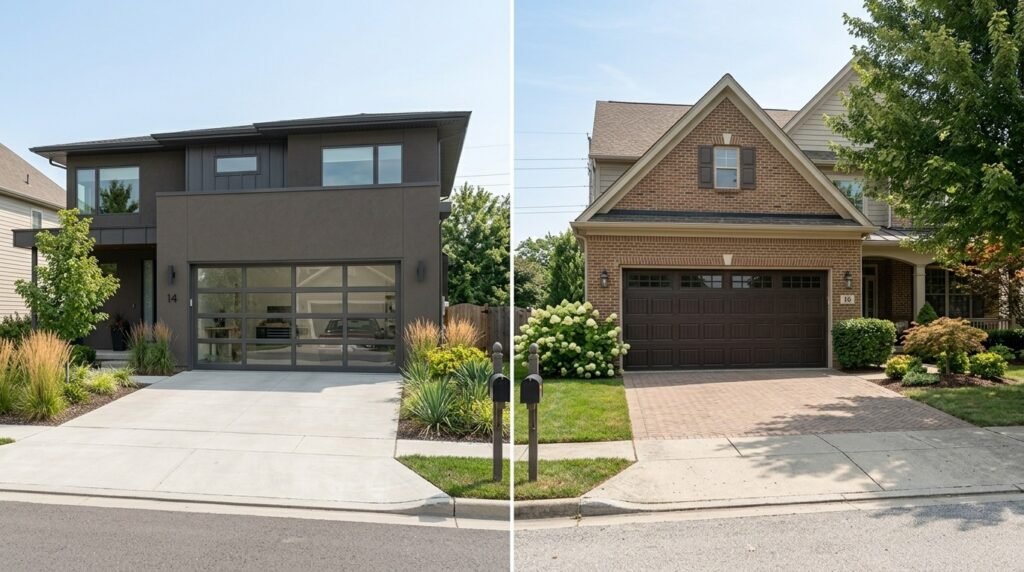
Here’s the practical way I’d make the decision.
Choose Steel If You:
Prioritize strength: Steel is usually the better pick when you want a tough door that can handle regular use and physical impacts.
Want better dent resistance: Steel is harder than aluminum, so it generally handles everyday bumps better.
Want stronger security: If garage door security is high on your list, steel’s stronger panels and impact resistance give it an advantage.
Need insulation options: If your garage gets very hot or cold, steel doors are available with well-insulated panel systems, including options using polyurethane or polystyrene insulation.
Have heavy daily use: For a busy household where the garage door opens and closes many times a day, a well-built steel door can be a solid long-term choice.
Want long-term value: A quality steel door can offer a good balance of strength, durability, insulation options, and price.
Choose Aluminum If You:
Live near the coast: If your home is exposed to salt air, aluminum’s corrosion resistance can be a major advantage.
Have humid conditions: Aluminum doesn’t develop iron rust like steel, making it useful in areas where moisture is a constant concern.
Want lightweight construction: Aluminum is much lighter than steel, which can make the door easier to handle and can be useful for certain large or specialized designs.
Prefer modern designs: If you like clean lines and modern garage doors, aluminum gives you plenty of contemporary options.
Want glass or full-view panels: Aluminum is a popular choice for full-view garage doors with large glass sections and slim frames.
Prioritize corrosion resistance: For coastal or damp environments, reducing rust concerns may be more important to you than having the toughest possible panel.
Choose Either If:
Your climate is moderate: If you don’t deal with extreme heat, severe cold, high humidity, or heavy salt exposure, both materials can work well.
Design is the main factor: Steel and aluminum both offer plenty of styles, colors, finishes, windows, and custom options. Your home’s architecture can help make the decision.
Your budget allows either: Don’t look only at the starting price. Compare the complete cost, including installation, insulation, windows, hardware, maintenance, and possible repairs.
Both can meet your insulation needs: Remember, the metal itself isn’t what makes a garage door energy efficient. R-value, insulation type, panel construction, weather seals, windows, and installation all matter.
A Quick Decision Guide
| If your top priority is… | Better choice |
| Strength | Steel |
| Dent resistance | Steel |
| Security | Steel |
| Insulation options | Steel |
| Heavy everyday use | Steel |
| Coastal conditions | Aluminum |
| Humid environment | Aluminum |
| Lightweight construction | Aluminum |
| Modern appearance | Aluminum |
| Full-view glass | Aluminum |
| Corrosion resistance | Aluminum |
| Traditional appearance | Steel |
The one thing I’d avoid is choosing based on the material name alone. A cheap, poorly built steel door isn’t automatically better than a well-engineered aluminum door. Look at the panel construction, insulation, hardware, wind rating, installation quality, and warranty too.
For most homeowners who want a strong, practical, and well-insulated door, steel is the safer all-around choice. If you’re dealing with coastal moisture or want a lightweight, modern, glass-heavy design, aluminum can make much more sense.
Quick Decision Guide
Still stuck between the two? Here’s the short version. Your best choice depends on what you actually need from the garage door, not just which material sounds better.
Choose Steel → Strength + Durability + Insulation
Go with steel if you want a strong, durable door that can handle regular use and gives you plenty of insulation options.
It’s a good fit when you care about:
- Better dent resistance
- Stronger panel construction
- Garage door security
- Heavy daily use
- Insulated door options
- Long-term durability
- Traditional or wood-look designs
For many homeowners, steel is the easiest all-around choice.
Choose Aluminum → Lightweight + Corrosion Resistance + Modern Design
Go with aluminum if you want a lightweight garage door, strong corrosion resistance, or a more modern appearance.
It’s especially useful when you want:
- Lightweight construction
- Less concern about rust
- Modern garage doors
- Full-view glass panels
- Large windows
- Minimalist designs
- Easier operation
Coastal Home → Aluminum Deserves Strong Consideration
If you live near the coast, aluminum deserves strong consideration.
Salt air and moisture can speed up corrosion on steel, especially when its protective coating gets damaged. Aluminum doesn’t develop iron rust in the same way and naturally has good corrosion resistance.
That doesn’t mean aluminum is maintenance-free. Regular cleaning is still important, especially when salt deposits build up on the door and hardware.
Heavily Used Garage → Steel
If your garage door gets opened and closed constantly, steel is usually the more practical choice.
Its strength and better dent resistance make it well suited to busy garages where the door deals with everyday bumps, impacts, and wear and tear.
Just make sure the springs, opener, tracks, rollers, and other hardware are properly matched to the door.
Garage Converted Into a Workspace → Prioritize Insulation
If you’ve turned your garage into a workspace, home gym, hobby room, or living area, don’t choose based on steel vs. aluminum alone.
Your priority should be insulation and thermal performance.
Look at:
- R-value
- Insulation type
- Insulated panel construction
- Weather seals
- Door installation
- Window performance
- Air leakage
Frequently Asked Questions
Is steel or aluminum better for a garage door?
It depends on what matters most to you. Steel garage doors are usually better for strength, durability, security, dent resistance, and insulation options. Aluminum garage doors are lighter, more corrosion-resistant, and often better suited to modern or full-view designs. For most homeowners, steel is the better all-around option, while aluminum makes more sense for coastal homes or modern designs.
What are the disadvantages of aluminum garage doors?
The biggest aluminum garage door cons are that aluminum is softer than steel, so it can dent or bend more easily. Basic aluminum doors may also provide less insulation, and full-view designs with specialty glass can become expensive. Large glass panels can also create privacy and heat-gain concerns.
Which garage door material lasts the longest?
There’s no fixed lifespan based only on material. Steel garage door lifespan can be excellent when the door is well built, protected from corrosion, properly installed, and maintained. Aluminum can also provide a long service life, especially in humid or coastal environments where steel may face more corrosion. Construction quality and maintenance matter just as much as the material.
Are aluminum garage doors good for coastal areas?
Yes. Aluminum is often a strong choice for coastal homes because of its natural corrosion resistance. Salt air can be hard on steel, particularly where the protective coating has been scratched or damaged. Aluminum can still experience surface oxidation or corrosion, though, so regular cleaning is important.
Do aluminum garage doors dent easily?
They can. Aluminum is softer than steel, so aluminum garage door dents are more likely after impacts from vehicles, hail, tools, or other objects. A minor dent may not affect operation, but a deep bend can require professional repair or panel replacement.
Can a steel garage door rust?
Yes. Steel garage doors can rust when moisture reaches exposed steel, particularly where the protective coating has been damaged. Many doors use galvanized steel and protective finishes to slow corrosion, but those coatings aren’t invincible. Cleaning scratches and chips early is a simple part of rust prevention.
Which is better for garage door insulation?
The better-insulated door isn’t determined by the outer metal alone. Insulated steel garage doors are widely available with insulation cores such as polyurethane or polystyrene and can provide strong thermal performance. Aluminum doors can also be insulated, so compare the R-value, panel construction, insulation core, weather seals, and windows rather than looking only at the material.
Does garage door material affect the opener?
It can. Steel doors are generally heavier than aluminum doors, but a properly balanced door shouldn’t make the opener do all the lifting. The torsion springs or other counterbalance system carry much of the door’s weight. What really matters is that the opener is correctly rated for the door and the complete system is properly balanced.
Are steel garage doors more secure?
Generally, yes. Steel has stronger panels and better impact resistance, which can make forced entry more difficult. But garage door security also depends on the opener, locking system, reinforcement, windows, tracks, hardware, installation, and condition of the door. Material alone doesn’t make a garage door completely secure.
Which garage door material is best for hot climates?
Either material can work, but don’t choose based on metal alone. In a hot climate, focus on insulation, R-value, heat transfer, weather sealing, and solar heat exposure. A properly insulated steel door is often a strong choice, while an insulated aluminum door can also perform well when properly designed.
Which garage door material is strongest?
Steel is generally the stronger material. It has better steel garage door strength, impact resistance, and dent resistance than aluminum. However, the actual strength of a garage door also depends on its gauge, panel construction, reinforcement, hardware, and installation. A material label by itself doesn’t tell the whole story.
Is aluminum more expensive than steel for garage doors?
It can be, but there’s no universal price difference. Aluminum vs steel garage door cost depends on the door size, gauge, insulation, windows, glass, design, hardware, brand, and installation. A basic steel door may cost less, while a custom aluminum full-view door with specialty glass can cost considerably more. Compare the total cost of ownership, not just the initial purchase price.
Final Verdict
When choosing between the two, there isn’t one material that wins for every home. Steel is usually the better fit if you care most about strength, durability, security, and flexible insulation options. Aluminum makes more sense when low weight, corrosion resistance, and a clean modern look are higher on your list.
So, Aluminum vs Steel Garage Doors really comes down to how you plan to use the garage. Think about your climate, daily use, insulation needs, budget, and the style of your home before making the final call.
The best choice isn’t simply the stronger metal. It’s the material and door construction that match your climate, garage use, insulation needs, budget, and design.