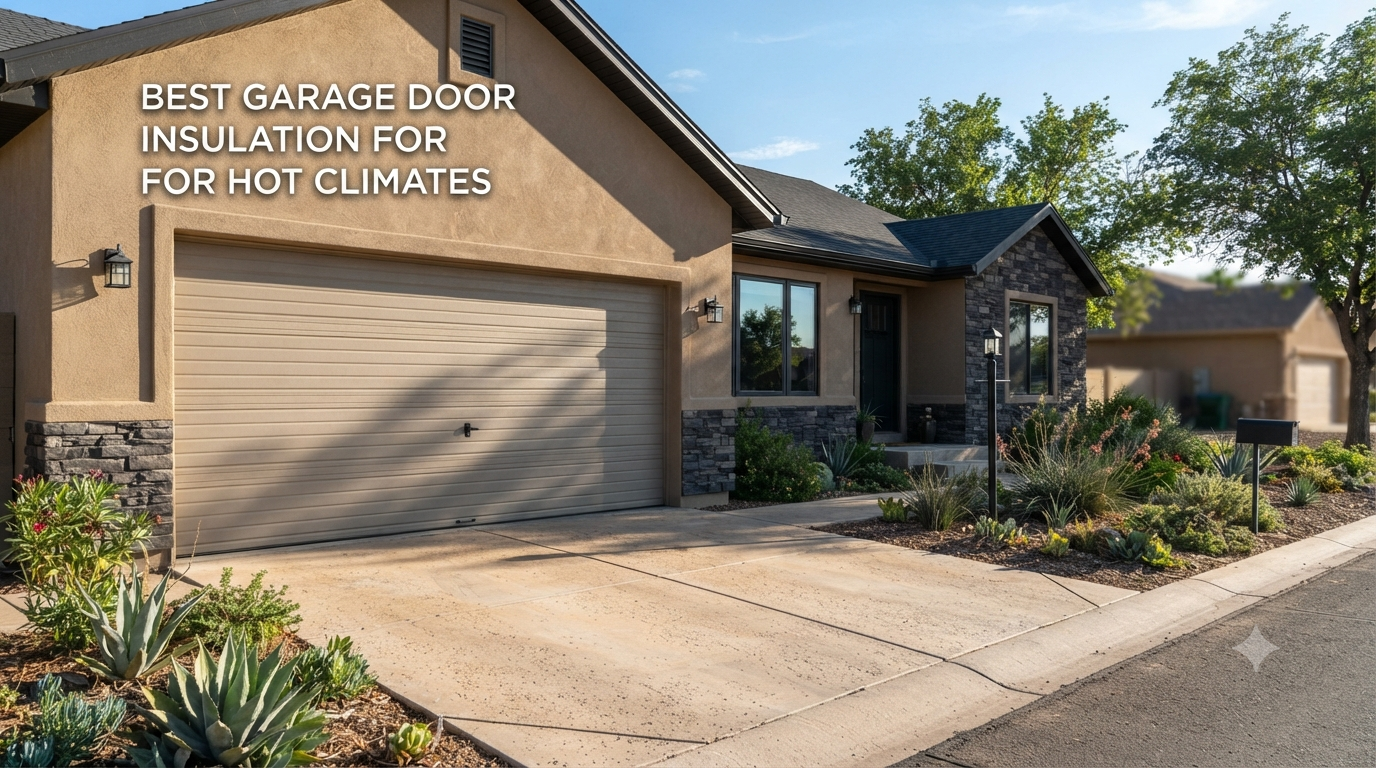
If you’re looking for the best garage door insulation for hot climates, polyurethane foam is usually the best all-around option because it offers strong thermal resistance and helps slow heat transfer. For garages that get intense direct sunlight, reflective insulation can also help by reducing solar heat. The right choice depends on your garage type, sun exposure, door construction, budget, and the R-value you need. Good insulation can help keep your garage more comfortable during hot weather and improve overall temperature control.
What Makes Garage Door Insulation Good for Hot Climates?
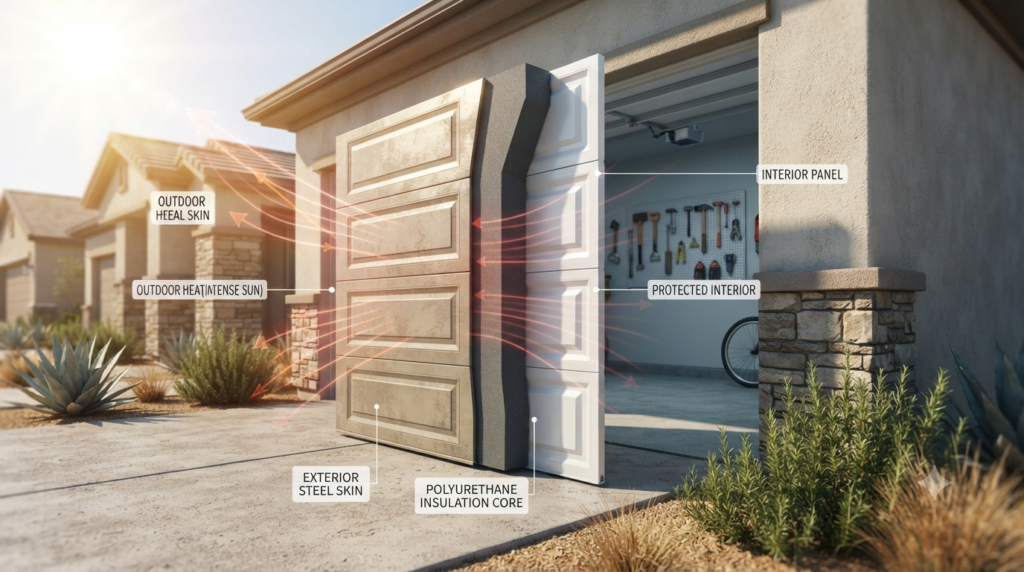
Good garage door insulation should do more than simply have a high R-value. In a hot climate, you want it to slow heat transfer, limit heat gain, and help with temperature control inside the garage. Good thermal resistance improves energy efficiency, but the door’s exposure to solar heat matters too.
R-Value vs. Radiant Heat
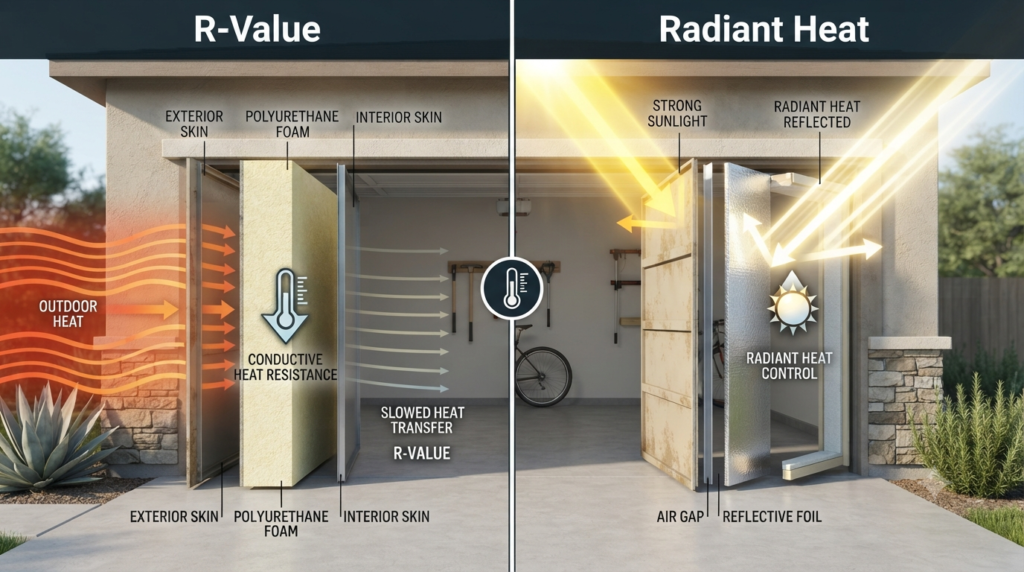
R-value tells you how well insulation resists heat moving through it. A higher R-value generally means better thermal resistance. But direct sunlight creates radiant heat, which works a little differently.
This is where a radiant barrier or reflective foil insulation can help. Instead of mainly slowing heat through the door, reflective materials bounce much of the incoming solar energy away. For a garage door that gets strong afternoon sun, using the right combination of insulation and radiant-heat control can make a noticeable difference.
4 Best Garage Door Insulation Materials for Hot Weather
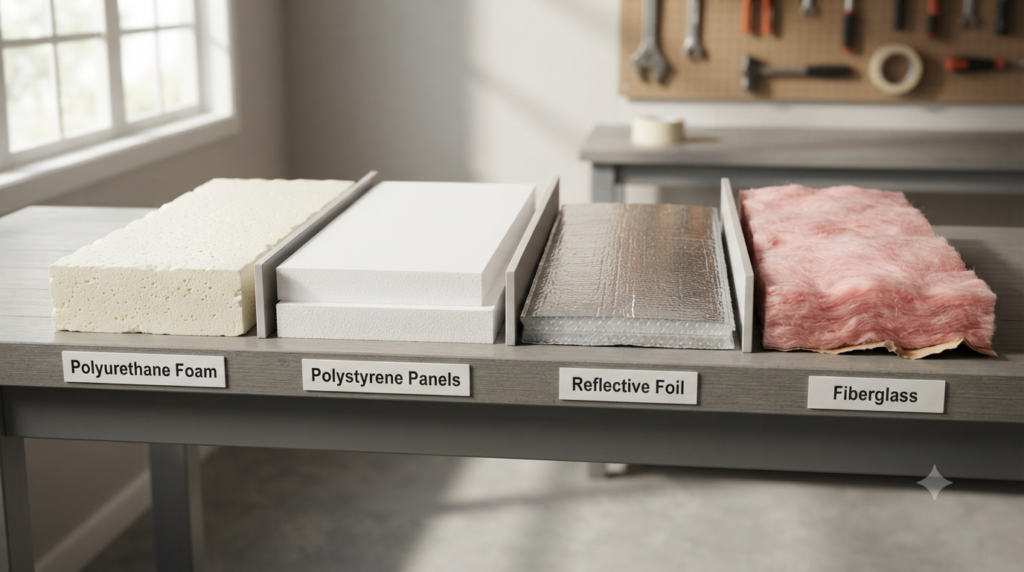
The best insulation depends on how hot your garage gets, how much sun hits the door, and whether you’re upgrading an old door or buying a new one. Here’s a quick look at the four common garage door insulation materials worth considering:
| Material | Best For | Main Advantage |
| Polyurethane Foam | Maximum thermal performance | High R-value and strong door |
| Polystyrene Panels | Budget-friendly upgrades | Simple and lightweight |
| Reflective Foil | Direct sun and radiant heat | Reflects solar energy |
| Fiberglass | Certain DIY projects | Affordable and helps with sound |
Polyurethane Foam
Polyurethane foam is a top choice when you want strong thermal insulation. It fills the space inside an insulated garage door, leaving fewer gaps where heat can move through. It also offers a high R-value and adds stiffness to the door. Spray foam can work for some applications, but it needs careful installation.
Polystyrene Panels
Polystyrene panels are a practical option for an existing door. These rigid foam boards are lightweight, easy to cut, and fit many standard panel designs. They’re also useful for DIY insulation when you want to improve an older garage door without replacing the whole thing. Many garage door insulation panels use this type of foam.
Reflective Foil and Radiant Barriers
Reflective foil insulation is worth considering when your garage door gets strong direct sunlight. A radiant barrier reflects radiant heat rather than simply slowing heat through the material. That can be useful in a hot climate, especially when solar heat is a bigger problem than heat moving through the door itself.
Fiberglass Insulation
Fiberglass insulation can be used for some garage insulation projects, especially where sound control and low cost matter. It can provide decent thermal performance, but moisture resistance depends on how it’s installed and protected. For a garage door, it’s usually less convenient than rigid foam or factory-filled insulation, so fit and safety should be checked first.
How to Choose the Right Insulation for Your Garage
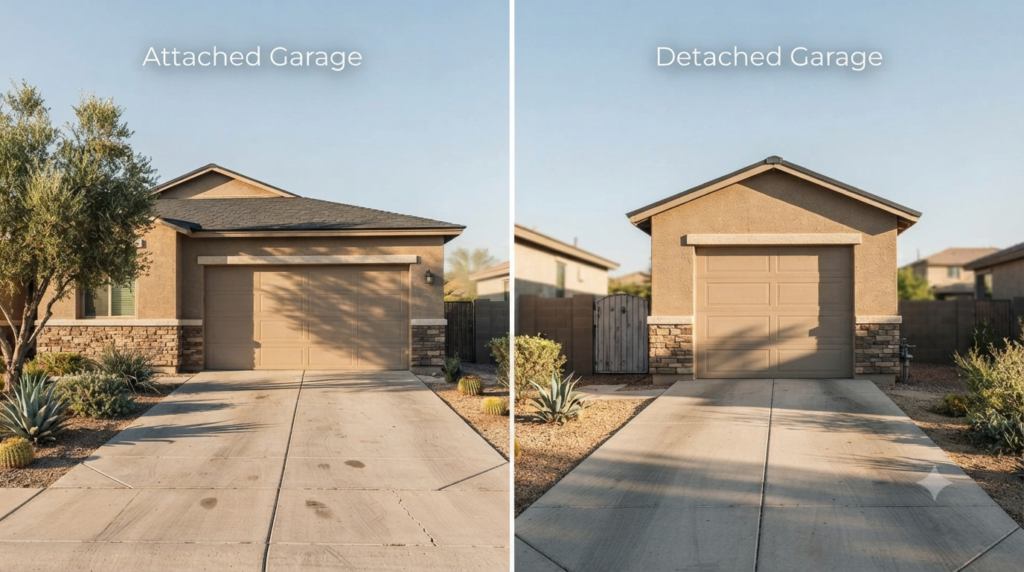
Choosing the best garage door insulation depends on a few simple things: where the garage is located, how much sun exposure the door gets, and how you use the space. You don’t always need the most expensive insulation. The right option should match your garage, door, and budget.
Attached vs. Detached Garage
An attached garage usually needs better insulation because heat can move through shared walls into nearby rooms. A detached garage may not need the same level of insulation, especially if it’s mainly used for parking or storage. If you use it as a workshop or living space, stronger insulation makes more sense.
How Much Sun Does the Door Get?
A garage door facing strong direct sunlight can absorb a lot of heat during the day. In this case, sun exposure should be one of your first considerations. Reflective insulation, a lighter door color, and good air sealing can help reduce the heat buildup.
R-Value, Door Weight, and Budget
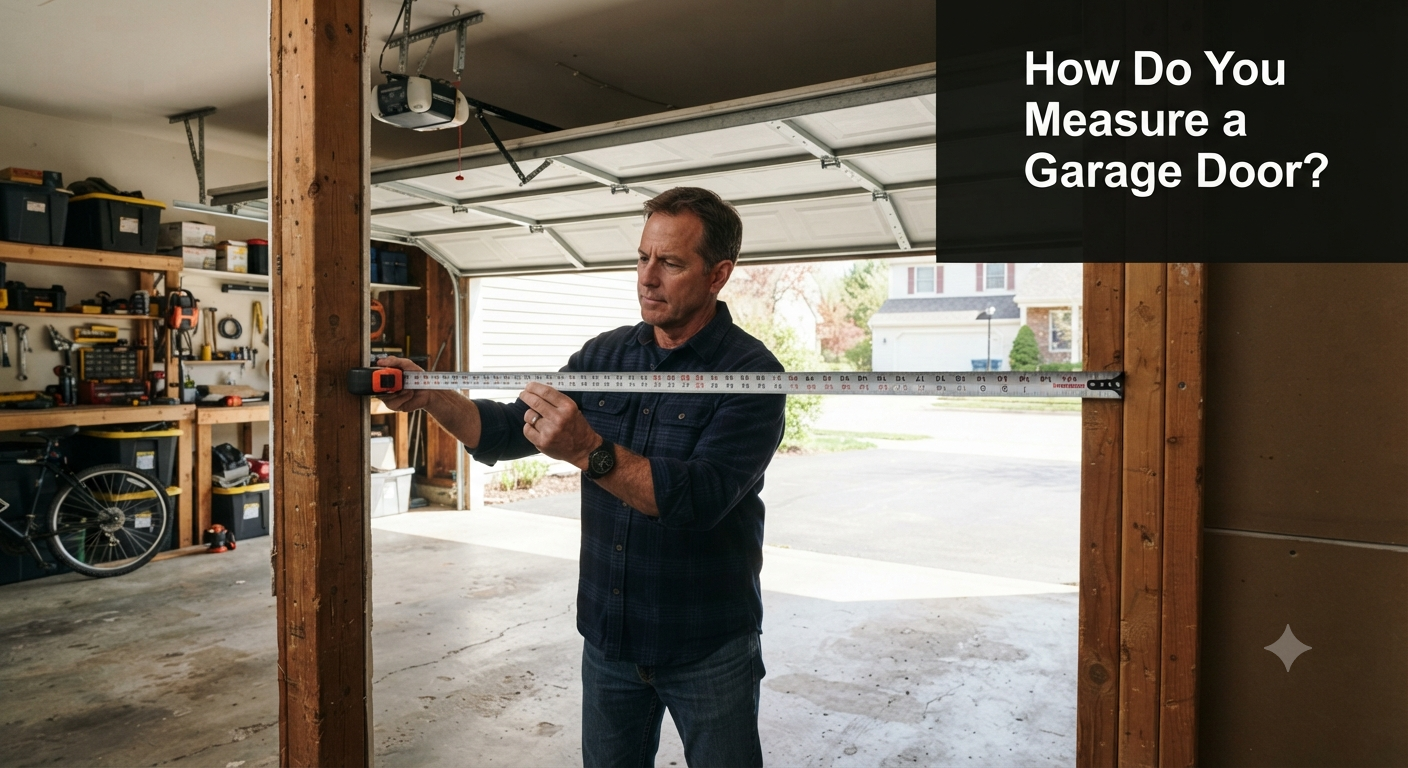
A higher R-value isn’t automatically the best choice for every door. Check the insulation thickness, total door weight, and your budget before buying. Also check door compatibility, since some insulation panels or kits won’t fit every garage door design. A good setup is one that improves insulation without making the door too heavy or difficult to operate.
Can Insulation Actually Keep a Garage Cooler?
Yes, but don’t expect insulation to cool the garage like an air conditioner. Good insulation helps reduce garage heat by slowing heat transfer through the door. This can keep the garage temperature more stable, especially when the door gets strong afternoon sun.
Insulation can also help reduce the HVAC load in an attached garage by limiting heat moving toward nearby rooms. That may support energy savings over time. Still, insulation works best when you also seal air leaks around the door.
Check the bottom seal, side weatherstripping, and other gaps. In very hot weather, sensible garage ventilation can help remove trapped hot air too. Think of it this way: insulation slows the heat down, while sealing and ventilation deal with the other ways heat gets inside.
Garage Door Insulation vs. Replacing the Door
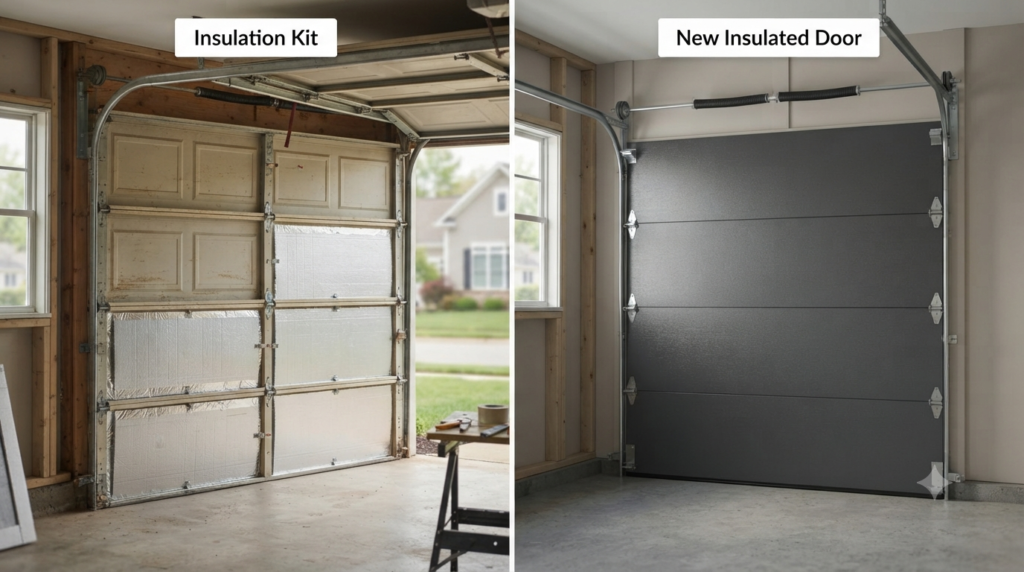
If your existing garage door is still in good shape, adding an insulation kit can be a cheaper way to improve its thermal performance. But if the door is badly damaged, warped, or has major air leaks, garage door replacement may make more sense.
When an Insulation Kit Makes Sense
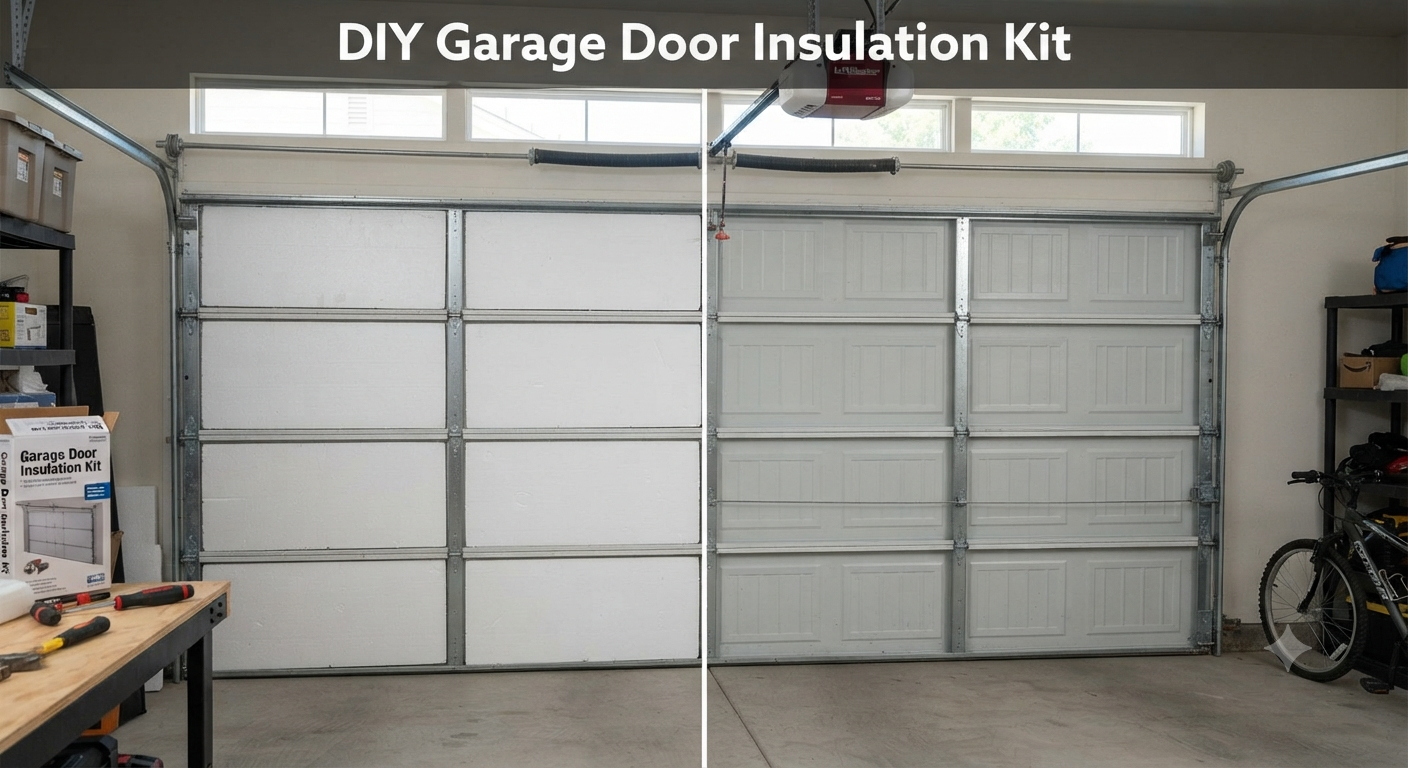
An insulation kit is worth considering when the door works properly but has little or no insulation. It’s especially useful if you want a simple upgrade without paying for a new insulated garage door. Just make sure the kit fits your door and doesn’t add too much weight.
When a New Insulated Door Is Better
Consider replacing a damaged garage door when it has serious panel damage, poor seals, or an outdated design. A new insulated door can give you better insulation, stronger construction, and a better fit from the start. In some cases, replacing the door is simply more practical than trying to fix everything.
Don’t Ignore Air Sealing and Garage Ventilation
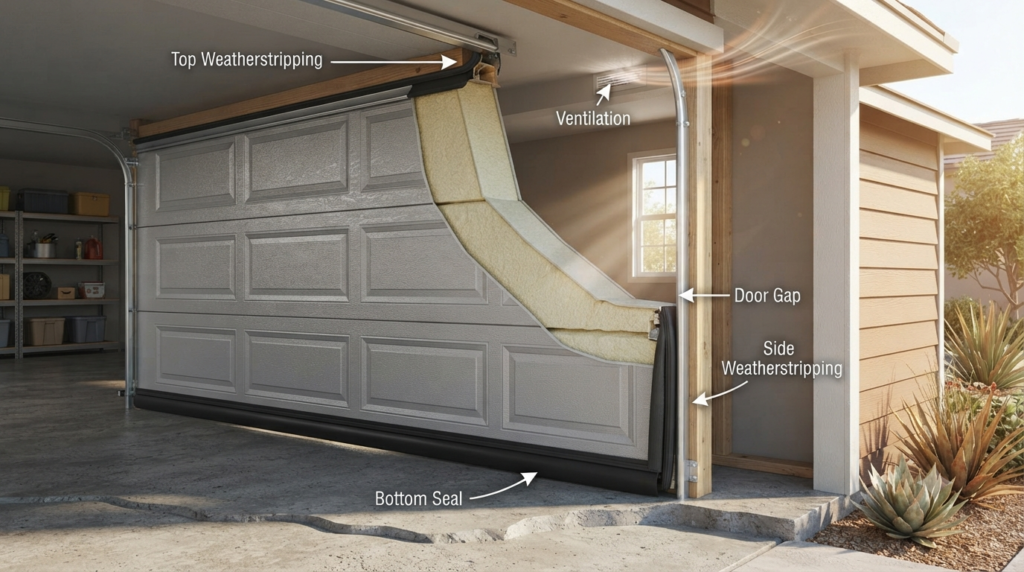
Good insulation won’t do much if hot air is constantly getting through garage door gaps. Check the bottom seal, side seals, and top weatherstripping for cracks or gaps. Proper air sealing helps the insulation work as intended.
Also, remember that insulation and garage ventilation do different jobs. Ventilation can help remove trapped hot air, while insulation slows heat transfer. For better overall results, consider garage wall insulation and garage ceiling insulation too, especially if the garage gets extremely hot.
Best Garage Door Insulation for Different Situations
There isn’t one insulation setup that fits every garage. Your attached garage, sun exposure, how you use the space, and the condition of the door all matter. Here’s a simple way to narrow it down:
| Situation | Best Approach |
| Attached garage | Higher-performance insulated door |
| Detached garage | Moderate insulation may be enough |
| Direct sunlight | Reflective or radiant heat control |
| DIY upgrade | Polystyrene or a suitable insulation kit |
| Workshop or home gym | Better insulation + air sealing |
| Old or damaged door | Consider garage door replacement |
For DIY garage door insulation, always check the door’s weight limit and make sure the kit fits the panel design. A garage used as a workshop or home gym usually deserves more insulation than one used only for parking.
Frequently Asked Questions
What type of garage door insulation is best for hot climates?
Polyurethane foam is usually the strongest all-around choice because it offers a high R-value and slows heat transfer well. For a door exposed to strong direct sun, reflective foil or a radiant barrier can also help reduce solar heat. The best option depends on the door, budget, and garage setup.
Does garage door insulation keep a garage cooler?
Yes, garage door insulation can help keep the garage cooler by slowing heat transfer through the door. It won’t cool the space like an air conditioner, but it can reduce heat buildup and help keep the garage temperature more stable during hot weather.
What R-value is best for a garage door?
For a hot-climate garage, a moderate to high R-value is often a good starting point, especially for an attached garage. However, don’t choose insulation based on R-value alone. Sun exposure, door construction, air sealing, and radiant heat also affect how well the garage handles summer heat.
Do garage door insulation kits really work?
Yes, a quality garage door insulation kit can reduce heat transfer and make an uninsulated door perform better. Kits are most useful when the existing door is still in good condition. Make sure the insulation fits properly and doesn’t add more weight than the garage door system can handle.
Is polyurethane better than polystyrene for garage doors?
Polyurethane generally provides better thermal performance and a higher R-value than polystyrene. It also adds stiffness to the door. Polystyrene panels, however, cost less and can be a practical choice for DIY upgrades. So polyurethane wins for performance, while polystyrene can make more sense on a tighter budget.
Can I insulate an existing garage door?
Yes, you can insulate many existing garage doors with foam panels, reflective insulation, or a suitable insulation kit. Before starting, check the door’s panel design, weight limit, and available space. If the door is badly damaged or already has major sealing problems, replacing it may be the better option.
Final Verdict
If you’re choosing the best garage door insulation for hot climates, polyurethane is the strongest overall pick when you want high thermal performance. Reflective insulation is a smart choice for doors that get strong direct sun, while polystyrene works well for budget-friendly DIY upgrades. Fiberglass can also make sense in certain applications.
But don’t focus only on the highest R-value. Air sealing, weatherstripping, wall and ceiling insulation, and proper ventilation all play a part in keeping a garage more comfortable. The best setup is the one that matches your door, climate, sun exposure, and how you actually use the space.
If you also deal with freezing temperatures during winter, check out our guide on garage door insulation for cold weather to see how insulation choices change in colder climates.