If your garage gets freezing in winter, the right garage door insulation for cold weather can make a noticeable difference. Polyurethane foam is usually the best choice for strong thermal performance, while polystyrene is a more affordable option. For an existing door, rigid foam or a garage door insulation kit can be a practical upgrade. But don’t look at insulation alone. A higher R-value, good weatherstripping, and tight seals all work together to keep cold air out and reduce heat loss.
What Makes Garage Door Insulation Good for Cold Weather?
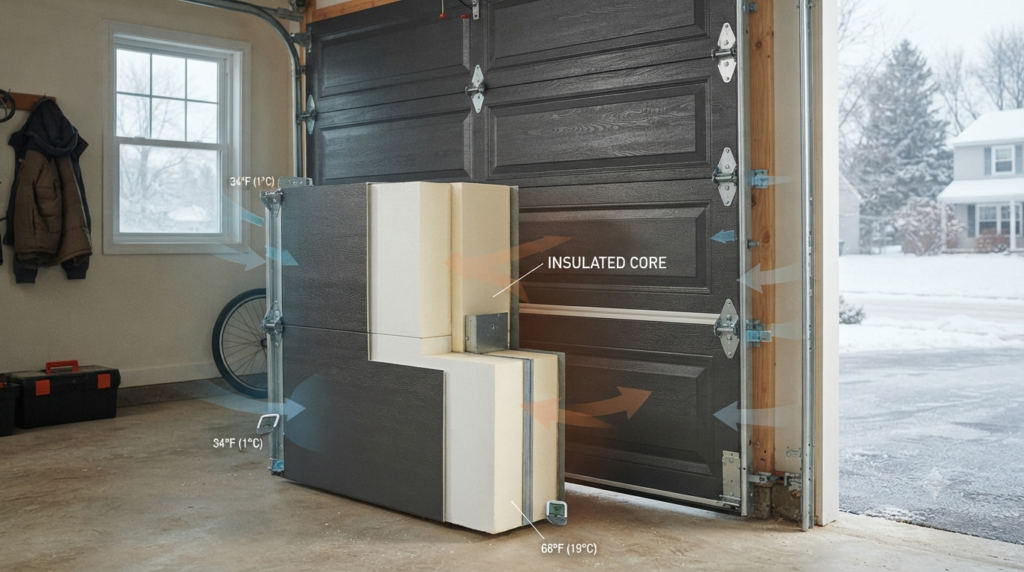
Best garage door insulation does more than make the door feel thicker. Its main job is to slow heat transfer between the warm garage and the cold air outside. Materials with better thermal resistance can reduce heat loss, which helps the garage stay more comfortable during winter.
This matters even more with an attached garage because cold air can affect the rooms next to it. Better insulation can also improve energy efficiency by reducing how hard your heating system has to work.
But there’s a catch: insulation can’t stop air leaks. If cold air is coming through the bottom, sides, or top of the door, even good insulation won’t perform as well as it should. For better cold-weather performance, you need both solid insulation and tight weather seals.
Best Insulation Materials for Cold Weather
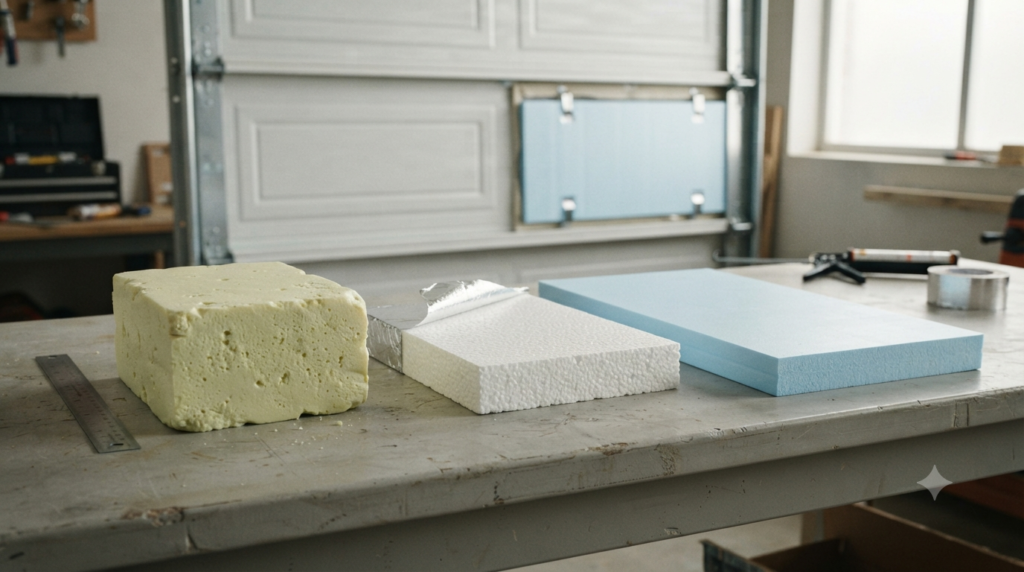
Not every insulation material works the same way in a cold climate. Polyurethane foam usually gives the strongest thermal performance, while polystyrene and rigid foam can make more sense when you’re trying to keep the cost down.
| Insulation | Best for | Cold-weather performance | Cost |
| Polyurethane | Best overall | Excellent | $$$ |
| Polystyrene | Budget option | Good | $$ |
| Rigid foam | Existing doors | Good | $$ |
| Fiberglass | Certain retrofits | Good | $$ |
| Reflective insulation | Mild winters | Moderate | $ |
Polyurethane Foam
Polyurethane garage door insulation is a strong pick when winter temperatures are a real concern. The foam is injected into the door’s insulation core, where it expands and fills much of the space between the panels. This gives it good thermal resistance and can provide one of the highest R-value ratings available in residential garage doors.
It’s most common in a factory-insulated door, especially models with multiple layers. You also get a stronger, quieter door, which is a nice bonus.
Polystyrene Panels
Polystyrene garage door insulation uses rigid foam boards fitted inside the door sections. It’s cheaper than polyurethane and works well for homeowners who want better insulation without paying for a premium door.
These garage door insulated panels are lightweight and can also be used as replacement insulation panels on some existing doors. The main tradeoff is that they don’t fill small spaces as tightly as injected polyurethane foam.
Rigid Foam, Fiberglass & Reflective Insulation
Rigid foam can be a useful retrofit option for a solid existing door. Fiberglass insulation and fiberglass batts can also work in certain setups, but they need to be fitted properly so they don’t sag or leave gaps.
Reflective foil insulation is easy to handle and inexpensive, but it’s not usually my first choice for a garage facing harsh winter temperatures. Some garage door insulation materials, including products sold by brands such as Owens Corning, are better suited to retrofit projects where a full door replacement isn’t needed.
What R-Value Do You Need for a Cold Climate?
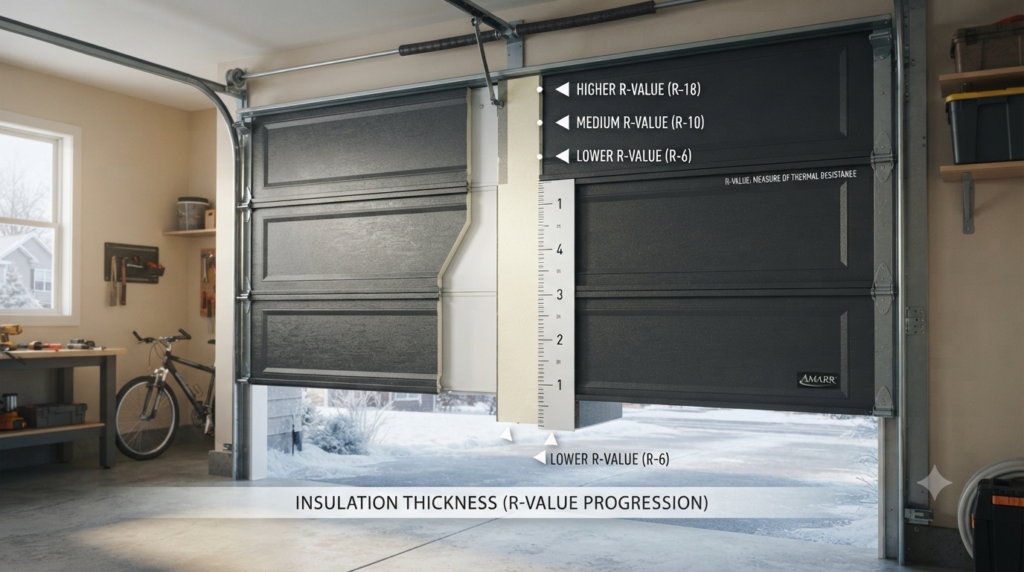
R-value tells you how well insulation resists heat flow. A higher R-value rating generally means better thermal resistance, which matters when you’re dealing with freezing temperatures or extreme cold.
| Climate | General direction |
| Mild winter | R-6–R-9 |
| Cold winter | R-10–R-13 |
| Very cold climate | R-14+ |
If you’re comparing garage door insulation highest R-value options, don’t choose based on the number alone. Door construction, installation, weather seals, and air leakage can all affect how well the insulation performs. A high R-value won’t help much if cold air is still getting around the door.
Polyurethane vs. Polystyrene: Which Is Better?
For thermal performance, polyurethane usually has the edge. Its dense foam fills the space inside the door more completely, helping with heat retention and overall energy efficiency.
Polystyrene is still a good choice if you’re watching your budget. It works well in insulated doors and garage door insulation kits, especially when you want a simple upgrade without paying for a premium polyurethane system.
In short: choose polyurethane for stronger performance in cold weather; choose polystyrene when keeping the upfront cost lower matters more.
New Insulated Door vs. Insulating an Existing Door
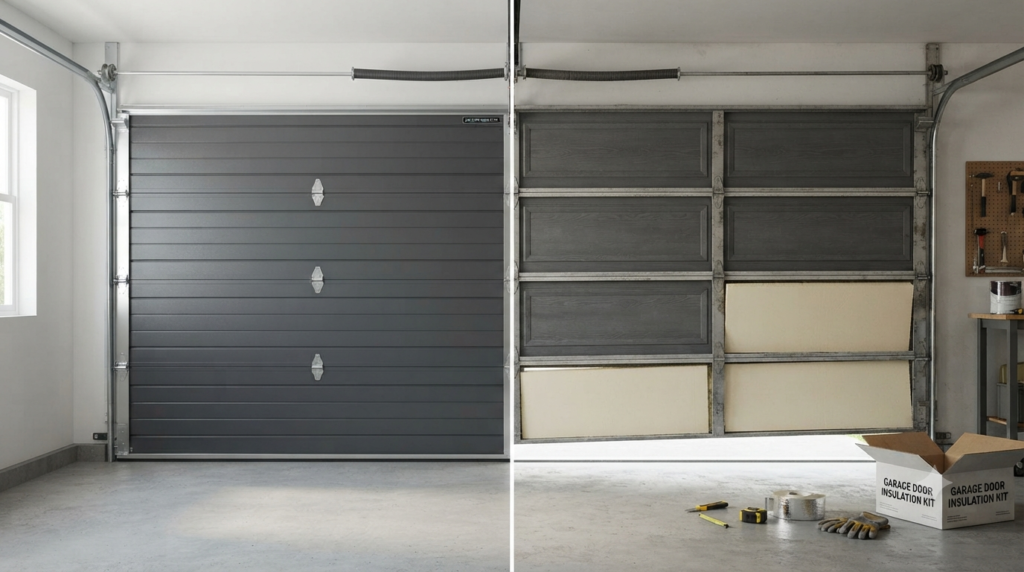
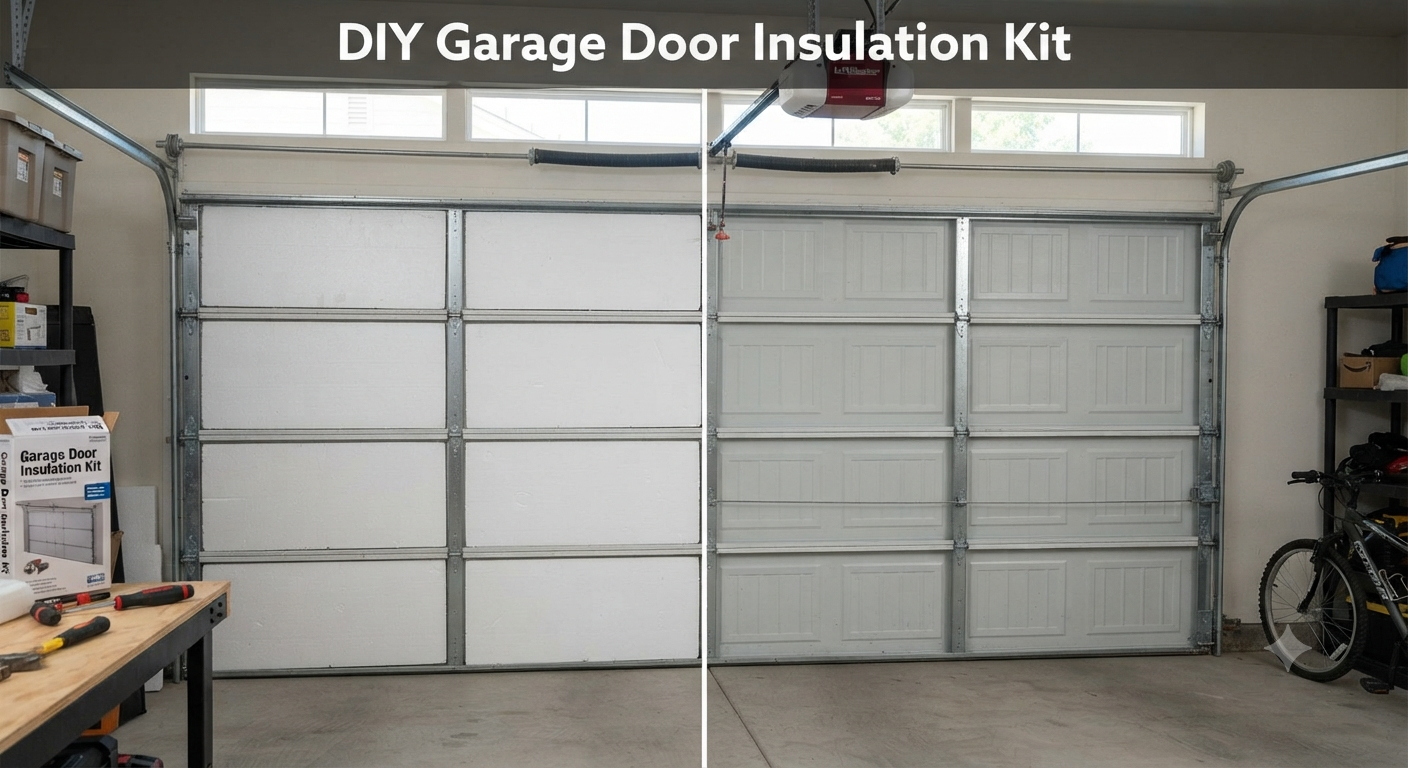
If your garage door is still in good shape, you don’t always need to replace it. A garage door insulation kit can add retrofit insulation to an existing door and improve its performance without the cost of a new one.
Choose a new factory-insulated door when the old door has damaged panels, a weak structure, or you’re dealing with a severe climate. For a solid door in decent condition, garage door insulated panels or garage door insulation panels can be a practical choice.
For homeowners who want to keep costs down, DIY garage door insulation for cold weather can work well when the door is suitable for it. Just make sure the added insulation doesn’t make the door too heavy for its springs or opener.
Don’t Ignore Garage Door Seals
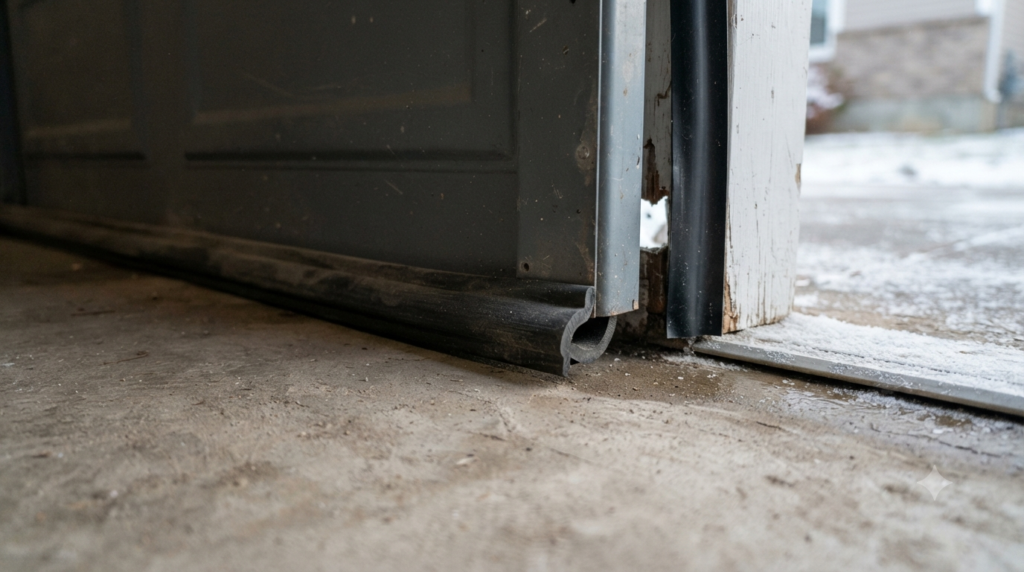
Even good insulation can lose its value when air leakage is left unchecked. Small gaps around the door can let in cold air, drafts and moisture, making the garage feel much colder.
Check the bottom seal first, then inspect the side seals, top seal and threshold seal. If you can see daylight around the edges, or snow and water get inside, the seals probably need attention.
A properly sealed garage door helps keep out drafts, moisture and cold air. In winter, that can matter just as much as the insulation inside the door.
Does Door Construction Affect Cold-Weather Performance?
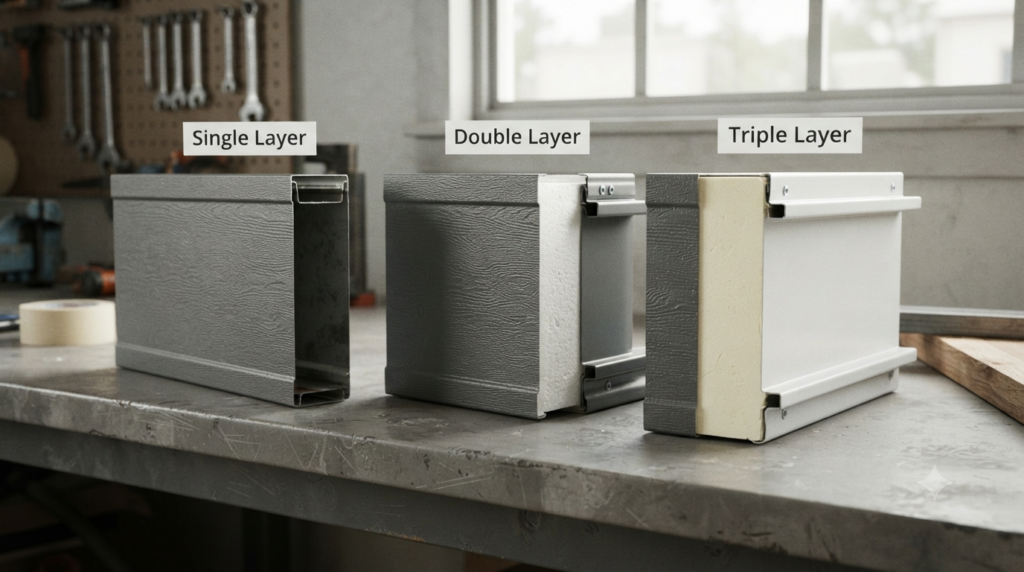
Yes, the door’s construction can make a noticeable difference in winter. A single-layer garage door has little protection from heat loss, while a double-layer garage door adds an insulation core between the layers. A triple-layer garage door usually gives the strongest overall construction.
A steel garage door with a proper insulation core can perform much better than a basic uninsulated door. Adding a thermal break also helps reduce heat transfer through the door. For cold climates, a well-built multi-layer door with polyurethane insulation is usually a strong combination.
Which Garage Door Insulation Is Best for Your Situation?
The best choice depends on your cold climate, garage use and budget. An attached garage next to living space may need better insulation than a detached storage garage. If you have a heated garage or workshop, spending more on higher insulation can make sense.
| Your situation | Better choice |
| Very cold climate | Polyurethane |
| Limited budget | Polystyrene |
| Existing good door | Retrofit insulation |
| DIY project | Insulation kit |
| Heated workshop | Higher R-value |
| Detached storage garage | Moderate insulation |
For extreme cold, polyurethane is the stronger pick. If garage door insulation cost is your main concern, polystyrene or a suitable insulation kit can offer a more affordable route.
How Much Does Cold-Weather Garage Door Insulation Cost?
The garage door insulation cost depends on more than just the insulation itself. A basic insulation kit may cost less than retrofit insulation, while a new factory-insulated door can cost much more.
The main things that affect the total cost are:
- R-value and insulation material
- Door size and construction
- Retrofit vs. full door replacement
- Professional installation or DIY work
- New weather seals
- Garage door windows
- Labor and any needed door repairs
If the existing door is in good shape, adding insulation can be a cheaper route than replacing the whole door. Just make sure the extra weight and installation method are suitable for the door.
Common Mistakes When Insulating a Garage Door
A few simple mistakes can reduce the benefit of insulation. One common problem is choosing material only because it’s cheap while ignoring R-value, air leakage, and weatherstripping.
Avoid these mistakes:
- Adding too much door weight
- Ignoring worn door seals
- Using insulation that doesn’t fit the door
- Assuming the highest R-value always wins
- Using reflective insulation as the main solution in severe cold
- Covering damaged panels instead of fixing them
- Not checking the garage door opener after adding insulation
- Forgetting to check door balance and springs after a retrofit
An insulation upgrade should improve the door without making it unsafe or harder to operate.
How to Choose the Right Garage Door Insulation for Winter
Before buying anything, ask yourself these five questions:
- How cold is your climate?
Mild winters don’t need the same insulation as freezing temperatures. - Is the garage attached?
An attached garage usually benefits from better insulation because it sits next to your home. - Is your existing door in good condition?
If the panels, tracks and structure are sound, retrofit insulation may be enough. - Do you need a retrofit or new door?
Use an insulation kit for a suitable existing door. Replace the door if it’s badly damaged or poorly built. - What R-value fits your needs and budget?
For colder areas, a higher R-value can help, but don’t forget the seals and installation.
Best overall pick: For a very cold climate or heated garage, a well-built multi-layer door with polyurethane insulation and a high R-value is usually the better choice. For a tighter budget, polystyrene or a suitable retrofit insulation kit can still make a real difference.