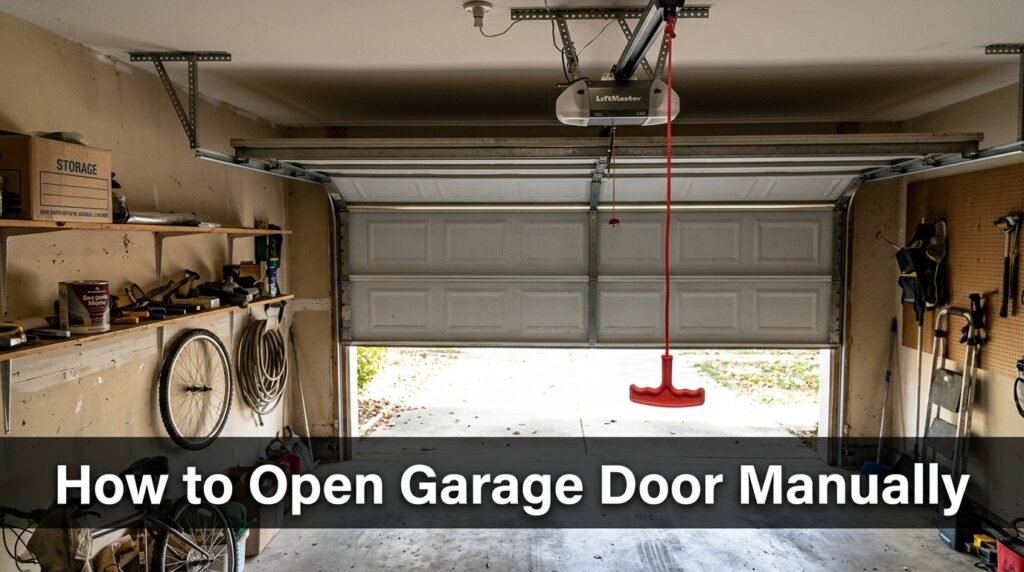
Pull the red emergency release cord down once, then lift the door by the bottom edge with both hands. That’s how to open garage door manually when the power’s out or your opener quits. Perform the procedure only once the door has been completely closed and the springs are functioning correctly. If the door seems to be very heavy or you heard a loud crash before it stopped working, do not force it. It is possible that the spring has broken.
Check the Door Before You Pull Anything
The red cord only unhooks the door from the opener. After that, the springs hold up the weight. So take half a minute to look the door over first.
| What you see | What to do |
| Door is fully closed, nothing looks off | Go ahead and use the manual release |
| Door is stuck halfway open | Don’t pull the cord. It can drop fast once it’s let go |
| You heard a loud bang | Likely a broken spring. Leave the door alone |
| A cable is hanging loose, or the door looks crooked | Don’t touch it. Keep people and pets back |
| The slide lock is on | Unlock it first, or you could bend the door or track |
Stay away from the garage door springs, the cables, and the metal brackets at the bottom corners. They’re under a lot of tension.
Where the Manual Release Is on Your Opener
On most openers it’s a red rope with a handle, hanging from the trolley. The trolley is the small part that slides along the rail and pulls the door. It’s easier to find it now, in daylight, than with a phone flashlight during a power outage.
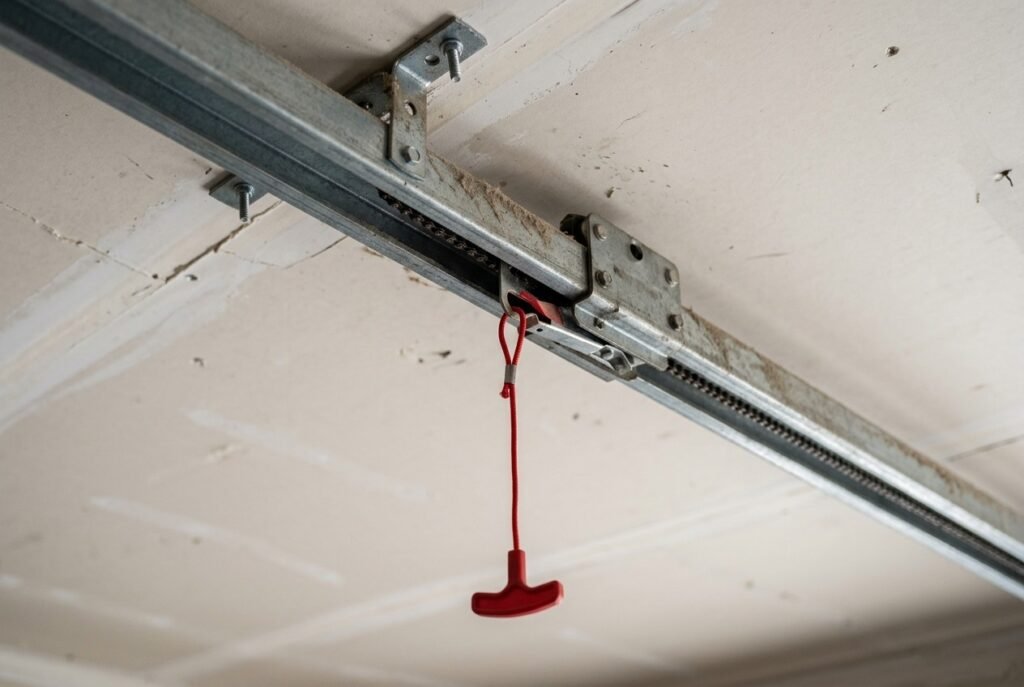
Chain, belt, and screw drive openers
All three have a rail and a trolley. Look up at the ceiling, a few feet back from the door, and you’ll see the red cord.
Jackshaft (wall-mount) openers
These sit on the wall beside the door. There’s no rail and no trolley, so the release looks different. It’s usually a handle or cord on the unit itself, and the label or manual will show you.
LiftMaster and Genie openers
Several models of LiftMaster and Genie rail openers come equipped with a trolley release cord, although some distinguishing features such as their design or the approach of the release may vary from model to model. You can find the model number on the motor casing and search for it on the company’s website along with the keyword “manual.” You will now find out how to open a LiftMaster garage door in a manual way.
How to Manually Open Garage Door From Inside
Once you’ve done it twice, this takes about fifteen seconds. To open garage door manually from inside:
- Check that the door is fully closed. If it isn’t, go back to the table above.
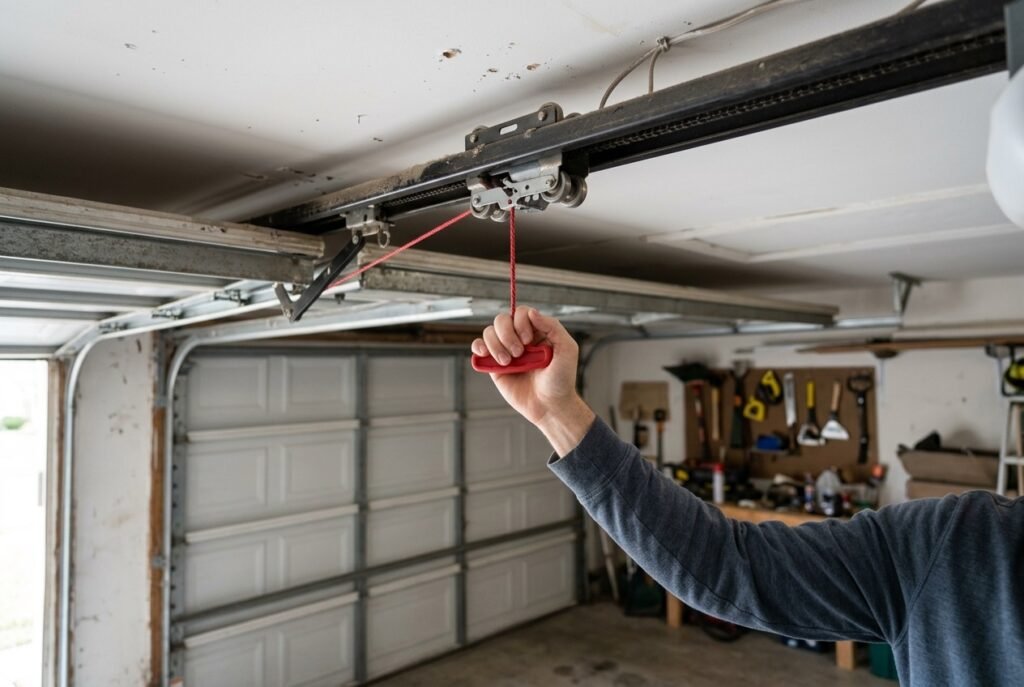
- Pull the red cord once. Most openers want a firm pull straight down. A few want down and back toward the motor. You’ll hear or feel a click when you disengage the opener.
- Lift with both hands. Grab the handle or the bottom edge, and use your legs, not your back. Keep your fingers out of the gaps between panels, because that’s where they get pinched.
- Let go and watch. A healthy door stays open on its own.
Don’t hang on the cord to pull the door up. It isn’t made to hold weight.
A good door feels lighter than most people expect, since the springs do most of the lifting. If yours fights you or slides back down, the heavy-door section further down covers why.
Does It Work the Same on an Electric Opener?
Yes. An electric or automatic garage door opener has the same red cord and the same trolley. The motor only matters while it’s running. Once you pull the cord, you’ve got a regular door on springs, so the steps above apply the same way.
Opening the Door From Outside With No Power
Say you’re locked out, it’s raining, and the remote is dead. Here’s how to open garage door manually from the outside. You’ve got two real options.
Use the side door
If the garage has a regular door on the side or back, go in that way and follow the inside steps.
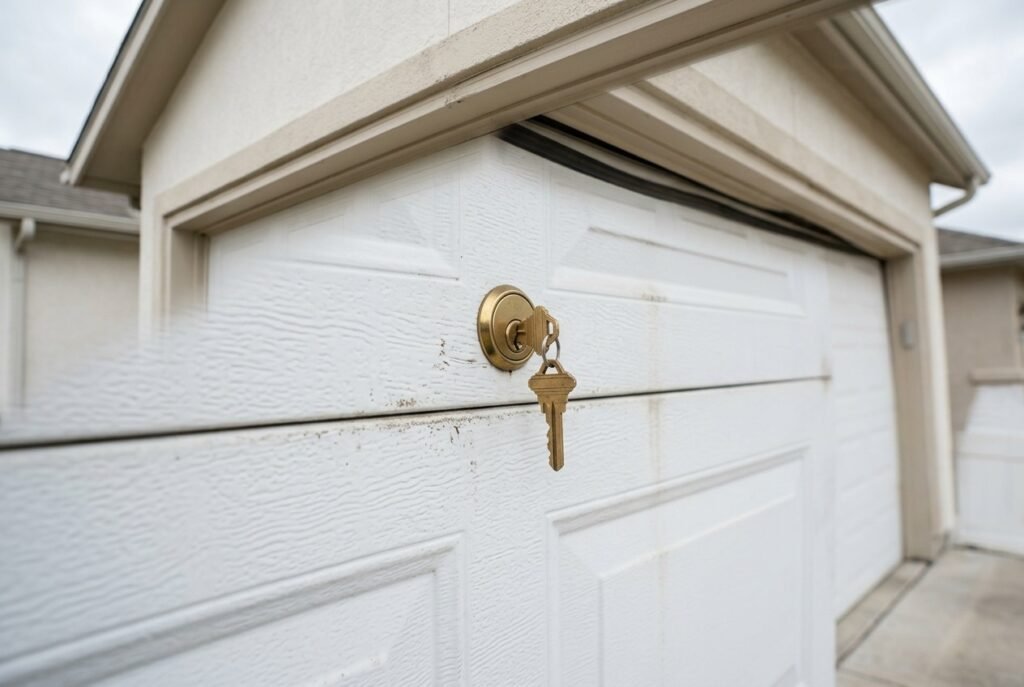
Use the outside key release
Some garage doors have a small round lock near the top center. That’s the emergency release lock. Put the key in, turn it, and pull the cylinder out. It tugs a cable connected to the trolley, which does the same job as the red cord inside. Then lift from the bottom edge.
How to open a locked garage door manually
A locked door can mean a key lock on the door panel or a slide lock thrown from the inside. The panel lock opens with its key. A slide lock can’t be beaten from outside, so you’ll need the side door. Prying at the bottom can bend the panels and track.
No key release and no side door
Then there’s no safe way to force it open from outside. A garage door tech can add an outside release kit. Keep in mind that it also gives someone else a way to try the door, so store the key somewhere sensible.
Try the Battery Backup First
Many modern openers include a battery backup, therefore if your opener contains this feature, you will still be able to operate it during a power failure. To do this makes sure to press your wall button before unplugging the unit. See if you can find a battery pack attached to the motor, and if it has run out of power, continue the process of opening the door manually as described above. The duration of the battery and its features vary from one manufacturer to another so that the operator’s guide can offer helpful information in this regard.
If the Red Cord Won’t Release
The cord pulls but nothing happens
The door’s weight can press on the trolley and keep it locked in place. Lift the door a little by hand to take the pressure off, then pull the cord again.
The cord is broken or missing
You can still disconnect the garage door opener by hand. Use a sturdy ladder and push the release lever on the trolley. Only do this with the door fully closed and nothing looking damaged.
The door is frozen to the ground
In winter, ice and slush can glue the bottom seal to the floor. A hard yank can tear the rubber or bend the bottom panel. Clear the ice away first, then lift.
The door is stuck halfway open
A door that’s stopped partway can fall the moment the opener lets go. Leave the cord alone, keep people and cars out of the way, and call a garage door tech.
Closing the Door and Locking It
From inside
Lower the door by the bottom edge, slow and even, until it rests on the floor. Don’t let it drop the last few inches.
From outside
Pull the door down until it touches the ground. If the panel has a key lock, turn the key. Make sure it’s fully shut before you walk off.
Locking it while the opener is disconnected
Once the opener is removed, there is nothing to secure the door. If there is a manual slide lock on your door, use it. If not, some individuals take locking pliers and place them on the track right before a roller so that the door cannot be lifted from the outside.
Whatever the method used, ensure it is removed before the opener is re-attached.
Reconnecting the Opener
Once the power’s back or the opener is fixed:
- Close the door all the way and take off any lock or clamp.
- Reset the release. Some models want you to pull the cord toward the door, and others reset on their own. Your manual will tell you which.
- Press the wall button or remote. The trolley should slide along the rail and click into place.
- If it doesn’t latch, lift the door a little by hand and run the opener again to re-engage it.
- Watch one full open and close. If the door strains or stops short, stop using the opener.
Your remotes and keypad stay programmed, so there’s nothing to set up again.
Why a Garage Door Feels Too Heavy to Lift

If a released door won’t move easily, something’s off. These are the usual causes:
- Feels like dead weight: A broken torsion spring (the big coiled spring on a bar above the door) or a broken extension spring (the long stretchy ones along the side tracks).
- Lifts a little, then jams: A cable slipped, or a roller popped out of the track. The door is off track.
- Scrapes or grinds: Dry rollers, a bent track, or something stuck in the way.
- Won’t stay up: The springs are weak or out of balance.
Safety cables should be in place on extension springs to ensure that a broken spring does not flail about. If there is anything wrong with the spring or the cable, have an expert take care of it because spring repair is not meant to be done by just any person.
Does the door type matter?
A little. Most homes have sectional doors, which fold into panels and roll up along the tracks. Some older homes have a one-piece tilt-up door that swings out at the bottom as it goes up. A tilt-up door may use a different release, so check its manual, and clear the driveway before you lift it.
Did you add insulation recently?
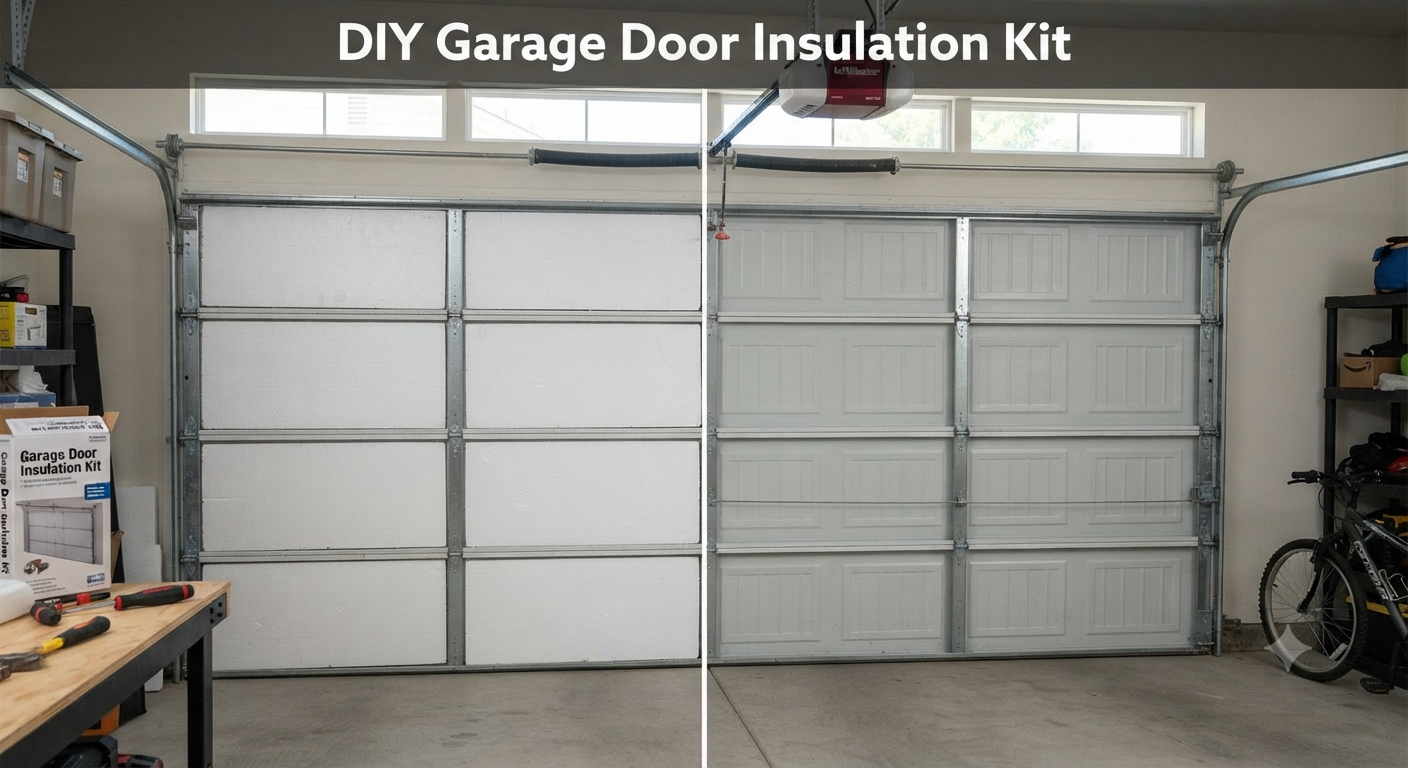
An insulation kit adds weight. Springs are set for a certain load, so a heavier door can feel stiffer or drift down when it used to stay put. If that sounds like your door, ask a pro to check the spring balance.
A Simple Balance Test
Finding out whether your door is in good working condition doesn’t require any kind of power outage. Just close the door, pull the red cord and lift it halfway up. If the door does not budge or moves only slightly, you are in the clear. A door that doesn’t stay up indicates that its springs are not in good condition.
However, do not perform this test if your door already feels heavy. 부정부사 Lyza Knowles.
Likewise, it’s a good practice to check your door every six months; this way everyone in your family learns how to do it when there aren’t any problems.
Frequently Asked Questions
How do you open garage door manually?
With the door fully closed, pull the red release cord once, then lift the door by the bottom edge with both hands.
Can you manually open a garage door?
Yes. Release the opener with the cord, then lift. From outside, you’ll need a side door or an outside key release.
How do I manually open my garage door when the power is out?
Try the wall button first in case you have a battery backup. If it doesn’t work, pull the red cord and lift the door by hand.
Is it safe to use the release while the door is open?
Usually not. If a spring is weak or broken, the door can fall once the opener lets go. Makers generally say to use the release only with the door fully closed.
Will the manual release damage my opener?
No, it’s built in for this. Trouble starts when you keep running the opener while the door is jammed or heavy.
Why won’t my garage door open by hand?
The common causes are a broken spring, a slipped cable, a bent track, a slide lock that’s still on, or a frozen bottom seal. If the door feels extremely heavy, stop and have it checked.
Conclusion
Once you know how to open garage door manually, the whole job comes down to three things: a closed door, one pull on the red cord, and an even lift. If the door is heavy, falls when let go of, or if you heard a noise earlier, call a pro for your springs and cables. By doing the balance test, you can identify if anything is wrong early, and there will be no more outages.