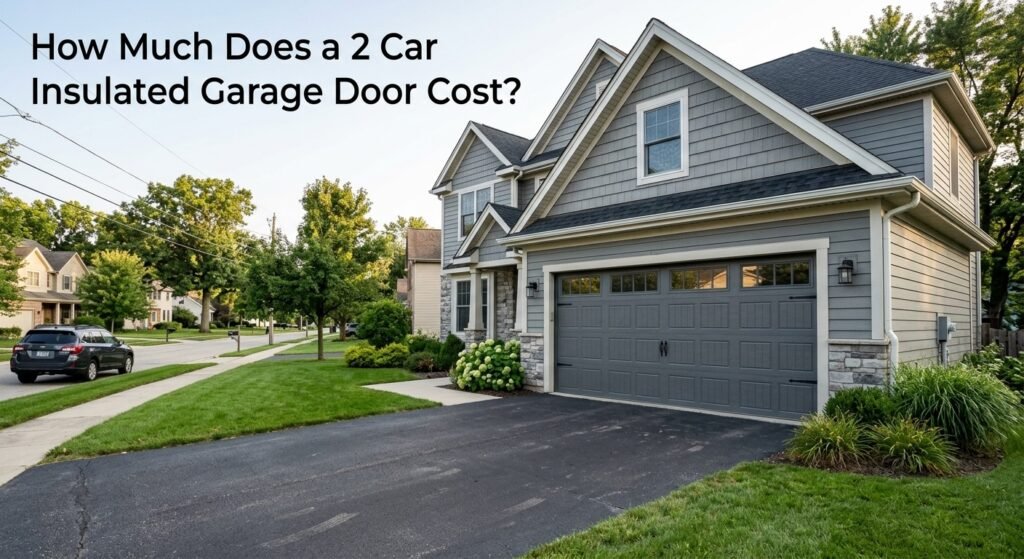
How much does a 2 car insulated garage door cost? In 2026, a typical 2-car insulated garage door costs about $1,500 to $3,700+ installed, depending on the door material, insulation level, size, and installation work.. A basic insulated steel door will usually sit toward the lower end, while a high-R-value or custom door can cost quite a bit more. The 2 car garage door cost also changes if you need a new opener, old door removal, windows, or repairs. So, before you compare prices, make sure you’re looking at the installed cost, not just the door itself.
How Much Does an Insulated 2-Car Garage Door Cost in 2026?
For 2026, a standard 16×7 insulated 2-car garage door usually falls around $1,500 to $3,500 installed. A basic double-layer steel door can stay near the lower end, while a better insulated triple-layer door, custom finish, windows, or premium material can push the bill higher. Current 2026 pricing guides put mid-range insulated steel doors around $1,500–$3,200 installed, while premium custom options can go well beyond that range.
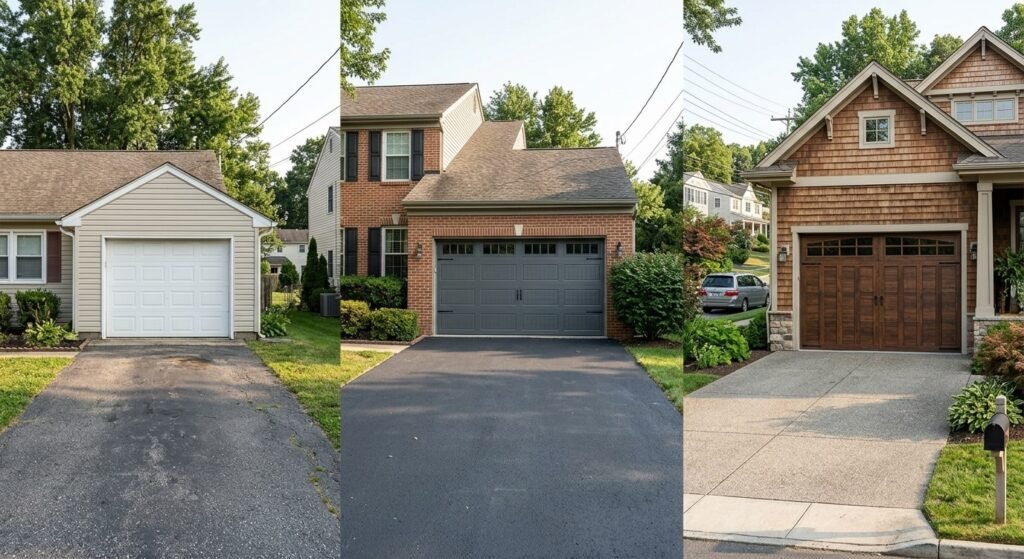
The insulated garage door prices you see online can also be confusing because some are for the door only. Your 2 car garage door installed price may include tracks, springs, rollers, hardware, labor, and removal of the old door. That’s why the average garage door cost can look different from one company to another.
Typical Price Range for a 2-Car Insulated Garage Door
Here’s a simple 2026 breakdown to give you a better idea of the total project cost:
| Door type | Door only | Typical installed cost |
| Basic insulated steel | $1,000–$1,800 | $1,500–$2,400 |
| Mid-range insulated steel | $1,400–$2,400 | $1,800–$3,200 |
| Premium triple-layer insulated | $1,800–$3,000+ | $2,200–$3,500+ |
| Custom/high-end | $3,000–$6,000+ | $4,000–$10,000+ |
These are planning ranges, not fixed quotes. Your location, door size, insulation level, material, and installer can move the final number quite a bit. For example, current 2026 pricing from Clopay-related listings shows 16×7 two-layer and three-layer steel doors around the $1,900–$2,850 installed range in some Texas markets, while other 2026 sources put premium custom doors much higher.
One thing I’d watch closely: don’t compare a $1,500 door-only price with a $2,500 installed quote and assume the second company is overcharging. They may simply be including the labor, tracks, springs, removal, and other parts in the price.
For most homeowners looking for a good balance of insulation, durability, and price, an insulated steel sectional door is usually the sensible middle ground. If you’re mainly trying to keep the garage more comfortable without going crazy on the budget, you probably don’t need the most expensive custom door on the market.
What Does the Price of a 2-Car Insulated Garage Door Include?
The price you see for an insulated garage door isn’t always the amount you’ll actually pay. Some quotes cover the door price only, while others include garage door installation cost, parts, labor, and removal of the old door. That’s why two quotes for what looks like the same door can be pretty far apart.
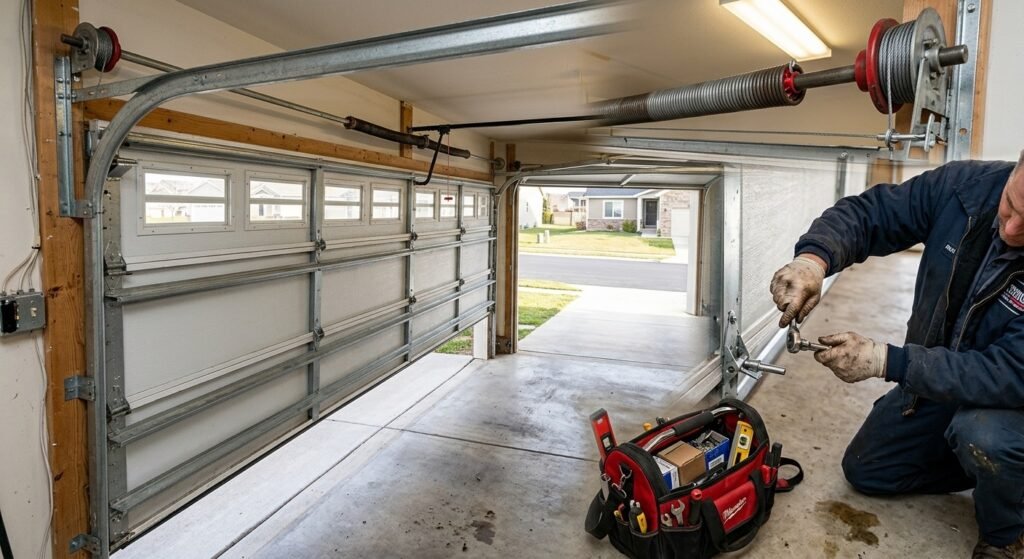
Door and Insulation
The door itself is usually the biggest part of the bill. For an insulated model, you’re paying for the door panels plus the insulation built into them.
The price can change based on the material, thickness, number of layers, and insulation type. For example, polyurethane generally provides better insulation than basic polystyrene, but it can also raise the price.
A double-layer door has an insulation layer with an outer and inner layer, while a triple-layer door adds another layer of material around the insulation. That extra construction usually means a higher door price.
Tracks, Rollers, Springs and Hardware
A garage door isn’t just the panels you see from outside. It also needs tracks, rollers, springs, brackets, cables, and other tracks and hardware to move safely.
The garage door springs are especially important because they handle much of the door’s weight. If you’re replacing an older door, some of these parts may need to be replaced or adjusted rather than reused.
Professional Installation
Installation labor is another major part of the final bill. Installing a large insulated door isn’t simply a matter of hanging the panels. The installer has to set the tracks, connect the springs and cables, balance the door, and make sure it opens and closes properly.
The exact garage door installation cost depends on the job. A straightforward replacement with a standard-size opening is usually easier than a project that needs framing repairs, new hardware, or other adjustments.
HomeGuide, for example, lists double-wide insulated-door installation labor separately from the door and other project components, which shows why looking at the complete quote matters.
Old Door Removal and Disposal
If you’re replacing an existing garage door, don’t forget about old door removal.
Some installers include removal and disposal in their installation price. Others list it as a separate charge. HomeGuide puts old-door removal around $50 to $250 when charged separately, although the actual amount can vary by location and job.
It’s a small detail, but it can make a difference when you’re comparing quotes.
Weather Sealing
A new insulated door can still lose some of its benefit if there are gaps around it. That’s where weatherstripping and proper weather sealing come in.
The installer may replace or add seals around the sides, top, and bottom of the door. A bottom seal helps close the gap against the garage floor, while perimeter weatherstripping helps reduce drafts and moisture around the edges.
So when checking the final price, don’t look at the door alone. Ask whether weatherstripping, installation labor, tracks and hardware, garage door springs, and old door removal are included.
A useful rule: compare the complete installed price, not just the advertised door price. That’s the easiest way to avoid getting surprised by extra charges later.
What Factors Affect the Cost of an Insulated 2-Car Garage Door?
There isn’t one fixed price for an insulated garage door. Your garage door replacement cost can change quite a bit depending on the material, insulation level, garage door size, design, and labor cost. Even two doors that look almost the same from the street can have different prices once you compare what’s inside the panels and what’s included with installation.
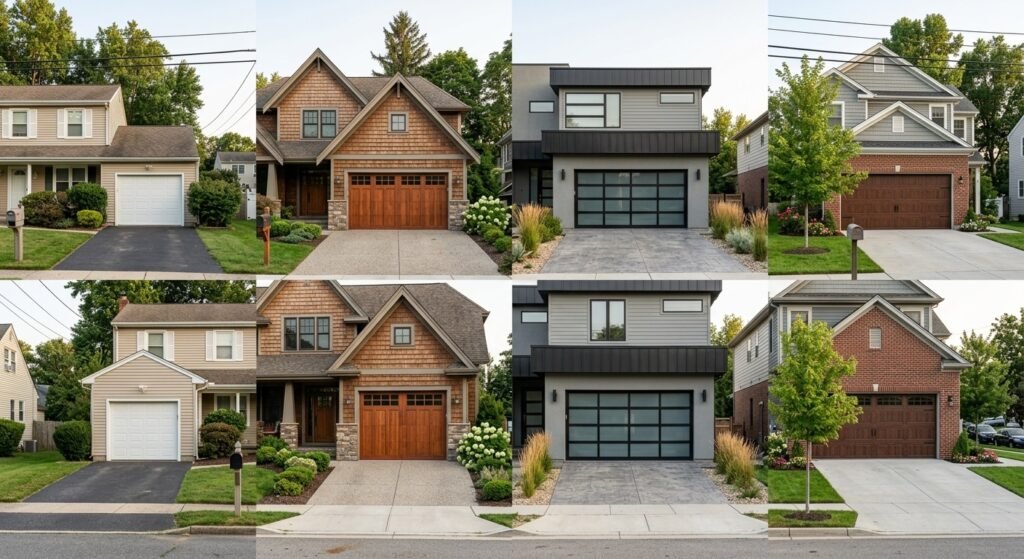
Here’s where most of the price difference comes from.
Door Material
The material has a direct effect on material cost, but it also changes the door’s weight, upkeep, and overall feel.
- Steel: Usually the practical choice for an insulated 2-car door. It’s strong, widely available, and works well with both double- and triple-layer construction.
- Wood: Gives the garage a warmer, more custom look, but it normally costs more and needs more upkeep.
- Aluminum: Lightweight and a popular choice for modern designs. It’s usually more expensive than basic steel when you start adding upgraded finishes or glass.
- Fiberglass: Can give you a wood-like appearance without some of the maintenance issues. Pricing depends heavily on the construction and finish.
- Composite: Often chosen when you want the appearance of wood without paying for the same level of maintenance.
Insulation Type and Construction
The insulation level can make a noticeable difference in the price. It’s not just about whether a door says “insulated” on the label. You also need to look at what’s inside the panels.
Polyurethane insulation is denser and generally provides better insulation than basic polystyrene insulation. It’s often used in higher-performance doors, so the price can be higher too.
A double-layer garage door usually has the exterior layer, insulation, and a backing layer. A triple-layer garage door adds another layer, making the panel heavier and more solid.
Then there’s insulation thickness. Thicker insulation usually means better thermal performance, but it also adds to the cost. HomeGuide notes that insulated garage doors commonly use polystyrene or polyurethane and come in several thicknesses, including 1 3/8″, 1 7/8″, and 2″.
So don’t compare doors by the word “insulated” alone. Check the construction and insulation material.
R-Value and Why It Changes the Price
The garage door R-value tells you how well the door resists heat flow. In simple terms, a higher insulation R-value generally means better resistance to heat passing through the door.
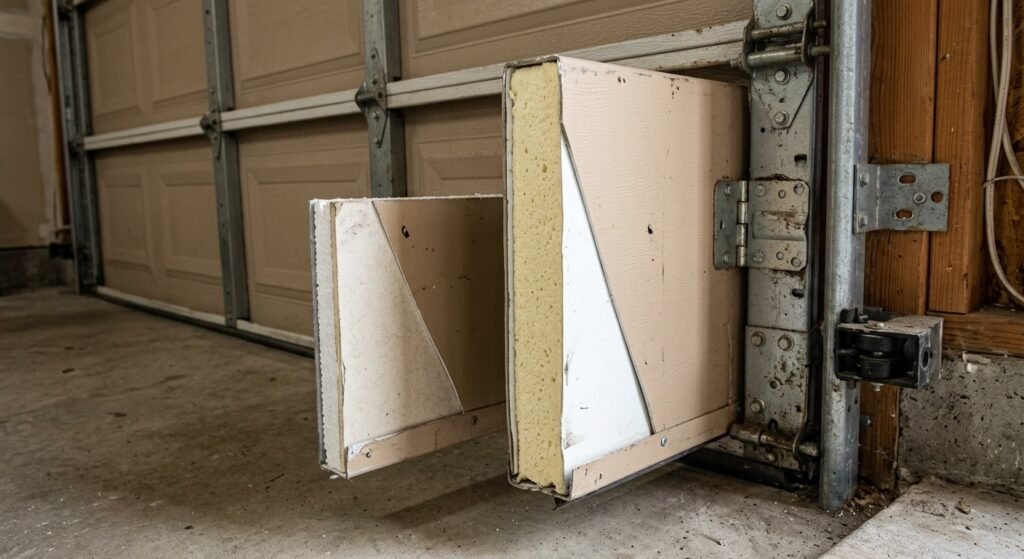
That’s why a high R-value garage door can cost more than a basic insulated model.
But here’s the thing: higher isn’t always better for every garage.
If you only use your garage for parking and storage, you may not need the highest R-value available. On the other hand, if it’s an attached garage, workshop, gym, or another space you use often, better thermal efficiency can be worth paying for.
HomeGuide lists insulated garage door R-values from about 6.3 to 20.4 and notes that higher values provide greater resistance to heat flow.
Garage Door Size
Size is another easy one to overlook. A standard 2 car garage door size is commonly around 16 feet wide, but not every garage has the same opening.
For example, a 16×7 garage door is a common setup. A taller 16×8 garage door uses more material, and an 18×7 garage door has a wider opening, which can also affect the final price.
If your opening isn’t a common size, you may need a custom garage door size. That’s where the price can start moving up faster because you’re no longer buying a standard configuration.
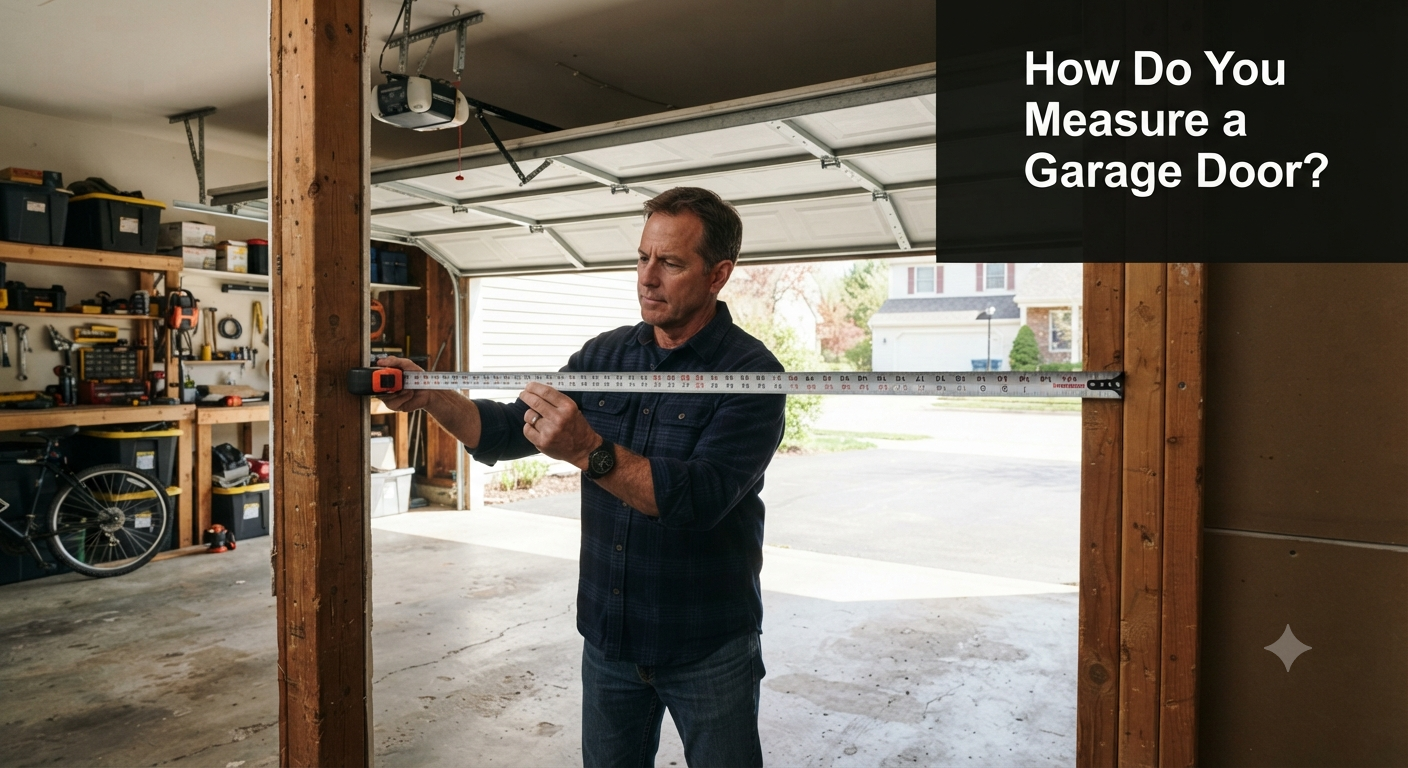
Before getting quotes, measure the opening rather than guessing from the garage’s exterior size. A few inches can matter when you’re ordering the actual door.
Style and Design
The style isn’t only about looks. Some designs cost more because they use different materials, windows, overlays, or custom details.
A basic raised panel garage door is usually one of the simpler choices. A carriage house garage door adds more decorative detail and can cost more.
Then you have modern garage door and contemporary garage door designs, which often use clean panels, aluminum, glass, or a mix of materials. These can move into a higher price range pretty quickly.
A custom garage door can cost even more depending on the finish, windows, hardware, color, and construction.
Location and Labor Rates
Your location can affect the final bill too. Garage door installation labor isn’t priced the same everywhere.
A contractor in a high-cost city may charge more than someone working in a smaller market. Local demand, travel distance, installer experience, and the difficulty of the job can all affect the local installation cost.
You may also see different contractor labor charges when comparing quotes. One installer might bundle labor into the door price, while another lists separate installation rates.
That’s why it’s better to compare the full installed quote instead of looking at labor as a single number. Check what you’re actually getting for the money, including removal, hardware, sealing, and any adjustments needed around the opening.
2-Car Garage Door Cost by Insulation Level
Not every insulated garage door has the same amount of insulation. A basic door may have a simple foam core, while a more expensive model can use thicker insulation and multiple layers. That difference affects both the price and how well the door handles heat, cold, and outside noise.
Basic Insulation
A basic insulated door is usually the starting point if you want some insulation without spending a lot more. Many budget-friendly doors use polystyrene, which is relatively inexpensive and can provide a noticeable improvement over a completely uninsulated panel.
This option can make sense if:
- You mainly use the garage for parking or storage
- Your climate is fairly mild
- You don’t need the garage to stay at a steady temperature
- You’re trying to keep the project cost under control
Mid-Range Insulation
A mid-range insulated door is where things start getting interesting. You can often get better panel construction, a higher R-value, and more effective insulation without jumping straight into the most expensive models.
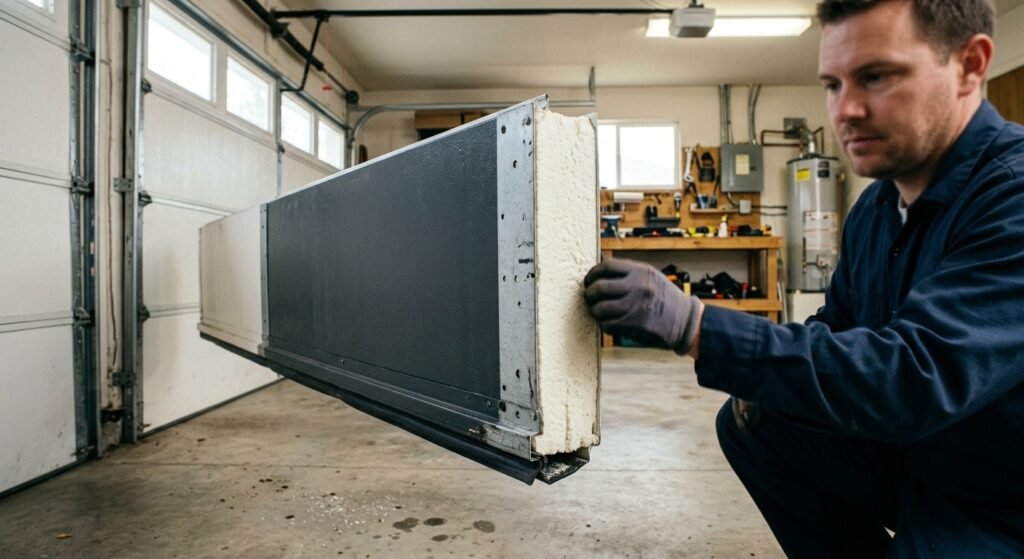
This is where polyurethane starts to make more sense. It’s denser than polystyrene and generally provides better insulation within a similar panel space.
A mid-range door is a good fit for:
- Attached garages
- Garages used several times a day
- Workshops
- Home gyms
- Homes in areas with hot summers or cold winters
- Homeowners who want better comfort without paying for a premium custom door
High-Performance Insulation
High-performance doors are built for homeowners who care more about temperature control, durability, and noise reduction than getting the lowest possible price.
These doors often use triple-layer construction, with insulation sandwiched between multiple layers of the door. Higher R-value options are also more common here, particularly with polyurethane insulation.
This level makes more sense when:
- The garage is attached to the house
- You heat or cool the garage
- You use it as a workshop or gym
- You spend a lot of time inside the garage
- Your area has strong temperature swings
- You want better noise control and a more solid-feeling door
HomeGuide notes that double-layer doors commonly use polystyrene insulation, while triple-layer doors can use polyurethane for higher R-values and stronger thermal performance.
One thing I’d keep in mind: don’t pay for the highest insulation level just because it sounds better. If your garage is only used for storing the lawn mower and parking the car, a premium triple-layer door may not give you enough extra value to justify the jump in price.
The right insulation level really comes down to how you use the garage, your local climate, and how much temperature control you actually need.
How Much Does a 16×7 Insulated Garage Door Cost?
A 16×7 insulated garage door is one of the most common choices for a two-car garage. In 2026, a typical door can cost roughly $1,000–$2,400 for the door itself, while an installed project may land around $1,500–$3,200, depending on the insulation, material, brand, and local labor.
The 16×7 garage door cost can move higher if you add windows, premium finishes, upgraded hardware, or a high-R-value insulation package.
For a standard 2 car garage door, 16 feet wide by 7 feet tall is usually a pretty straightforward size. That means you can often avoid the extra expense that comes with a custom opening.
If you’re comparing an insulated 16×7 garage door price, don’t just look at the panel price. Check whether installation, tracks, springs, weather seals, and old-door removal are included too.
How Much Does a 16×8 Insulated Garage Door Cost?
A 16×8 insulated garage door is basically the same width as a 16×7 door but gives you another foot of height. That extra size can mean a little more material and, in some cases, a higher installation price.
A reasonable 2026 planning range is around $1,100–$2,600 for the door, with the installed price commonly reaching $1,700–$3,500 or more depending on the door and installation requirements.
The 16×8 garage door cost can also change if the taller opening needs different tracks, springs, or other hardware.
A taller garage door can be useful if you have a larger vehicle, an SUV, truck, or simply want more clearance. Just don’t assume that taller automatically means better. If your garage opening is already 7 feet high and works fine for your vehicles, there’s not much reason to pay extra just for another foot.
When checking an insulated garage door price, compare a 16×7 and 16×8 model with similar insulation and features. That gives you a much fairer price comparison.
Insulated vs. Non-Insulated 2-Car Garage Door: Is the Extra Cost Worth It?
The short answer is: sometimes, yes. It really depends on what you do with your garage.
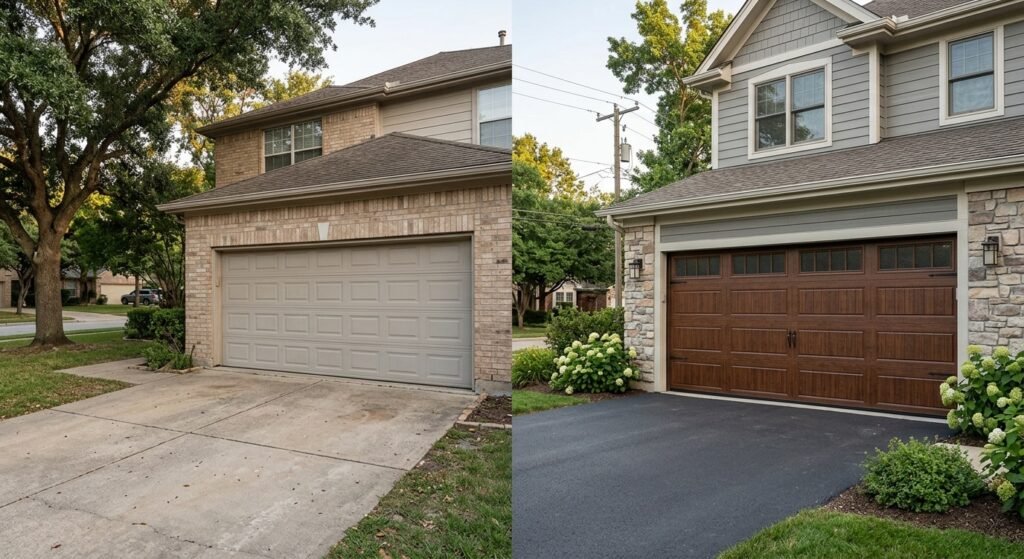
An insulated vs non insulated garage door comparison isn’t only about the upfront price. An insulated door can also offer better temperature control, less outside noise, and a more solid feel when opening and closing.
| Feature | Non-Insulated | Insulated |
| Upfront cost | Lower | Higher |
| Temperature control | Limited | Better |
| Noise reduction | Basic | Better |
| Energy efficiency | Lower | Higher |
| Door feel | Lighter | More solid |
| Best for | Parking/storage | Attached or frequently used garages |
The main insulated garage door benefits become easier to notice when the garage is connected to your house or you actually spend time inside it.
For example, if your garage doubles as a workspace, gym, or storage area, keeping extreme outdoor temperatures from passing straight through the door can make the space more comfortable.
An energy efficient garage door can also help reduce heat transfer between the garage and the rooms next to it. But I wouldn’t buy insulation just because someone promises huge savings on your utility bill. The actual result depends on the rest of the garage.
Does an Insulated Garage Door Save Money on Energy Bills?
It can, but there’s no honest one-size-fits-all number.
An insulated door slows down heat transfer through one of the largest moving openings in your garage. That can help the garage stay closer to the temperature of the rest of the house, especially when the garage is attached.
This is where an energy efficient garage door can be useful. In a hot summer, for example, a well-insulated door can reduce how quickly outdoor heat moves into the garage. During winter, it can slow the movement of cold air into the space.
But garage door energy savings depend on several things:
- Your local climate
- Whether the garage is attached or detached
- Whether the garage is heated or cooled
- How often the door opens
- Wall and ceiling insulation
- Air leaks around the door
- The door’s R-value
- How well the weather seals fit
Does Your Garage Type Affect Whether Insulation Is Worth It?
Yes, quite a bit.
The same insulated door can make perfect sense for one homeowner and be unnecessary for another. The biggest question is simple: How do you actually use the garage?
Attached Garage
An attached garage shares at least one wall with the home, so temperature changes inside it can matter more.
If your bedroom, kitchen, or another living area sits next to the garage, better garage insulation and an insulated door can help reduce the temperature difference between the two spaces.
Detached Garage
A detached garage is separated from the house, so the reason for insulation is a little different.
If it’s mainly used for parking and storage, you may not need an expensive high-R-value door. A basic insulated model could be plenty.
But if you’ve turned the detached garage into a workshop, office, hobby room, or another usable space, insulation becomes much more useful. In that case, the door is only one part of the job. The walls, ceiling, windows, and air leaks matter too.
Workshop or Home Gym
A workshop garage or garage gym is a different story.
If you’re spending several hours in the space, extreme heat or cold gets annoying pretty fast. An insulated door can help make the garage more comfortable and can also reduce outside noise.
You may want to spend a little more on insulation here, especially if you’re heating or cooling the space.
Climate-Controlled Garage
If you have a climate-controlled garage, insulation becomes much more important.
You’re already paying to heat or cool the space, so letting that conditioned air escape through a poorly insulated door doesn’t make much sense. A better-insulated door, along with good weather seals, can help the system work more efficiently.
Extra Costs That Can Increase Your Final Garage Door Bill
The price you see for the door isn’t always the final number. A few hidden garage door costs can show up once the installer looks at the opening, old hardware, or the features you want.
These additional installation costs aren’t necessarily a bad thing. Some are simply part of doing the job properly. The trick is knowing about them before you agree to a quote.
New Garage Door Opener
If your current opener is old, weak, or not compatible with the new door, you may need a replacement. The garage door opener cost depends on the type you choose, with basic models generally costing less than smart or quieter belt-drive openers.
Windows
Windows can make a garage door look much nicer and bring some natural light into the garage. But they’re an upgrade, so they’ll add to the price.
The cost depends on the number of windows, glass type, and door design. Simple window inserts are usually cheaper than decorative or specialty glass.
If your garage gets plenty of daylight already, this is one of those upgrades you can skip to keep the garage door replacement cost down.
Custom Colors and Finishes
A standard white or factory color is usually the easiest option on the budget. Want a very specific color or finish? That can cost more.
Custom colors, wood-look finishes, and special coatings may all increase the door price. It’s worth asking whether the finish is actually custom or just one of the manufacturer’s standard options.
Decorative Hardware
Handles, hinges, straps, and other decorative pieces can give a basic door the look of a carriage house door.
They aren’t required for the door to work, though. If you’re trying to control hidden garage door costs, decorative hardware is an easy place to save.
Frame or Opening Repairs
This one can catch homeowners off guard.
If the existing frame is damaged, rotten, uneven, or doesn’t fit the new door properly, the installer may need to repair or modify the opening first. The same applies if the opening needs resizing for a different door size.
These repairs are hard to price before someone actually looks at the garage, so it’s smart to ask whether the quote includes any basic framing work or if that would be charged separately.
Spring and Hardware Replacement
A new door may come with new springs, rollers, cables, tracks, and other hardware. But if you’re replacing only certain parts, you could see a separate charge for spring and hardware replacement.
Permit or Code Requirements
Depending on where you live, a permit may be required for certain garage door work. Local rules aren’t the same everywhere, so don’t assume a permit is always needed or never needed.
Ask the installer whether your project requires one and, more importantly, who is responsible for getting it. That small question can prevent an annoying surprise later.
Delivery and Disposal
There may also be a delivery charge for bringing the new door to your home. And if the old door isn’t included in the quote, you’ll have a separate removal cost for taking it down and disposing of it.
HomeGuide lists old-door removal and disposal as a possible additional expense, along with costs related to openers, repairs, resizing, and weatherstripping.
So when comparing quotes, don’t just ask, “How much is the door?”
Ask for the complete installed price, including labor, delivery, old-door removal, hardware, opener work, and any expected repairs. That’s the number that actually matters when you’re working out your budget.
Can You Insulate an Existing 2-Car Garage Door Instead?
Yes, you can. If your current garage door is still in decent shape, adding insulation can be a cheaper way to improve comfort without replacing the whole door.
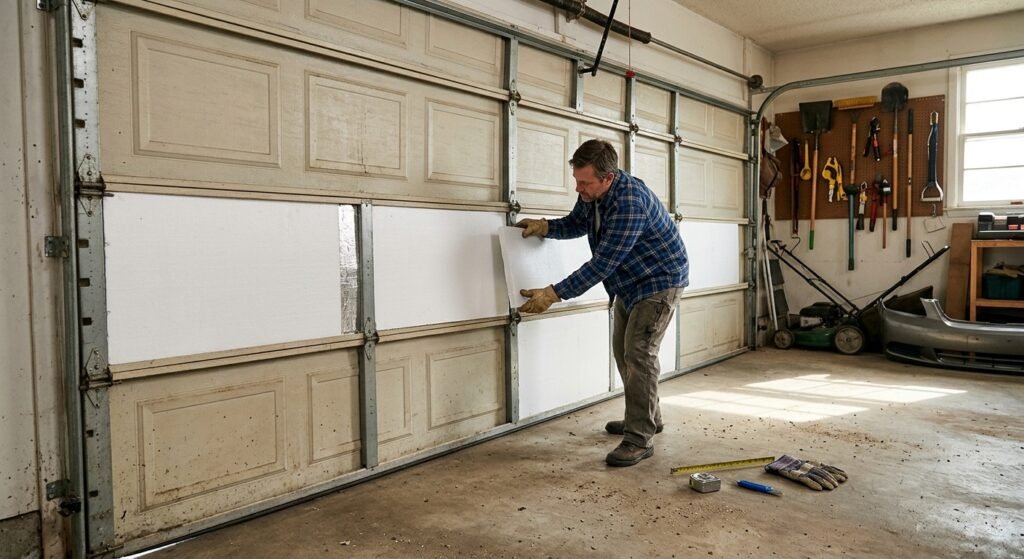
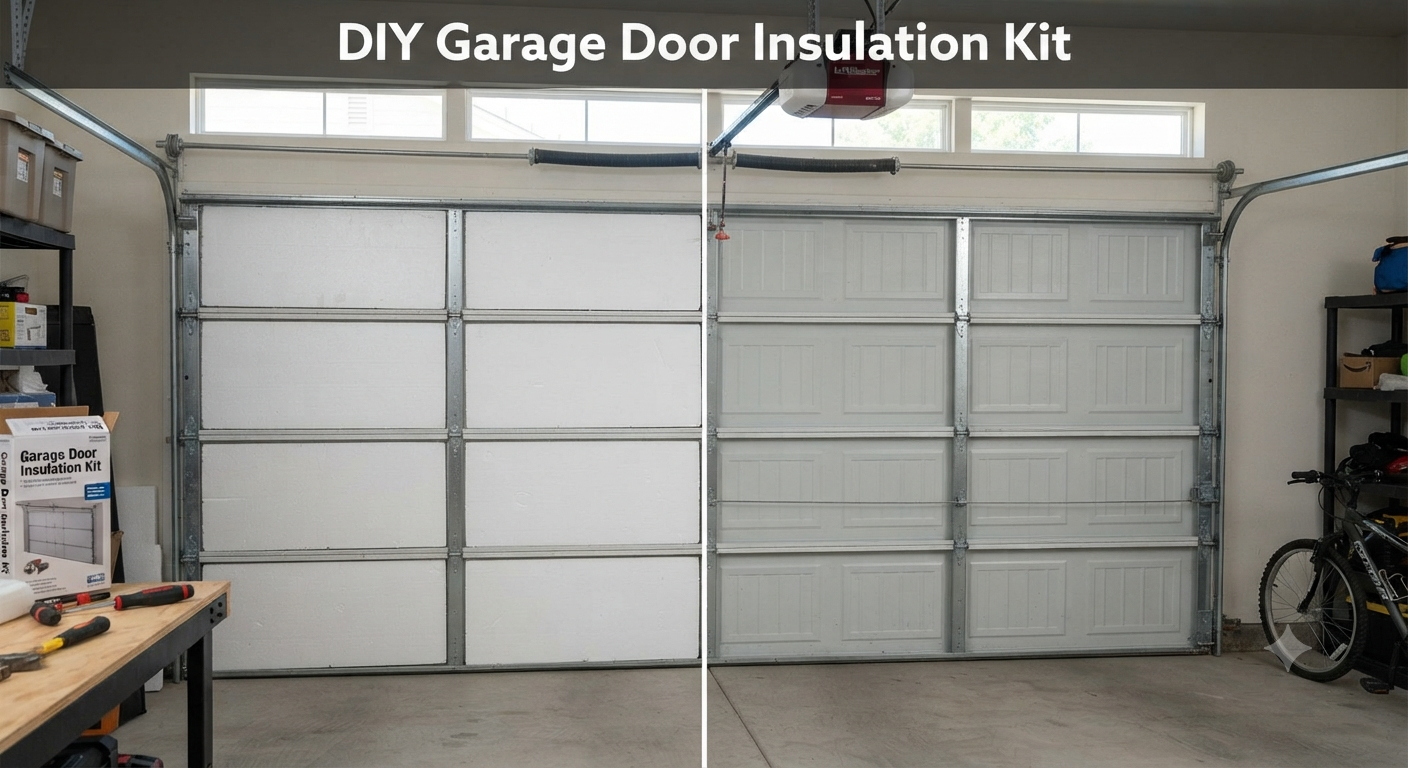
A garage door insulation kit can add insulation to the existing panels, and some homeowners choose DIY garage door insulation to keep labor costs down. But it isn’t always the best long-term option. Your door’s condition, construction, weight limit, and how you use the garage all matter.
When a Retrofit Makes Sense
A retrofit garage door insulation project can make sense when the existing door still opens smoothly, the panels aren’t badly damaged, and the hardware is in good condition.
You might consider it if:
- The door is structurally sound but has little or no insulation
- You mainly want better temperature control
- You’re trying to avoid the price of a complete replacement
- The garage is used for storage, parking, or occasional projects
- You don’t need a very high R-value
- The springs and opener can handle the added weight
A garage door insulation kit is usually the simplest route. Depending on the kit and material, you may be able to insulate existing garage door panels yourself with basic tools.
The big advantage is cost. You’re improving the door you already have instead of paying for new panels, tracks, springs, and installation.
But there’s a catch: adding insulation also adds weight. If the existing springs are already worn or barely handling the door, adding a heavy insulation layer isn’t something I’d do without having the system checked first.
When Replacement Is Better
Sometimes putting insulation onto an old door just doesn’t make much sense.
If the panels are damaged, the tracks are worn, the door is noisy or badly out of balance, or the hardware is near the end of its life, you’re probably better off replacing the whole thing.
A new factory-insulated door gives you insulation that’s built into the panels rather than added afterward. You can also choose the insulation level, panel construction, R-value, windows, and other features from the start.
Replacement is usually worth considering when:
- The existing door is old or damaged
- Panels are cracked, bent, or rusted
- Springs or other hardware need major work
- You want a higher insulation level
- The garage is attached to your home
- You use the space as a workshop or gym
- You want better weather sealing and a newer door system
The garage door insulation cost for a retrofit may look attractive at first, but don’t compare it with a replacement based on insulation alone. A replacement also gives you new panels, hardware, seals, and a fresh installation.
My take: if the door is healthy and you’re mainly looking for a budget-friendly comfort upgrade, DIY insulation can be worth a shot. If the door is already showing its age, I’d put that money toward a properly insulated replacement instead.
How to Choose the Right Insulated Garage Door Without Overspending
Buying the best insulated garage door doesn’t mean buying the most expensive one. A $5,000 door isn’t automatically a better choice for your garage than a $2,500 door. What matters is whether the door fits your climate, how you use the space, and what you’re actually getting for the money.
A good garage door buying guide should help you spend on the things that matter and skip the stuff you don’t really need.
Choose Based on Your Climate
Start with the weather where you live.
If you deal with very hot summers, cold winters, or big temperature swings, insulation becomes more useful. A better-insulated door can slow down heat transfer and make the garage less affected by outdoor temperatures.
In a mild climate, you may not need the highest insulation level available. A basic or mid-range insulated door could do the job just fine.
Choose Based on How You Use the Garage
Think about what actually happens inside the garage.
If it’s mostly for parking cars and storing boxes, you probably don’t need a top-of-the-line door.
But if you use it as a workshop, gym, hobby room, or workspace, you’ll notice temperature changes a lot more. In that situation, spending more on insulation can make sense.
Compare R-Value, Not Just Price
When comparing insulated doors, look at the R-value, not just the sticker price.
A higher R-value generally means the door has greater resistance to heat flow. But don’t fall into the trap of thinking the highest number is automatically the best choice.
For example, paying substantially more for a very high R-value may not be worthwhile if your garage is only used for parking. On the other hand, a higher-R-value door can make more sense if you heat or cool the space.
Also check how that R-value is achieved. Insulation material, thickness, and door construction all matter.
That’s where an insulated steel garage door can be a good middle-ground choice. Steel gives you a durable exterior, while the insulated core improves thermal performance without pushing the price into custom-door territory.
Get Itemized Quotes
This is one of the easiest ways to avoid paying for something you didn’t expect.
Ask the installer to break the quote down into:
- Door and insulation
- Installation labor
- Tracks and hardware
- Springs and rollers
- Old door removal
- Disposal
- Weatherstripping
- Garage door opener work
- Windows or decorative upgrades
- Any repairs to the opening
An itemized quote makes the garage door value much easier to judge. One company may quote $2,000 for the door and charge everything else separately, while another may quote $2,700 but include most of the work.
Compare at Least 3 Installers
I’d recommend getting at least three quotes before making the decision. Garage door prices and labor can vary from one local company to another, even for a similar door.
When comparing installers, ask:
- What brand and model are you quoting?
- What type of insulation does it use?
- What’s the R-value?
- Is installation included?
- Is old-door removal included?
- Are springs, tracks, and rollers included?
- What’s covered by the warranty?
- Is the opener included or separate?
- Are there any possible extra charges?
HomeGuide also recommends comparing multiple quotes and checking details such as insulation type, brands, removal, warranties, and related installation costs.
How to Save Money on a 2-Car Insulated Garage Door
You don’t have to buy the cheapest door to keep your budget under control. There are a few simple ways to get an affordable insulated garage door without giving up the things that actually matter.
The biggest garage door cost savings usually come from choosing the right size, comparing complete quotes, and skipping upgrades you won’t really use.
- Choose standard sizing. A standard garage door is usually less expensive than a custom-size door. If your opening can take a common 16×7 or 16×8 door, there’s little reason to pay extra for custom sizing.
- Don’t overpay for unnecessary R-value. A higher R-value can be useful, but you don’t need the highest number available for a garage that’s mainly used for parking and storage. Match the insulation to your climate and how you use the space.
- Compare installed quotes. Don’t compare one company’s door-only price with another company’s installed price. When you compare garage door quotes, look at the complete project total.
- Ask what’s included. Before signing anything, ask whether installation, tracks, springs, rollers, weatherstripping, old-door removal, and disposal are included. A cheap quote can look very different once these extras are added.
- Keep a good opener if compatible. You may not need a new opener just because you’re installing a new door. If your existing opener is in good condition and suitable for the new door, keeping it can save a decent amount.
- Choose steel for value. An insulated steel door is often a practical choice when you want durability and insulation without moving into the higher prices of custom wood or designer doors.
- Avoid unnecessary custom features. Decorative hardware, specialty finishes, extra windows, and custom designs can quickly push the price up. Add them because you actually want them, not because you feel like you have to.
- Check seasonal promotions. Some garage door companies and manufacturers offer garage door discounts or seasonal deals. It doesn’t hurt to ask if there’s a current promotion before placing the order.
One more thing: don’t cut corners on the parts that keep the door safe and working properly. Saving a few hundred dollars isn’t much of a win if you end up with poor installation or hardware that needs replacing soon.
The best deal is usually the door that fits your garage, climate, and daily use, not simply the one with the lowest price tag.
Is a 2-Car Insulated Garage Door Worth the Money?
For some homeowners, yes. For others, not really. Whether an insulated garage door is worth it mostly comes down to how you use the garage, your climate, and how much extra you’re paying for the insulation.
An insulated door can cost more upfront, but you’re also getting benefits that a basic non-insulated door doesn’t offer.
When It Makes Sense
An insulated door is usually easier to justify if your garage is attached to the house or you spend a lot of time inside it.
You may notice benefits such as:
- Better energy efficiency and temperature control
- Less heat entering during hot weather
- Less cold air getting through in winter
- Better noise reduction from outside
- A heavier, more solid-feeling door
- Better overall durability with quality construction
- Improved curb appeal if you’re replacing an old, worn-out door
- Potentially better home value when the garage door is part of a larger exterior upgrade
When It May Not Be Worth the Extra Cost
If the garage is detached and you only use it for parking and storage, you may not get much value from paying for a premium insulation package.
The same goes for a mild climate where outdoor temperatures don’t swing very much.
You also shouldn’t assume that a more expensive door automatically gives you a better return. Your garage door ROI depends on the door’s quality, installation, local housing market, and what buyers in your area actually care about.
What About Energy Savings?
Insulation can improve energy efficiency by slowing heat transfer through the garage door. That’s especially useful when the garage is attached to your home or has heating and cooling.
But I wouldn’t buy an insulated door expecting a guaranteed monthly saving. There’s no single number that applies to every house. Wall insulation, ceiling insulation, air leaks, climate, and how often you open the door all play a part.
So think of insulation as one piece of the bigger energy picture, not a magic fix for high utility bills.
The Bottom Line
If you have an attached garage, extreme weather, or a garage you actually use as living or working space, spending more on insulation can be a smart upgrade.
If it’s simply a place to park your car and store stuff, a basic insulated door—or even a good non-insulated door—may be enough.
In my opinion, the sweet spot is usually a well-built insulated steel door with a sensible R-value. You get comfort, durability, and some noise reduction without paying a premium just for features you don’t need.
Frequently Asked Questions
How much does a 2-car insulated garage door cost in 2026?
For 2026, most homeowners can expect to spend roughly $1,500 to $3,500 installed for a standard insulated two-car garage door. Basic insulated steel doors tend to be cheaper, while triple-layer, high-R-value, custom, or premium doors can cost more.
Your final price also depends on the garage door size, insulation level, material, installation labor, and extra features. So treat the range as a starting point, not a guaranteed quote.
How much does a 16×7 insulated garage door cost?
A 16×7 insulated garage door can cost around $1,000 to $2,400 for the door, with an installed project often landing around $1,500 to $3,200.
The exact 16×7 garage door cost depends on the door construction, R-value, material, brand, and what’s included with installation. Standard sizes are generally easier on the budget than custom sizes.
How much does installation add to the price?
Installation can add several hundred dollars to the door price. The amount depends on local labor rates and how complicated the replacement is.
Your quote may also include or separately charge for old-door removal, disposal, tracks, springs, rollers, weatherstripping, or repairs. That’s why it’s better to compare the total installed cost instead of looking at installation as a single number.
Is an insulated garage door worth the extra money?
For many homeowners, yes—but not everyone needs a premium insulated door.
An insulated door can help with temperature control, noise reduction, and energy efficiency. It’s especially useful for an attached garage or a space you use as a workshop, gym, or living area.
If your garage is mainly used for parking and storage, a basic insulated door may be enough. You don’t necessarily need the most expensive option.
What R-value is good for a garage door?
There’s no single best R-value for every garage. A moderate R-value can work well for a basic garage, while a higher R-value makes more sense when the garage is attached, climate-controlled, or used regularly.
HomeGuide’s pricing information lists insulated garage doors across a fairly wide R-value range, so it’s better to choose based on your climate and garage use rather than simply buying the highest number.
Is polyurethane better than polystyrene?
Generally, polyurethane provides better insulation than basic polystyrene because it’s denser and can provide stronger thermal performance within the door panel.
That doesn’t mean polystyrene is a bad choice. It can cost less and still gives you a useful step up from a non-insulated door.
If budget is your main concern, polystyrene can be perfectly reasonable. If you want stronger insulation and don’t mind spending more, polyurethane is worth looking at.
Is a triple-layer garage door worth it?
It can be, especially if you want better insulation, a more solid door, and less outside noise.
A triple-layer garage door generally has more material around the insulation than a basic double-layer design, so it usually costs more. I’d consider one for an attached garage, workshop, gym, or climate-controlled space.
For a garage that’s only used for parking, the extra cost may not be worth it.
Do I need a new opener with a new garage door?
Not necessarily.
If your current garage door opener is in good condition, compatible with the new door, and has enough lifting capacity, you may be able to keep it.
However, an old or worn opener may be worth replacing while the door is being installed. Ask the installer to check it first rather than automatically adding a new garage door opener cost to your project.
Can I insulate my existing garage door?
Yes. A garage door insulation kit can be used to add insulation to some existing doors.
This can be a cheaper option when the door itself is still in good condition. But adding insulation also adds weight, so the springs and opener should be able to handle the change.
If the door is already damaged, badly worn, or having hardware problems, replacing it with a factory-insulated door may make more sense.
Does an insulated garage door reduce energy bills?
It can help, but don’t expect a fixed amount of savings.
An insulated door slows heat transfer, which can help the garage stay closer to the indoor temperature. This matters more when the garage is attached to your home or you’re actively heating and cooling it.
Your actual garage door energy savings depend on your climate, how often the door opens, wall and ceiling insulation, air leaks, and whether the garage is climate-controlled.
Final Thoughts
The right insulated 2 car garage door doesn’t have to be the most expensive one on the market. For most homeowners, a solid insulated steel door with the right R-value, good weather sealing, and professional installation is a pretty sensible choice.
When you’re working out the garage door cost, remember to look at the whole project—not just the door itself. Your installed garage door price may also include labor, hardware, removal, disposal, and upgrades such as windows or a new opener.
If you’re replacing an old door, garage door insulation is worth considering when you use the garage often, have an attached garage, or live somewhere with very hot or cold weather. If the garage is only used for parking and storage, you probably don’t need to spend extra on the highest insulation level.
In short, how much does a 2 car insulated garage door cost depends on the size, material, insulation, design, labor, and extras you choose. A realistic 2026 budget is usually around $1,500 to $3,500+ installed for a standard insulated two-car door, while premium or custom options can go much higher.