Garage door locks physically keep your door from being opened when the opener isn’t holding it closed. Common options include slide locks, T-handle locks, deadbolts, rail locks, and automatic locks that work with compatible garage door openers.
If you have an automatic opener, you might assume you don’t need a separate lock. That’s not always the case. A power outage, opener failure, or a compromised emergency-release mechanism can leave a garage door vulnerable if nothing else is holding it shut.
The right lock depends on your door, opener, how you use the garage, and whether you need to lock the door from inside or outside.
What Is a Garage Door Lock and How Does It Work?
A garage door lock is a device that physically prevents the door from moving, separate from the lifting force provided by the opener.
Think of it this way: the opener lifts and lowers the door, while the lock keeps the door from being moved when it’s supposed to stay closed.
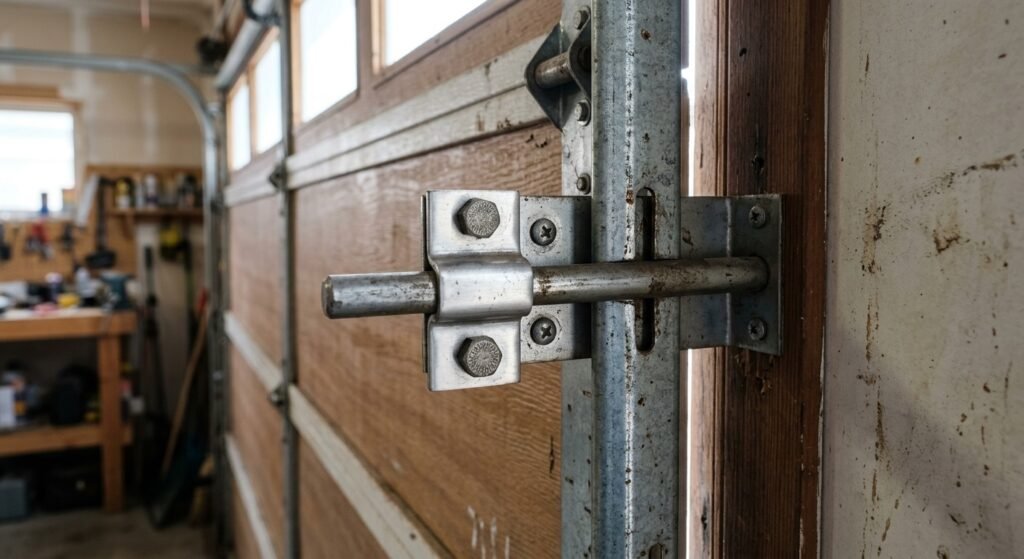
Most garage door locks use a metal bar, bolt, or pin that engages with the door track or another solid mounting point. Once engaged, the lock prevents the door from rolling upward.
Some locks are completely manual. Others can work automatically with a compatible garage door opener.
Here’s an important distinction that often gets overlooked: a garage door opener isn’t necessarily the same thing as a mechanical lock. An opener keeps the door closed through its motor and drive system, but that system can fail. That’s one reason a separate locking system can still be useful, depending on the door and opener setup.
Types of Garage Door Locks
There are several types of garage door locks, and each one makes sense in a different situation. Here’s what you need to know before buying one.
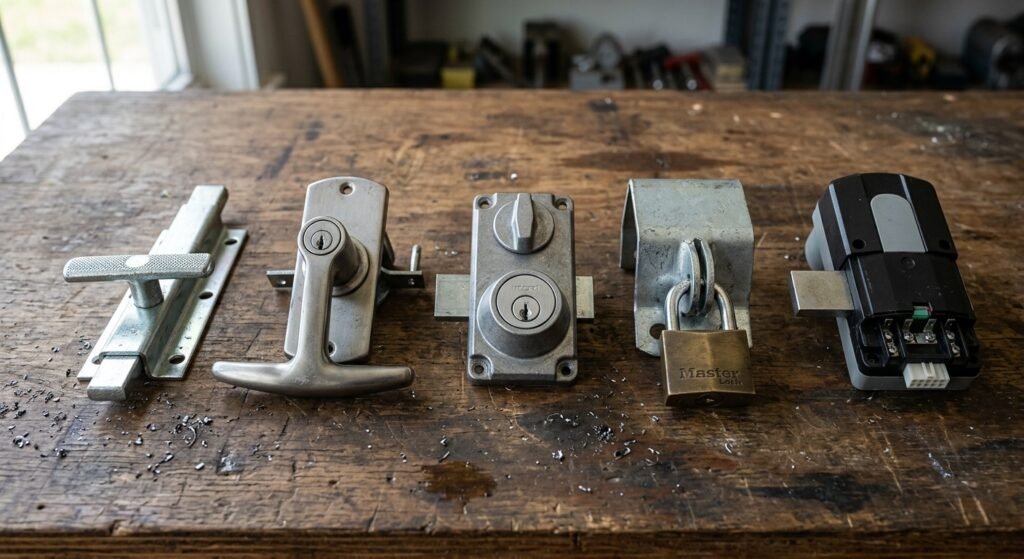
Slide Locks (Bar Locks)
A garage door slide lock, also called a bar lock, is one of the simplest options.
A metal bar slides horizontally into a hole or slot in the garage door track. Once the bar is in place, the door can’t roll upward.
These locks are inexpensive and relatively easy to install, making them a common choice for manual garage doors.
T-Handle Locks
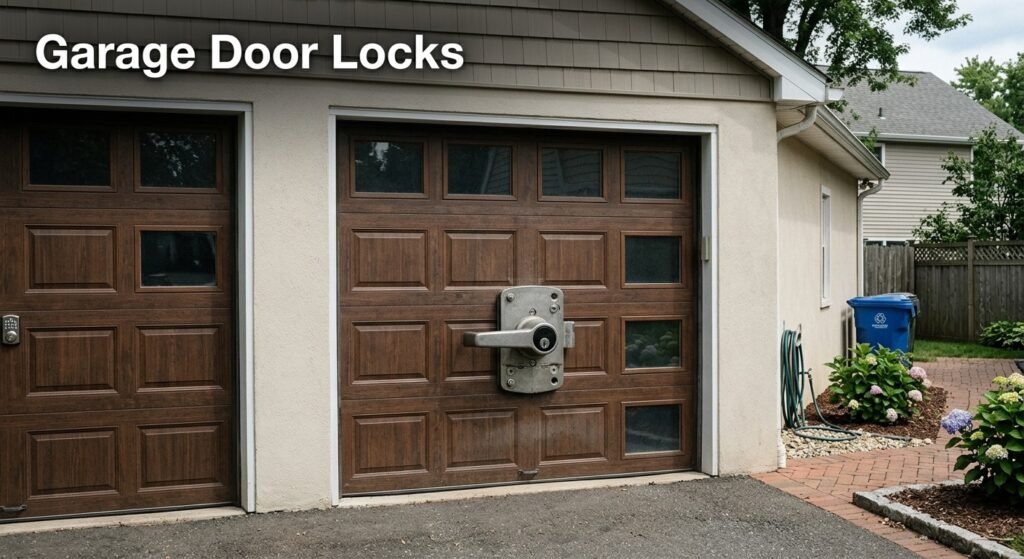
A garage door T-handle lock, sometimes called a T handle garage door lock, has a T-shaped handle mounted through the garage door.
Turning the key rotates an internal mechanism that engages locking rods or a cam. They’re especially common on older doors, detached garages, and doors without automatic openers.
If the handle is damaged, the key no longer works, or the internal mechanism is worn out, you can usually replace the T-handle assembly rather than replacing the entire garage door.
Deadbolts
Deadbolts for garage doors provide another way to physically secure a closed door.
Depending on the design, the bolt can engage with a bracket, track, or another reinforced mounting point. Some are manually operated, while certain systems are designed to work with compatible garage door openers.
A deadbolt can make sense when you want something more substantial than a basic slide lock, particularly for a garage that’s more exposed to the street, alley, or other access points.
Padlocks and Rail Locks
A garage door padlock or garage door rail lock uses the garage door track or a dedicated bracket as the locking point.
A padlock passes through the bracket or hasp, preventing the door from moving.
This is a simple way to add another physical barrier without replacing the existing garage door hardware.
If the lock will be exposed to weather, choose hardware designed for outdoor conditions. Moisture and temperature changes can eventually cause cheap hardware to rust or seize.
Automatic (Opener-Integrated) Locks
An automatic garage door lock can work with a compatible opener system and lock the door when it closes.
These systems are convenient because you don’t have to manually engage the lock every time. However, compatibility matters. Not every automatic lock works with every garage door opener.
They’re also more expensive than basic manual locks and may require professional installation depending on the system.
Before buying one, check the opener manufacturer’s compatibility requirements rather than assuming a particular lock will work with your setup.
Garage Door Defenders
A garage door defender is a security accessory designed to add protection around vulnerable parts of the garage door system.
It’s not the same thing as a traditional lock. Instead, these products are intended to reinforce or shield specific areas, depending on the design.
If you’re mainly concerned about forced entry or access to the emergency-release mechanism, this type of security accessory may be worth considering alongside a conventional lock.
Locking Handles and Knobs
Some older garage doors use a garage door handle with lock built into the handle itself.
These handles typically use a simple latch or locking mechanism. They’re convenient, but the security they provide depends heavily on the design and condition of the hardware.
If the existing handle feels loose, damaged, or easy to manipulate, replacing it or adding another suitable locking method may make more sense.
Inside Lock vs. Outside Lock: Which One Do You Actually Need?
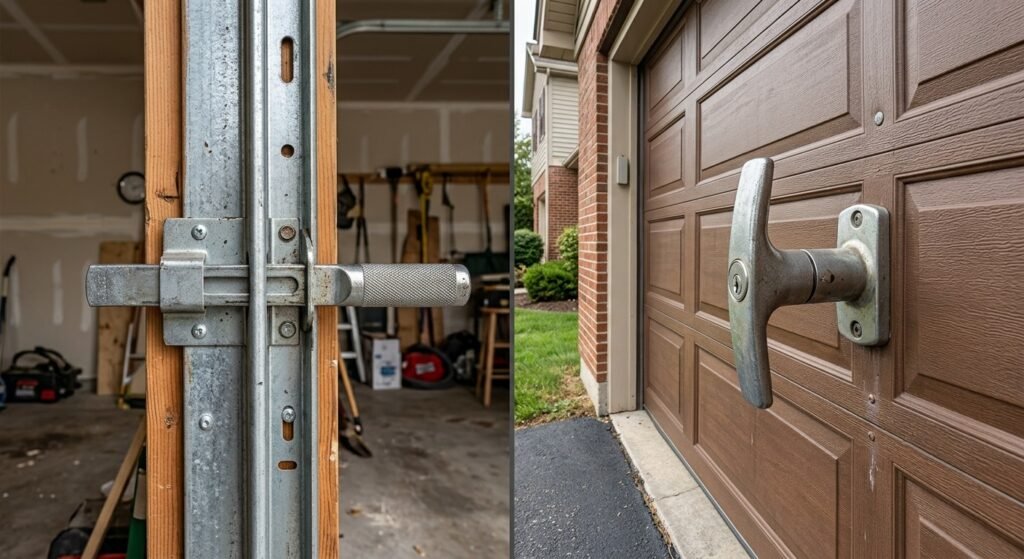
This is an easy detail to overlook when shopping for a garage door lock.
- Inside garage door lock: Slide locks and many manual deadbolts are operated from inside the garage. They’re useful when you have another way to enter or exit the garage.
- Outside garage door lock: T-handles and certain keyed systems let you lock and unlock the garage door from outside.
Some homeowners use more than one security measure, but the hardware needs to be compatible with the door and opener. Never use a manual lock in a way that prevents the automatic opener from operating normally.
How to Lock a Garage Door (Step by Step)
For a Manual Door With No Opener
- Close the garage door completely.
- Locate the slide lock, T-handle, or other locking mechanism.
- Engage the lock fully.
- Give the door a gentle pull to make sure it stays in place.
Don’t force the lock if it doesn’t line up. A track, door, or locking mechanism that’s out of alignment may need adjustment.
For a Door With an Automatic Opener
- Close the door using the opener as you normally would.
- Make sure any manual lock is disengaged unless the opener and lock are specifically designed to work together.
- If your opener uses an integrated automatic lock, make sure the system is functioning properly.
- If you’re leaving for an extended period, use the opener’s available lock or vacation features if your model provides them.
Important: Never engage a manual slide lock or deadbolt and then activate the garage door opener. The opener can continue trying to move the door, which may damage the locking mechanism, door, or opener.
The Emergency Release Risk Many Homeowners Miss
Garage door openers have an emergency-release mechanism that allows you to disconnect the opener from the door. That’s useful when the power is out or the opener isn’t working.
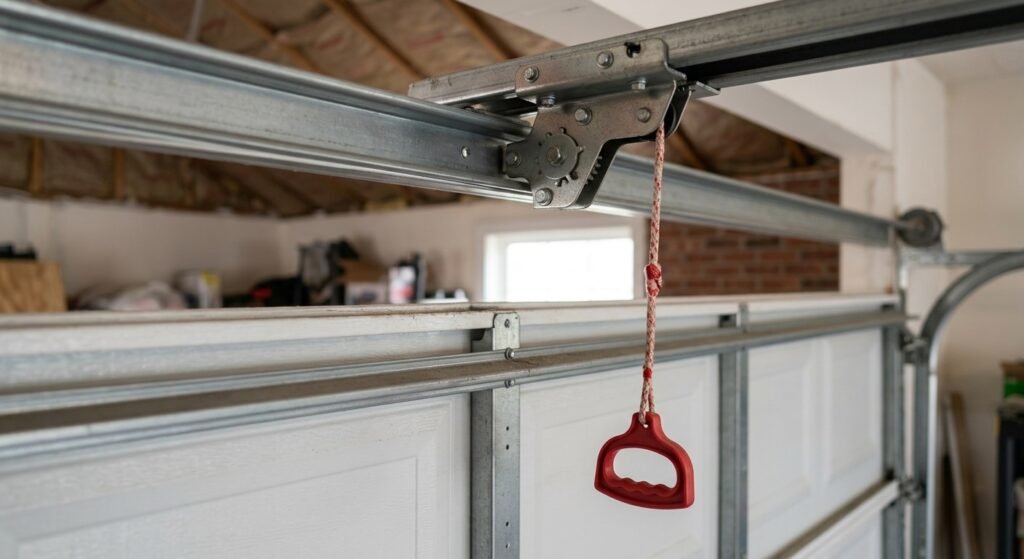
The problem is that the emergency-release mechanism can become a security concern if it can be reached from outside through a gap around the top of the garage door.
For that reason, it’s worth checking how your particular garage door and opener are installed.
A few practical steps can help:
- Inspect the top seal: A damaged or badly worn seal can leave unnecessary gaps around the door.
- Check the emergency-release setup: Make sure the release mechanism is installed according to the opener manufacturer’s instructions.
- Consider a compatible security accessory: Products designed to protect the emergency-release mechanism may provide another layer of security.
- Keep the opener and door hardware maintained: A properly adjusted door is less likely to develop unnecessary gaps or other problems.
Do You Still Need a Lock If You Already Have an Opener?
Not necessarily in every setup, but an opener and a physical lock serve different purposes.
An automatic opener is designed to control the movement of the garage door. A mechanical lock physically prevents movement.
There are a few reasons homeowners may still want an additional locking solution:
- Power outages: The opener won’t operate normally without power.
- Opener failure: Motors, gears, belts, chains, and other components can eventually fail.
- Emergency-release concerns: Depending on the installation, the release mechanism may need additional security consideration.
- Older equipment: Older garage door systems may not offer the same security features as newer systems.
How to Install or Replace a Garage Door Lock
Installing a basic garage door lock kit can be a manageable DIY project if you’re comfortable drilling and working with garage door hardware.
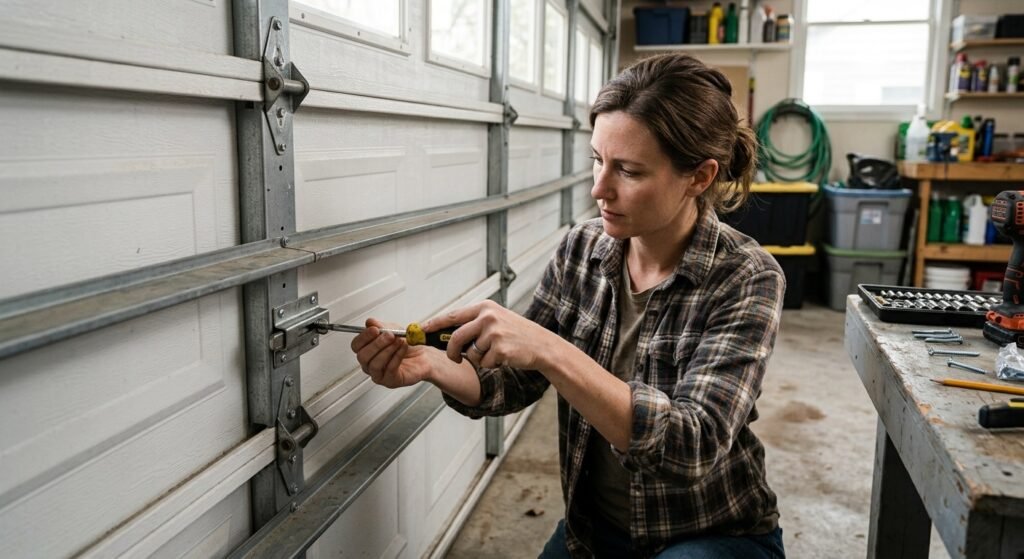
For a basic slide lock or T-handle, the general process looks like this:
- Choose the location. A slide lock is generally installed on the inside of the door near the track. A T-handle is installed through the garage door panel.
- Mark the mounting points. Use the template or instructions supplied with the lock.
- Drill the required holes. Use the correct bit and avoid damaging the door panel.
- Install the lock hardware. Secure the brackets, handle, or locking mechanism according to the manufacturer’s instructions.
- Test the lock. Make sure the bar, bolt, or locking rods move smoothly and fully engage.
- Test the door. If you have an opener, confirm that the lock doesn’t interfere with normal opener operation.
For a garage door lock replacement, remove the old hardware first and compare the mounting pattern and dimensions with the new lock.
Common Garage Door Lock Problems and How to Fix Them
Lock Is Stuck or Won’t Turn
Dirt, corrosion, moisture, or an aging lock cylinder can make a lock difficult to operate.
Don’t force the key. Use a lubricant that’s specifically recommended for lock cylinders and check whether the mechanism needs cleaning or replacement.
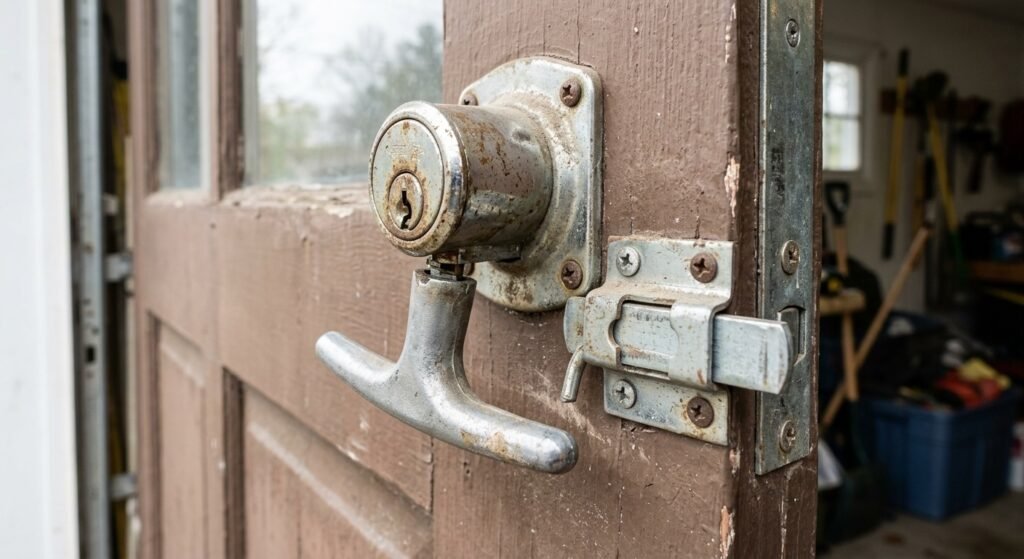
T-Handle Spins but Doesn’t Lock
If the handle turns but the door doesn’t lock, the internal cam, rods, or linkage may have become disconnected or damaged.
Key Won’t Turn or the Lock Cylinder Is Worn Out
A damaged garage door lock cylinder doesn’t always mean the entire handle needs replacing.
If the rest of the hardware is in good condition, replacing the cylinder may solve the problem.
Door Won’t Open and the Opener Is Straining
First, check whether a manual lock is engaged.
This is one of the first things to check before assuming the opener itself has failed. If a manual lock is preventing the door from moving, continuing to operate the opener can cause damage.
Lock Freezes in Winter
Moisture inside a lock cylinder can freeze during cold weather.
A lock-specific lubricant designed for the application can help reduce moisture-related problems. If the cylinder repeatedly freezes, inspect it for water intrusion or consider replacing worn hardware.
Old Lock Hardware Is Loose or Rattling
Garage doors vibrate every time they open and close, so screws and mounting hardware can loosen over time.
Tighten loose fasteners and inspect the mounting points. If the door panel or mounting area is damaged, simply tightening the screws may not be enough.
How Much Do Garage Door Locks Cost?
The cost depends on the type of lock, the door, and whether you’re installing it yourself or hiring a professional.
Here are rough US price ranges for common options:
| Lock Type | Typical Parts Cost | Typical Installation |
| Slide/bar lock | $10–$25 | Usually DIY |
| T-handle lock | $20–$50 | Usually DIY |
| Manual deadbolt | $25–$60 | DIY or professional |
| Padlock/rail bracket | $10–$20 | Usually DIY |
| Automatic/opener-integrated lock | $80–$150+ | May require professional installation |
| Lock cylinder replacement | $10–$20 | Usually DIY |
| Garage door defender/security bracket | $15–$35+ | Usually DIY |
These are general ranges rather than fixed prices. Hardware prices vary by brand, door type, location, and current market conditions.
Professional labor can add to the total, particularly if the technician needs to adjust the door, modify existing hardware, or install an opener-compatible locking system.
How to Choose the Right Garage Door Lock
Before buying a lock, ask yourself a few simple questions.
Is the Garage Door Your Main Entry Point?
If you need to enter the garage from outside, you’ll probably want a keyed exterior lock such as a T-handle or another compatible outside-access system.
If you have a separate walk-in door, an inside locking mechanism may be more practical.
Do You Already Have an Automatic Opener?
If you do, make sure any manual lock you install won’t interfere with the opener.
This is one of the most important compatibility issues to check before installation.
How Exposed Is Your Garage?
A garage that opens directly onto an alley, side street, or other accessible area may benefit from additional security measures.
Think about the entire system rather than just the lock: the door, tracks, emergency release, opener, windows, and side entry should all be considered.
What’s Your Budget?
You don’t necessarily need the most expensive locking system.
A basic manual lock can be a practical choice for some garages, while an opener-integrated lock or additional security hardware may make more sense for other setups.
Do You Need Convenience or Maximum Physical Security?
Manual locks are simple and inexpensive, but you have to operate them yourself.
Automatic systems are more convenient, but they cost more and require compatibility with the door and opener.
Frequently Asked Questions
Can I Lock My Garage Door From Outside Without a Key?
Some modern garage systems offer remote locking or control through an app. Traditional mechanical locks, however, generally require a key, combination, or another form of access from outside.
The exact options depend on your garage door and opener system.
Do Garage Locks Work If the Power Goes Out?
Manual locks such as slide locks and many T-handle systems don’t require electricity.
Automatic systems can behave differently depending on how they’re designed, so check the manufacturer’s instructions. Having a suitable manual security option can be useful if your garage needs to remain secured during a power outage.
Is a Garage Door Lock Required by Insurance or HOA Rules?
That depends on the specific insurance policy, HOA rules, and location.
Don’t assume a particular lock is required. Check your policy documents or contact your insurer or HOA if you’re concerned about a requirement.
How Do I Lock a Garage Door That Has No Separate Lock?
If your garage door currently relies only on the opener, you may be able to add a compatible manual locking system.
A basic slide lock is one possible option, but first make sure the new lock won’t interfere with your automatic opener.
Can Someone Break a Slide Lock Easily?
A slide lock is a physical deterrent, not an impenetrable security system.
Its effectiveness depends on the quality of the hardware, how it’s installed, and the condition of the door and track.
If you’re looking for stronger protection, consider the entire garage door security setup rather than relying on one inexpensive lock.
Final Thoughts
Garage door locks aren’t complicated, but choosing the wrong one can create more problems than it solves.
The best option depends on how your garage is used, whether you have an automatic opener, whether you need outside access, and what kind of security you’re looking for.
A simple slide lock may be enough for one garage, while another may benefit from a T-handle, deadbolt, automatic lock, or additional security hardware.
Whatever you choose, make sure the lock is compatible with your garage door and opener and that it doesn’t interfere with normal operation.
A lock should make your garage more secure, not become the reason your opener or door gets damaged.