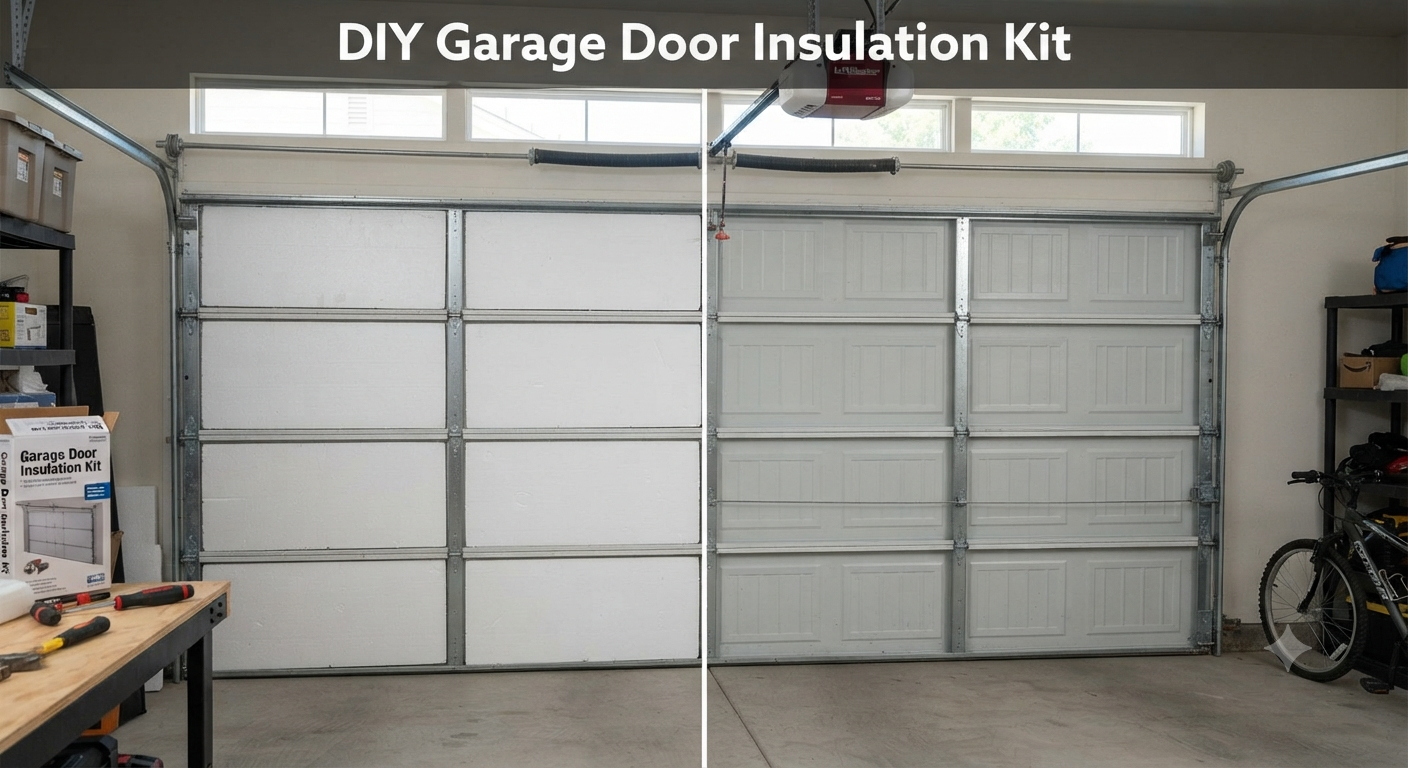
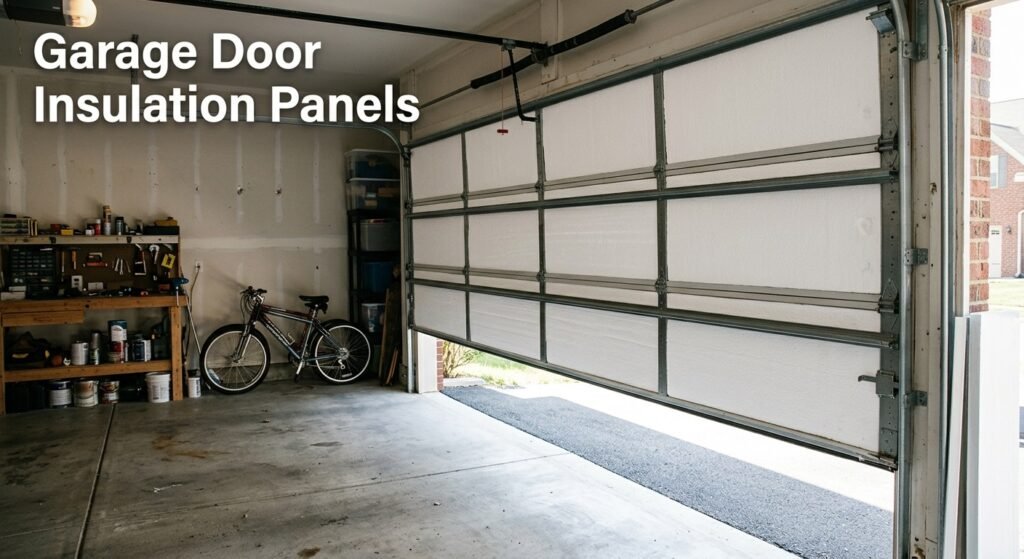
Garage door insulation panels are inserts that fit into the sections of a garage door to slow heat transfer and make the door more resistant to temperature changes. They can be made from rigid foam, fiberglass, or reflective materials, and they may come pre-cut or ready to trim.
The tricky part isn’t simply buying a panel and putting it on the door. Size, thickness, weight, fit, and the way the panel is secured all matter. This guide explains how these panels work, how to choose the right ones, and how to install or replace them without creating problems for your garage door.
What Are Garage Door Insulation Panels?
Garage door insulation panels are pieces of insulating material designed to fit inside the recessed sections or cavities of a garage door.
Think of a typical sectional garage door. It is made up of several horizontal sections, and many of those sections have an open or recessed space on the inside. An insulation panel sits inside that space.
The panel creates an additional layer between the garage and the outdoor side of the door.
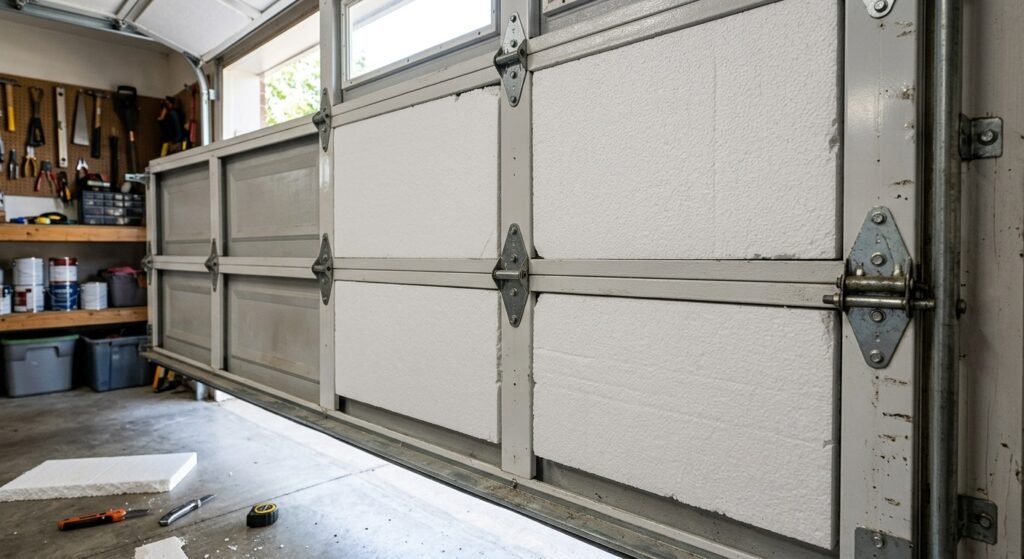
Depending on the product, a panel may be:
- Rigid foam
- Polystyrene
- Polyisocyanurate (polyiso)
- Fiberglass
- Reflective bubble insulation
- Another purpose-made insulation material
Some panels are made specifically for garage doors, while others are cut from larger insulation boards or sheets.
Panels Are Not the Same as an Insulated Garage Door
This distinction is easy to miss.
A factory-insulated garage door is manufactured with insulation built into each door section. A retrofit panel is added to an existing door later.
That’s why retrofit panels need to be chosen carefully. The insulation has to fit the existing door rather than simply being rated for a certain garage size.
A door can be advertised as an 8-foot-wide door, for example, but that doesn’t tell you the exact size of every insulation cavity.
How Do Garage Door Insulation Panels Work?
The basic job is simple: the panel slows heat transfer through the door.
A bare metal garage door can heat up quickly when exposed to direct sun and can also allow indoor heat to escape during cold weather. Adding insulation makes it harder for heat to pass through the door.
The result isn’t a temperature-controlled garage by itself. The panels simply reduce the rate at which temperature changes move through the door.
That’s an important distinction.
If your garage is extremely hot because the roof and walls absorb heat all day, insulating the door alone won’t solve the entire problem.
But if the door is one of the weakest parts of the garage envelope, adding properly fitted insulation can be a useful upgrade.
What Types of Garage Door Insulation Panels Are Available?
There isn’t one universal panel design. The right option depends on the door, available space, climate, and what you’re trying to improve.
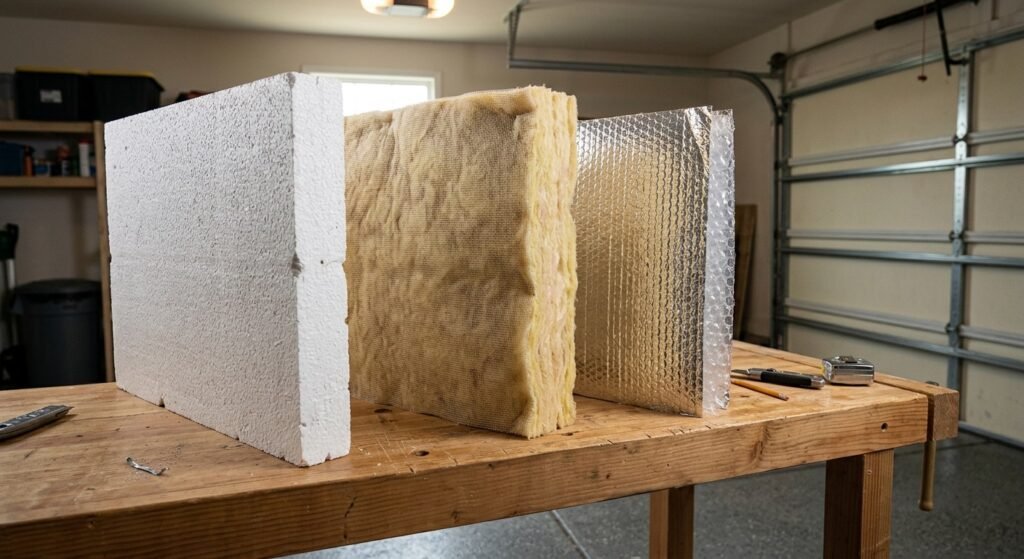
Rigid Foam Panels
Rigid foam is one of the more practical choices for a retrofit.
Common options include:
- EPS (expanded polystyrene)
- XPS (extruded polystyrene)
- Polyiso
These materials are relatively easy to cut and can provide useful thermal resistance without requiring a very complicated installation.
Rigid foam is especially popular for DIY garage door insulation panels because individual pieces can be cut to match the door sections.
Polystyrene Panels
Polystyrene panels are commonly used in garage door insulation because they’re lightweight and relatively easy to fit.
They can work well when the door has a suitable recessed cavity.
The important thing is to check the actual dimensions and thickness of the product instead of assuming every polystyrene panel is interchangeable.
Polyiso Panels
Polyiso is a rigid foam insulation that can offer strong thermal performance for its thickness.
This can be useful when the door doesn’t have much room for a thick insert.
However, don’t choose a panel simply because its insulation rating looks impressive. It still has to fit the door properly and remain compatible with the door hardware.
Fiberglass Panels
Fiberglass can also be used in garage door insulation kits.
Some products use a fiberglass insulation layer inside a finished vinyl cover, making the material easier to handle and keep clean.
Fiberglass needs more care during cutting and installation than a simple rigid foam board. Follow the product’s safety instructions and use appropriate protective equipment.
Reflective Insulation Panels
Reflective panels often use a foil or aluminized surface combined with a bubble layer.
They’re lightweight and easy to cut, which is one reason they’re popular in DIY kits.
However, reflective insulation isn’t simply a thinner version of foam insulation. It works differently, particularly in relation to radiant heat, and installation conditions can affect its performance.
For that reason, don’t compare a reflective panel and a foam panel by thickness alone.
Pre-Cut vs. Cut-to-Fit Insulation Panels
This is one of the first decisions you’ll make when buying.
Pre-Cut Panels
Pre-cut panels are already sized for a particular range of garage door sections.
They’re convenient and can save a lot of cutting.
They’re a good choice when:
- Your door has common-size sections
- You want a faster installation
- You don’t want to cut large insulation sheets
- The kit clearly matches your door dimensions
Cut-to-Fit Panels
Cut-to-fit panels or larger insulation sheets give you more flexibility.
You measure the actual cavity, mark the insulation, and trim each piece.
This takes longer, but it can be a better option for:
- Older garage doors
- Non-standard sections
- Custom doors
- Doors with different-sized sections
- Replacement panels.
Garage Door Insulation Panel Sizes
There isn’t one standard insulation panel size that fits every garage door.
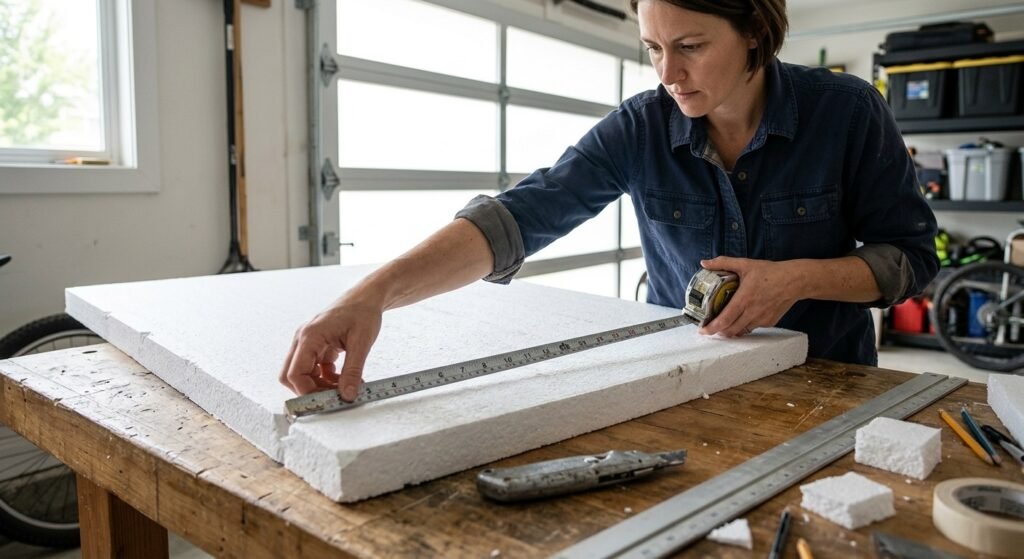
You may see products sold in dimensions such as:
- 24 × 48 inches
- 24 × 54 inches
- Around 20 × 54 inches
- Other pre-cut sizes
- Full-size insulation sheets
- Custom-cut panels
These dimensions are product-specific, not a universal garage door standard. For example, current kits on the market include 24 × 48-inch reflective pieces as well as panels designed around openings up to roughly 22 × 54 inches.
Why Door Size Doesn’t Tell You Panel Size
A 16 × 7-foot garage door doesn’t necessarily need sixteen identical pieces.
The actual number and dimensions depend on:
- Number of door sections
- Section height
- Section width
- Door design
- Windows
- Reinforcement bars
- Existing insulation
- Available cavity depth
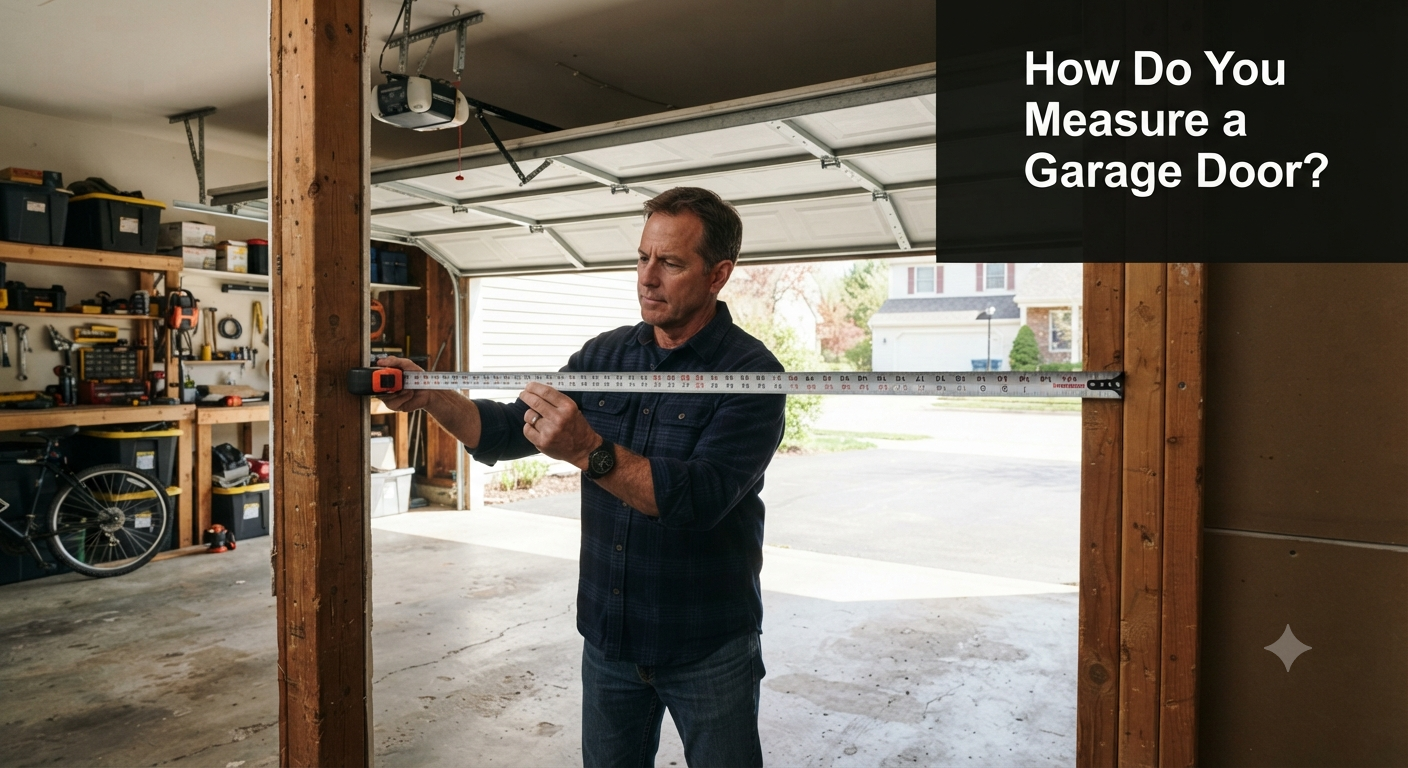
How to Measure for Garage Door Insulation Panels
Good measurements are probably the most important part of the project.
If the panels don’t fit, even a high-quality insulation material won’t perform the way you expect.
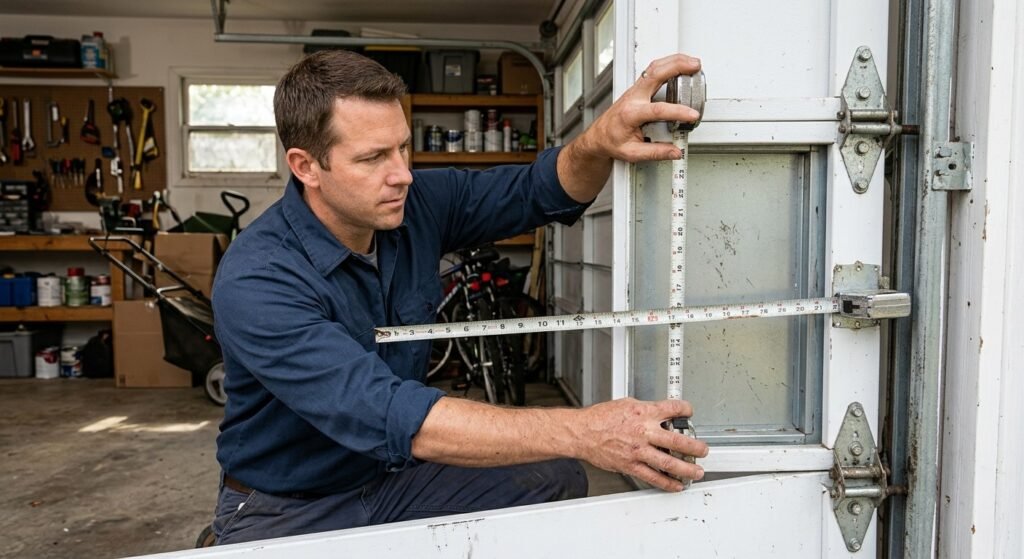
Measure Every Door Section
Start by measuring the usable height and width of each recessed area.
Don’t assume every section is identical.
Some garage doors have slightly different dimensions between sections, especially older or unusual doors.
Measure the Available Depth
Next, check how much room you have behind the door’s interior surface.
This determines the maximum practical panel thickness.
Pay attention to:
- Hinges
- Struts
- Brackets
- Roller hardware
- Door edges
- Windows
A panel that technically fits the width and height may still be too thick.
Measure Around Windows
If your door has windows, don’t assume you can cover the whole section.
The insulation should be cut around the window area unless the product is specifically designed for that application.
Keep the panel away from moving hardware and anything that needs to flex when the door opens.
Count the Number of Sections
Once you’ve measured each cavity, count how many pieces you’ll need.
A common mistake is to calculate the total door area and then order a kit without checking the individual panel dimensions.
How Thick Should Garage Door Insulation Panels Be?
Thickness should be based on the space available in your garage door.
A thicker panel isn’t automatically a better panel.
If it’s too thick, it may:
- Stick out from the door
- Interfere with hinges
- Rub against other components
- Make the door sections harder to fold
- Prevent the door from operating correctly
Some garage door insulation products are around 1 to 2 inches thick, while others are much thinner. The correct choice depends on the particular door and product.
Check the Door Cavity Before Buying
Don’t order a thick foam board first and try to make the door accommodate it.
Measure first.
If the available cavity is shallow, a thinner high-performance material may make more sense than simply adding a thicker low-density board.
Do Garage Door Insulation Panels Add Too Much Weight?
They can.
This is one of the biggest things to think about before adding insulation to an existing garage door.
Your garage door’s spring system is balanced for the weight of the door. Adding a significant amount of material can change that balance.
What Happens If the Door Becomes Too Heavy?
You may notice:
- The door feels heavier by hand
- The opener sounds like it’s working harder
- The door doesn’t stay in position
- Movement becomes uneven
- The door becomes difficult to lift manually
Don’t respond by adjusting the springs yourself.
Garage door springs can be under substantial tension. If the door’s balance changes noticeably after installing insulation, have a qualified garage door technician inspect it.
Never remove or adjust torsion springs simply to compensate for an insulation upgrade unless you know exactly what you’re doing.
How Are Garage Door Insulation Panels Held in Place?
The fastening method depends on the panel and door.
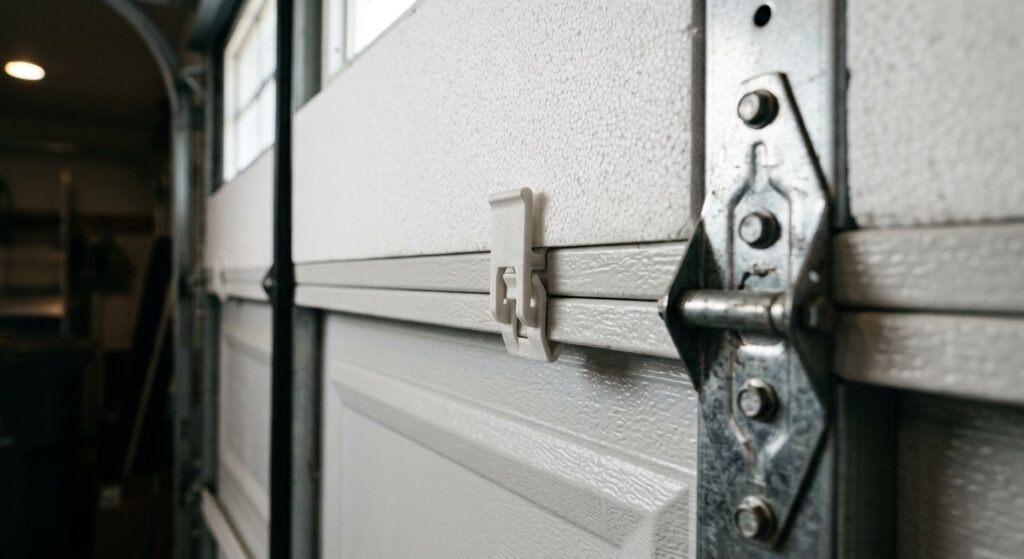
Common approaches include:
- Retainer clips
- Adhesive
- Double-sided foam tape
- Door-frame channels
- Friction fit
- Purpose-made retaining systems
Retainer Clips
Retainer clips are common in garage door insulation kits.
The clip base is attached to the door, and the insulation panel is positioned over the retaining pin. A second piece locks the panel into place.
Adhesive
Some reflective insulation kits use adhesive or double-sided foam tape.
This can provide a clean installation, but the door surface needs to be clean and suitable for the adhesive.
Don’t assume any household adhesive is safe for insulation.
Certain adhesives can damage foam materials.
Friction-Fit Panels
Some purpose-built foam panels are designed to sit inside the door frame without glue.
The panel is trimmed to the correct dimensions and held in place by the surrounding door channels or a dedicated spacer system.
This can be convenient because you don’t have to permanently bond the insulation to the door.
How to Install Garage Door Insulation Panels
The exact steps depend on your product, so always follow the included instructions first.
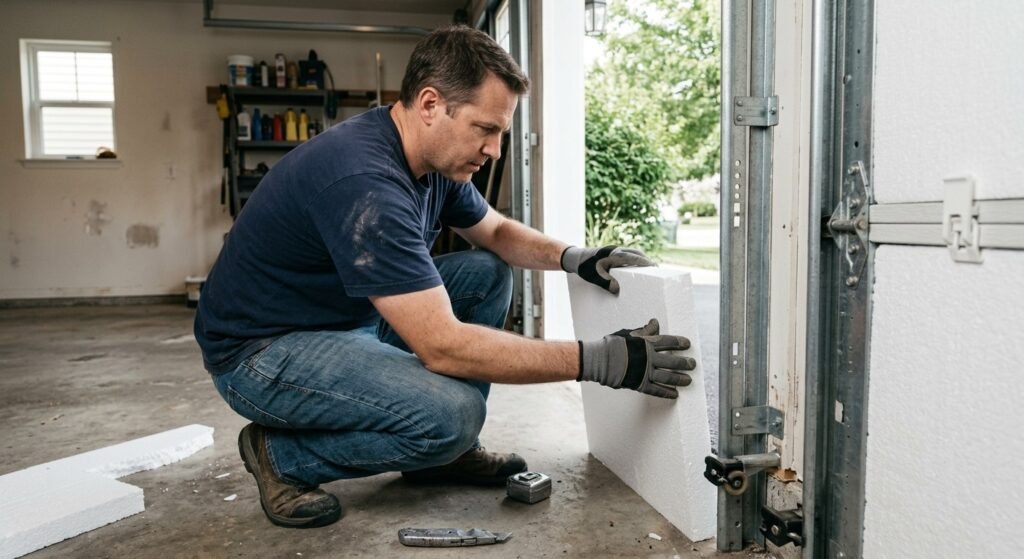
For a typical retrofit, the process looks something like this.
1. Clean the Door
Remove dirt, dust, grease, and loose material from the inside surface.
This is especially important if you’re using adhesive or tape.
2. Measure the Cavities
Measure each door section separately.
Write the measurements down rather than trying to remember them.
3. Cut the Panels
If the panels aren’t pre-cut, mark the measurements carefully.
Use a straightedge and a sharp utility knife for suitable foam products.
Don’t force a panel into place just because it’s close to the right size.
4. Test-Fit Each Piece
Before securing the panel, put it into the door cavity.
Check that it sits properly and doesn’t interfere with:
- Hinges
- Rollers
- Struts
- Brackets
- Windows
- Door movement
5. Install the Retainers or Adhesive
Use the fastening method recommended for that specific product.
If you’re using retainer clips, position them according to the kit’s instructions.
If you’re using adhesive, make sure both surfaces are prepared properly.
6. Secure the Panel
Press or fit the insulation into position.
Make sure the panel isn’t bowed out excessively or pushing against hardware.
7. Test the Door
Open and close the door carefully.
Watch each section as it moves.
Listen for rubbing or catching.
If something doesn’t move normally, stop and find the cause before continuing to use the door.
Garage Door Insulation Panels for Steel Doors
Steel garage doors are common candidates for retrofit insulation.
Many steel sectional doors have recessed cavities where insulation can be placed.
Before buying, check whether the door has:
- Open cavities
- Interior channels
- Reinforcement struts
- A relatively flat inner surface
- Existing insulation
A thin single-layer steel door may have plenty of room for a retrofit.
A door that’s already insulated may not.
What If the Steel Door Has Struts?
Some garage doors have horizontal reinforcement bars running across the inside.
These can reduce the usable space for insulation.
Don’t remove a structural reinforcement simply to make room for insulation.
Instead, choose or trim the insulation so it works around the existing hardware.
Can You Put Panels on an Aluminum Garage Door?
You may be able to, but check the door’s construction first.
Aluminum doors are lightweight, so added weight deserves particular attention.
The fastening method also matters because you don’t want to damage a thin door surface with an unsuitable adhesive or fastener.
If the door is older, inspect it for flexing or damage before adding anything.
Can You Add Panels to a Wood Garage Door?
Wood garage doors are different from typical steel sectional doors.
Some already have substantial material in their construction, while others have recessed areas that may accept an insulation insert.
Don’t assume a standard foam kit designed for a metal door will fit.
Measure the actual door and check the manufacturer’s recommendations.
What About Garage Doors With Windows?
Windows need special attention.
You don’t want to cover the glass just because the insulation panel is easier to cut as one large rectangle.
Instead, measure around the window and create the appropriate opening.
Also check how the window frame is constructed.
A badly fitted panel around a window can look messy and may interfere with the door’s movement.
Can You Replace Old Garage Door Insulation Panels?
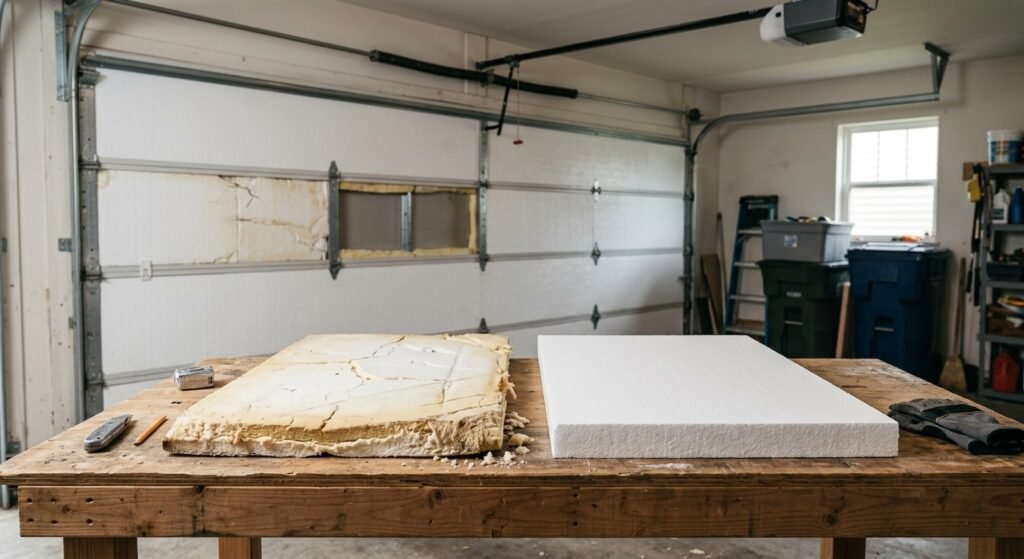
Yes, in many cases.
If the existing insulation is:
- Cracked
- Sagging
- Water damaged
- Torn
- Compressed
- Falling out
- No longer properly secured
When Replacement Makes Sense
Replacing individual panels can make sense when the garage door itself is still in good condition.
You may not need to replace the entire garage door just because the insulation has deteriorated.
Before buying replacement panels, identify:
- Door manufacturer, if known
- Door model, if available
- Section dimensions
- Existing panel thickness
- Number of sections
- Existing attachment method
A photo of the inside of the door can also help when discussing compatibility with a supplier.
Can You Remove Old Insulation?
Usually, yes, but the process depends on how it was installed.
Panels held by clips or channels are generally easier to remove than panels that were permanently glued.
Work slowly.
You don’t want to bend the door skin or damage the retaining hardware.
If old adhesive has been used, avoid aggressive scraping that could damage the door’s finish.
And if the old insulation is fiberglass or another material that produces irritating particles, use appropriate protective equipment.
Garage Door Insulation Panels and R-Value
R-value is relevant when comparing insulation products, but don’t let it become the only thing you look at.
The panel’s real-world usefulness also depends on:
- Thickness
- Fit
- Door construction
- Gaps
- Installation quality
- Air leakage
- Windows
- Weather seals
Do Insulation Panels Stop Garage Door Drafts?
Not by themselves.
This is an important difference between insulation and air sealing.
A panel reduces heat transfer through the door section.
It doesn’t automatically seal the gaps around the perimeter of the door.
If cold air is coming through the bottom or sides, look at:
- Bottom seal
- Side weatherstripping
- Top seal
- Door-frame gaps
For a deeper look at those components, your Garage Door Weather Stripping article can handle that topic without making this page unnecessarily repetitive.
Do Insulation Panels Reduce Garage Door Noise?
They can help reduce some noise and vibration, but don’t expect them to make a noisy garage door silent.
If the door itself rattles loudly, check the mechanical components too.
Possible causes include:
- Worn rollers
- Loose hinges
- Track problems
- Loose hardware
- Opener vibration
Insulation can help with sound transmission through the door, but it isn’t a repair for mechanical noise.
Are Garage Door Insulation Panels Worth It?
They can be a sensible upgrade when the existing door is in good shape and you want to improve its thermal performance without replacing the entire door.
They’re particularly worth considering when:
- The door is uninsulated
- The garage gets strong direct sunlight
- You use the garage as a workspace
- The garage is attached to the home
- The door feels very hot or cold
- You want a relatively simple retrofit
- The existing door doesn’t need replacement
But if the garage door is badly damaged, poorly balanced, or near the end of its life, spending heavily on retrofit panels may not be the smartest move.
How Much Do Garage Door Insulation Panels Cost?
The price can vary quite a bit.
A basic reflective kit may cost less than a thicker rigid-foam or fiberglass system. Custom-cut panels can also cost more than standard pieces.
Your total cost depends on:
- Panel material
- Thickness
- Door size
- Number of panels
- Custom cutting
- Fasteners
- Adhesive
- Shipping
- Installation
What to Look for When Buying Garage Door Insulation Panels
Before clicking “buy,” run through this checklist.
1. Check the Dimensions
Make sure the panel size matches your actual door sections.
2. Check Thickness
Confirm that the panel will fit inside the available cavity.
3. Check Weight
Look at the total weight, not just the weight of one small piece.
4. Check the Material
Know whether you’re buying:
- Foam
- Fiberglass
- Reflective insulation
- Another material
5. Check the Installation Method
Find out whether the panels require:
- Clips
- Adhesive
- Tape
- Channels
- Friction fitting
6. Check Coverage
A package may contain eight panels, but that doesn’t necessarily mean it covers every eight-foot-wide garage door.
Look at the total coverage and the dimensions of each piece.
7. Check Door Compatibility
Make sure the product is designed for your type of garage door.
8. Check Return Information
This is especially useful when buying pre-cut panels.
Measurements can be wrong, and some products may not be returnable once cut.
Common Garage Door Insulation Panel Mistakes
Buying Based Only on the Garage Door Size
“16 × 7 garage door” isn’t enough information.
Measure the actual cavities.
Choosing the Thickest Panel
More thickness isn’t always better.
The panel has to fit the available space.
Ignoring Added Weight
A lightweight retrofit can be very different from adding a large amount of dense material.
Always consider the effect on the door’s balance.
Covering Hinges or Hardware
Insulation should never block moving components.
The door has to flex and move through the tracks normally.
Using the Wrong Adhesive
Some adhesives aren’t compatible with certain foam products.
Use the adhesive recommended for your material.
Assuming Every Section Is the Same
This is a surprisingly common mistake.
Measure each section, especially if the door is older or has windows.
Forgetting About the Door’s Existing Insulation
If your door already contains insulation, adding another layer may not provide enough benefit to justify the extra weight and cost.
Inspect the door first.
Can Garage Door Insulation Panels Be DIY Installed?
Many homeowners can install a basic panel system themselves.
The project is generally more approachable when:
- The door is in good condition
- The panels are designed for DIY installation
- The sections are easy to access
- No spring or structural work is required
- The insulation is lightweight
- The fastening system is straightforward
You don’t need to turn a panel installation into a major garage renovation.
Measure carefully, cut accurately, keep the hardware clear, and test the door when you’re done.
When Should You Skip a Panel Retrofit?
There are situations where adding insulation panels isn’t the right move.
Consider another solution if:
- The door is badly damaged
- The sections are warped
- The door is already heavily insulated
- The spring system has existing balance problems
- The opener is struggling
- The door is near replacement age
- There isn’t enough room for a suitable panel
In those cases, putting money into a retrofit may only delay the larger repair or replacement you actually need.
Frequently Asked Questions
What are garage door insulation panels?
They’re pieces of insulation designed to fit into the recessed sections of a garage door. They can be made from foam, fiberglass, reflective materials, or other insulation products.
What size panels do I need for my garage door?
There’s no universal size. Measure the height, width, and available depth of each individual door section before ordering.
Are 24 × 48 garage door insulation panels a standard size?
24 × 48 inches is a size sold by some insulation kits, but it isn’t a universal garage door panel size. Always compare the product dimensions with your actual door cavities.
Can I cut garage door insulation panels?
Many foam and reflective products can be cut to fit. Use the cutting method recommended for the specific material and measure carefully before making the cut.
How thick should garage door insulation panels be?
The panel should be thick enough to provide useful insulation but thin enough to fit inside the door without interfering with hinges, struts, rollers, or the door’s movement.
Do garage door insulation panels make the door heavier?
Yes. Any added material increases the door’s weight. The amount depends on the material and total coverage.
Can I install insulation panels without removing the garage door?
In many retrofit projects, yes. The panels can usually be installed while the door remains in place, although you should follow the product’s instructions.
Can I use foam board for garage door insulation?
Yes, rigid foam board can be used for many retrofit applications when the thickness, dimensions, weight, and installation method are suitable for the door.
How do I keep insulation panels from falling out?
Depending on the product, you can use retainer clips, adhesive, tape, channels, or a friction-fit design. Use the fastening method intended for the specific insulation.
Can I replace only one damaged insulation panel?
Often, yes. If the door and remaining insulation are in good condition, replacing the damaged piece can be more practical than replacing the entire system.
Do insulation panels stop drafts around my garage door?
No. Panels insulate the door sections, while weatherstripping and seals address air gaps around the door.
Are insulation panels worth it for a detached garage?
They can be, especially if you use the detached garage as a workshop, office, hobby space, or other regularly occupied area. If it’s only used for parking, the upgrade may be less important.
Can insulation panels damage a garage door?
They can cause problems if they’re too heavy, too thick, poorly secured, or installed where they interfere with the door’s hardware. Correct sizing and installation are important.
Final Takeaway
Choosing the right garage door insulation panels is mostly about getting the details right. Don’t start with the biggest panel, the thickest foam, or the cheapest kit. Start with your actual garage door.
Measure every section, check the available depth, look around hinges and reinforcement bars, consider the total added weight, and choose a panel that can be securely fitted without interfering with the door’s movement.
Pre-cut panels are convenient, while cut-to-fit options give you more flexibility for unusual doors. Foam, fiberglass, and reflective products each have their own advantages, so compare the material, thickness, coverage, and installation method rather than judging the product by one specification.
And if your door already has insulation, don’t automatically add another layer. Sometimes replacing damaged inserts makes sense; other times, your money is better spent on weather sealing or a larger door upgrade.