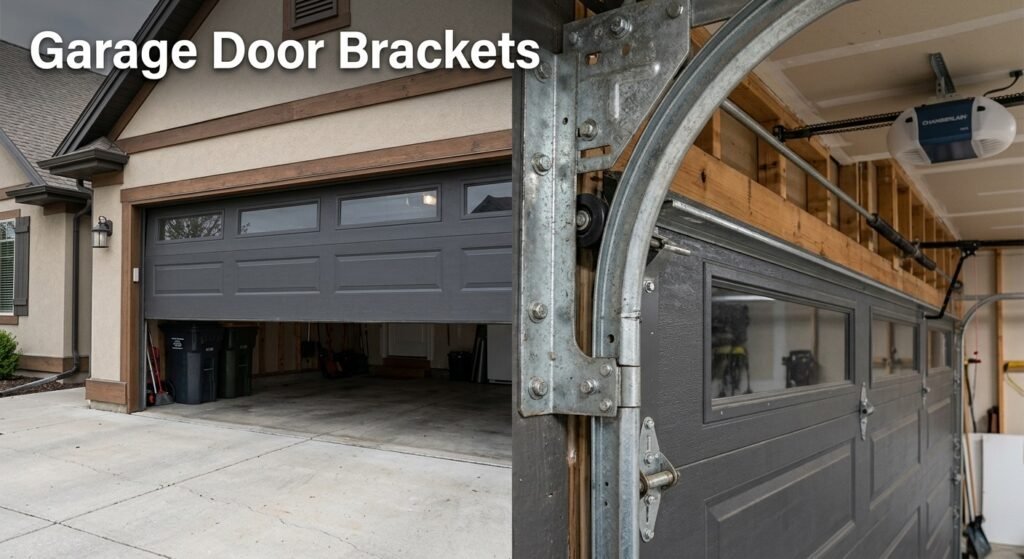
Garage door brackets are small metal parts, but they play an important role in keeping the door’s moving hardware in place. Depending on the type, a bracket may support a roller, secure a track, connect a lift cable, or support torsion-spring hardware.
When one becomes bent, cracked, badly rusted, or loose, you may notice unusual noises, uneven movement, a crooked door, or problems with the track. Some brackets are relatively simple to inspect, while others are connected to parts that can be dangerous to work on without proper experience.
What Do Garage Door Brackets Do?
A sectional garage door has several parts working together. The panels move along tracks, rollers guide the sections, cables help lift the door, and springs provide the counterbalance.
Brackets help keep many of these components in the correct position.
For example, a roller bracket holds a roller against the door section. A jamb bracket helps secure the vertical track. A bottom bracket connects the lower part of the door to the lift cable system.
Other brackets support the torsion shaft or reinforce the area where the garage door opener attaches.
Types of Garage Door Brackets
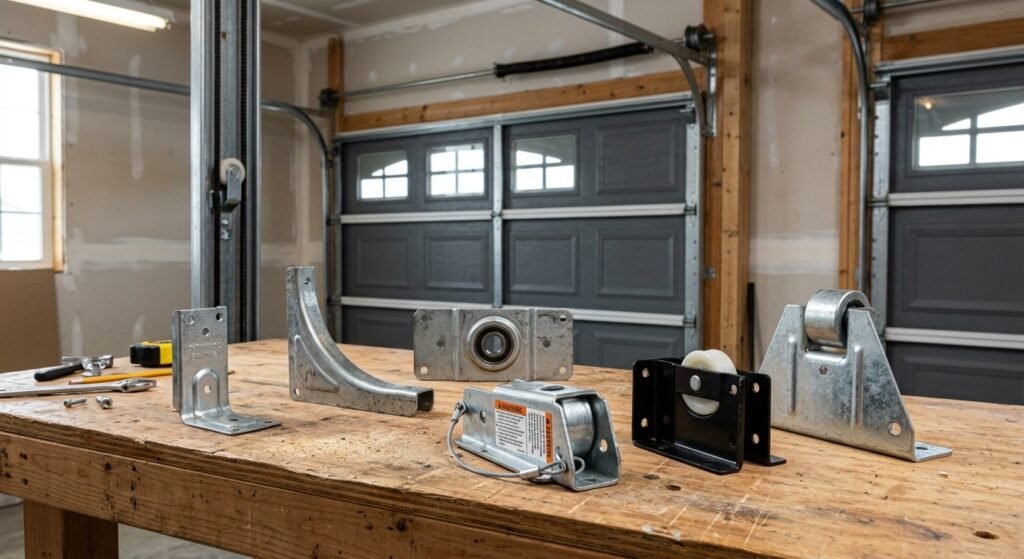
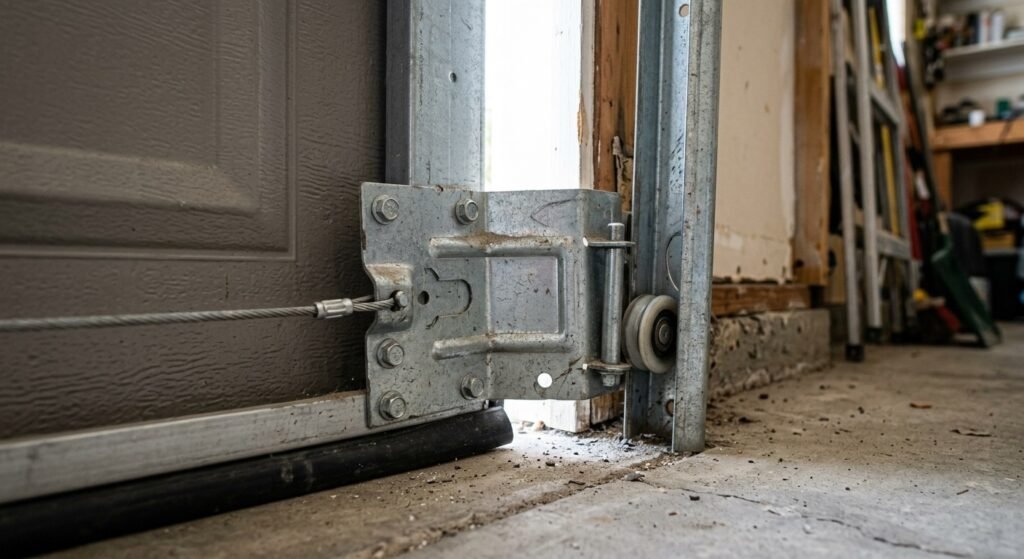
Bottom Brackets
Bottom brackets sit near the lower corners of the garage door. They connect the bottom section to the lift cable and, depending on the door design, may also support the bottom roller.
These brackets need extra caution because they’re connected to the lifting system.
A damaged bottom bracket may be bent, cracked, heavily corroded, or pulling away from the door. If the lift cable also looks loose, frayed, or out of position, stop using the door and have the system inspected.
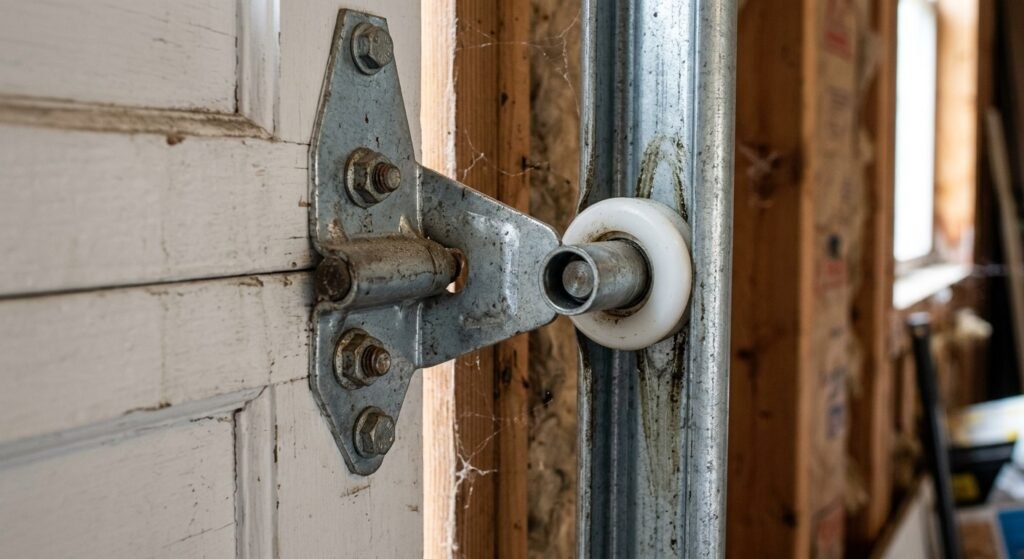
Roller Brackets
Roller brackets hold the rollers that travel inside the garage door tracks. They’re installed along the sides of the door sections.
When the bracket and roller are positioned correctly, the door should move smoothly through the vertical and horizontal tracks.
A bent roller bracket can change the position of the roller and cause:
- Rattling
- Scraping
- Grinding
- Popping sounds
- Rough movement
- A roller that doesn’t sit correctly in the track
Vertical Track Wall Brackets
Vertical track wall brackets secure the vertical tracks to the framing around the garage door opening.
Their job is to keep the track in the correct position while the rollers travel up and down.
If a wall bracket becomes loose or bent, the track can shift. That may change the way the rollers sit inside the track and can lead to rubbing, noise, or uneven movement.
Top Roller Brackets and Top Fixtures
Top roller brackets, often called top fixtures, sit at the upper corners of the top door section and hold the top rollers.
The top rollers travel through the curved portion of the track as the door moves from vertical to horizontal travel. Because of that, the position of the top fixture matters.
Many top fixtures are adjustable, allowing the top roller to sit correctly in relation to the track.
A bent fixture, damaged mounting area, or incorrectly positioned roller can cause rough movement or make the top section sit unevenly when the door is closed.
Jamb Brackets
Jamb brackets are used to secure the vertical tracks to the framing around the garage door opening.
Several brackets may be installed along each side of the door. Depending on the system, they may be adjustable or come in different designs.
A loose jamb bracket can allow the vertical track to move out of position. That can affect roller travel and eventually contribute to rubbing, binding, or an off-track door.
Flag Brackets
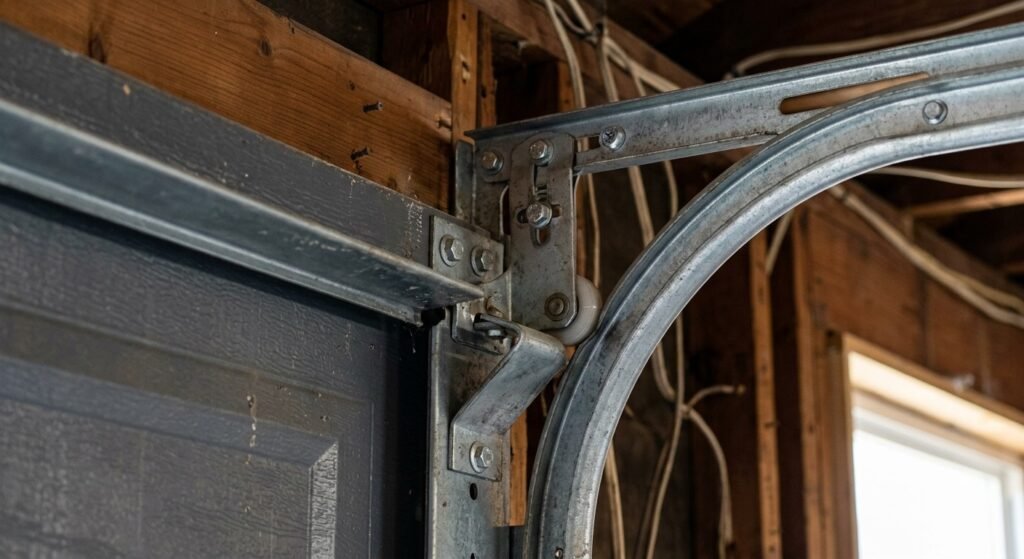
Flag brackets sit near the upper corners of the garage door opening, where the vertical and horizontal tracks meet.
They help hold the track assembly in position and support the transition between the vertical and horizontal sections.
A bent or loose flag bracket can affect track alignment. You may notice binding near the top corners, unusual rubbing, or difficulty as the door moves through the curved section.
If a flag bracket is visibly damaged or pulling away from its mounting surface, don’t continue operating the door until the problem has been checked.
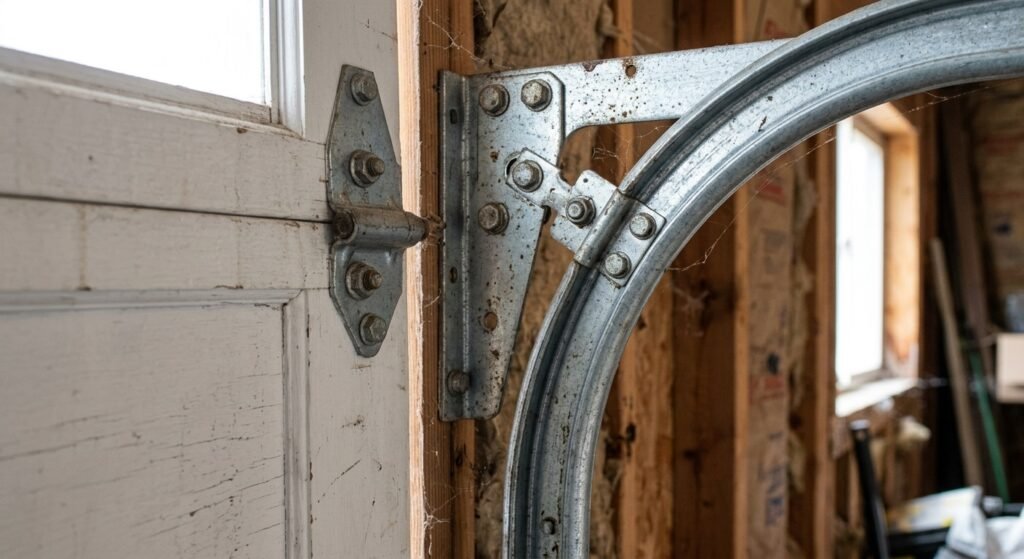
Center Support and Spring Anchor Brackets
Torsion-spring garage doors use hardware around the center of the torsion shaft to support and anchor the spring assembly.
These parts may be referred to as center support brackets or spring anchor brackets, depending on the design.
Some spring anchor brackets are slotted, allowing the shaft position to be adjusted. Others use a fixed bearing arrangement. The correct configuration depends on the door’s spring and shaft setup.
On wider doors or systems with heavier torsion springs, similar hardware may also provide additional shaft support.
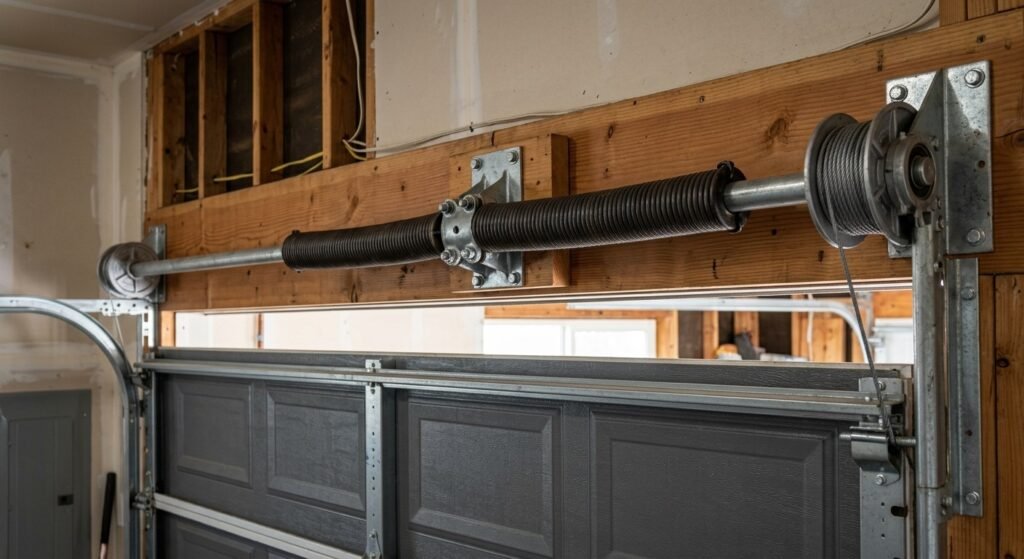
End Bearing Plates
End bearing plates support the ends of the torsion shaft.
Two common configurations are supported and unsupported.
A supported end bearing plate attaches to both the horizontal track angle and the garage header. An unsupported version attaches to the horizontal track angle without the additional header attachment.
Unsupported plates provide less structural support and are used on certain garage door configurations, including some rear-mounted spring systems.
Another measurement matters when selecting an end bearing plate: the center-line (CL). This refers to the distance from the center of the shaft to the garage header.
The required center-line depends on the door’s hardware arrangement and can be affected by the cable drum and shaft position. That makes bearing plate replacement more than a simple matter of matching the shape of the old part.
Opener Brackets
An opener bracket connects the garage door opener arm to the door, usually near the center of the top section.
This mounting point experiences repeated force every time the opener operates.
If the bracket becomes loose, bent, or starts pulling away from the door, check the surrounding panel as well. If the mounting holes are stretched or the sheet metal is damaged, installing another bracket in the same location may not solve the problem.
Reinforcement Brackets
Reinforcement brackets add support to areas of a garage door that experience additional stress.
They’re often used around opener mounting points and may also be part of a reinforcement system for larger or heavier doors.
Some doors use reinforcement struts across a section to reduce flexing. Certain high-wind applications may also require specific reinforcement based on the door design and local requirements.
If an opener bracket repeatedly comes loose, replacing it with another identical bracket may not address the underlying problem.
How to Identify the Right Garage Door Bracket
Before ordering a replacement, identify exactly where the bracket is and what it supports.
Start with its location. Is it at the bottom corner of the door, along the vertical track, near the top corner, around the torsion shaft, or near the opener arm?
Then check what is attached to it.
Is it holding a roller, track, cable, bearing, or opener arm?
Also consider:
- Door width and height
- Door section thickness
- Track configuration
- Roller stem size
- Mounting-hole pattern
- Left- or right-hand orientation
- Steel gauge
- Shaft center-line where applicable
- Garage door manufacturer or model
Signs a Garage Door Bracket Needs Attention
A damaged bracket doesn’t always fail suddenly. The door may show warning signs first.
The Door Looks Crooked
If one side of the door sits higher than the other, there could be a problem with the brackets, rollers, cables, tracks, or door balance.
You Hear New Grinding or Popping Sounds
New grinding, scraping, rattling, or popping sounds can come from damaged brackets or loose track hardware.
They can also come from rollers, hinges, tracks, or spring components, so noise alone isn’t enough to identify the failed part.
A Roller Looks Out of Position
Stand clear of the moving door and visually check the rollers.
If one sits at a noticeably different angle or doesn’t appear to be tracking correctly, the roller, bracket, track, or door section may need inspection.
The Door Comes Off the Track
An off-track garage door can result from damaged rollers, bent tracks, loose brackets, cable problems, or impact damage.
Don’t keep operating the opener when the door has come off its track. Continuing to run it can make the damage worse.
You See Bent, Cracked, or Rusted Metal
Visible damage is one of the clearest warning signs.
Surface rust doesn’t always mean immediate failure, but deep corrosion, cracks, or a bracket that has visibly changed shape should be taken seriously.
Mounting Holes Are Damaged
If screws or bolts have pulled through the door panel, inspect the surrounding metal too.
The mounting area may be stretched or torn. In that situation, installing another bracket in the same weakened location may lead to another failure.
Why Do Garage Door Brackets Bend or Break?
A bracket can fail for several reasons, and the bracket itself isn’t always the original problem.
Common causes include:
- Normal wear from repeated door cycles
- Corrosion
- Impact from a vehicle or other object
- Loose or incorrect fasteners
- Improper installation
- Door imbalance
- Excessive stress on the mounting area
- A damaged or weakened door panel
- Incorrect replacement hardware
Is It Safe to Replace a Garage Door Bracket Yourself?
It depends on the bracket and what it’s connected to.
A homeowner can usually perform a visual inspection of accessible hardware. Some simple track or wall hardware may also be manageable for someone who understands the system and isn’t working around tensioned components.
The main question is what’s attached to the bracket.
Brackets You Can Inspect
You can visually inspect accessible:
- Track brackets
- Jamb brackets
- Visible fasteners
- Surface rust
- Obvious bending or damage
Brackets Better Left to a Professional
Professional help is recommended for work involving:
- Bottom brackets
- Lift cables
- Torsion springs
- Spring anchor brackets
- Center bearing supports
- End bearing plates when spring tension is involved
- Severely bent tracks
- Torn door panels
- Hardware pulled from the door structure
How to Choose Replacement Garage Door Brackets
The cheapest bracket isn’t necessarily the correct one.
Match the replacement to your actual door system.
Check the Bracket Type
Make sure you’re buying the right component. A bottom bracket, top fixture, jamb bracket, and flag bracket aren’t interchangeable.
Check the Door and Track Configuration
Door size, track arrangement, headroom, and construction can affect which hardware is appropriate.
Check the Roller
If the bracket holds a roller, check the roller stem and existing setup before ordering.
Check the Side
Some brackets are designed specifically for the left or right side of the door.
Check the Gauge
Steel gauge can be confusing. A lower gauge number generally means thicker steel.
Don’t automatically choose the heaviest bracket available. The replacement should be appropriate for the door and intended application.
Check the Center-Line Dimension
For torsion-system bearing plates and related hardware, the shaft position matters.
If you’re replacing an end bearing plate or spring anchor bracket and aren’t comfortable determining the required center-line dimension, have the part identified professionally.
Check the Manufacturer
If you can find the garage door manufacturer and model, keep that information available when looking for replacement hardware.
It can make the identification process much easier.
Are Garage Door Brackets Universal?
No. Some replacement brackets are adjustable or designed to fit several configurations, but garage door brackets aren’t universally interchangeable.
Differences can include:
- Door thickness
- Track size
- Roller stem length
- Mounting pattern
- Door weight
- Headroom configuration
- Spring arrangement
- Shaft position
- Left- or right-hand design
What Are Garage Door Brackets Made Of?
Steel is commonly used for garage door brackets because the hardware needs to handle repeated loads and movement.
Many brackets are galvanized or otherwise treated for additional corrosion resistance.
The environment matters as well. Garages exposed to humidity, moisture, road salt, or coastal air can be harder on metal hardware.
If a bracket has severe corrosion, don’t judge its condition by appearance alone. Corrosion can reduce the strength of the metal even when the part still looks mostly intact.
How Much Does Garage Door Bracket Replacement Cost?
The cost depends on the type of bracket, your location, the door system, and how much labor the repair requires.
A basic track bracket may be a relatively straightforward repair. A bottom bracket or torsion-related component can require more work because of the cables, springs, shaft, or other connected parts.
When getting a quote, ask what the price includes:
- Replacement bracket
- Labor
- Cable work
- Spring-related work
- Track adjustment
- Door reinforcement
- Panel repair
Can a Bad Bracket Affect Garage Door Alignment?
Yes.
Brackets help keep tracks, rollers, cables, and other hardware in specific positions. If one bends or shifts, the alignment of the door system can change.
A loose jamb bracket can allow the vertical track to move. A bent roller bracket can change the roller’s position. A damaged top fixture can affect how the upper section travels through the track curve.
This can lead to:
- Uneven movement
- Rubbing
- Binding
- Excessive noise
- Uneven gaps
- An off-track door
Can Bracket Problems Affect Garage Door Insulation?
They can indirectly affect how well the door seals.
Garage door insulation sits inside the door sections, but the door still needs to close evenly against the frame and weather seals.
If damaged hardware causes the door to sit unevenly, gaps may develop around the sides or bottom. Those gaps allow outside air to enter the garage.
This can be especially noticeable in an attached garage, where temperature changes may affect rooms next to or above the garage.
If an insulated garage door suddenly feels drafty, check the door’s alignment, weatherstripping, tracks, rollers, and visible hardware before assuming the insulation itself has failed.
Garage Door Bracket Maintenance Tips
You don’t need a complicated maintenance routine. A quick visual inspection can help you spot obvious problems before they become bigger ones.
Look for Rust
Check accessible brackets for surface rust, deep corrosion, or flaking metal.
Watch for Bending
A bracket shouldn’t suddenly look different from similar hardware around it. If one is noticeably bent, have it checked.
Listen for New Sounds
Pay attention when the door opens and closes. New grinding, popping, scraping, or rattling is worth investigating.
Watch the Door’s Movement
Look for jerking, binding, uneven travel, or a section that seems to shift as the door moves.
Check the Door’s Seal
With the door closed, look around the sides and bottom for obvious gaps.
Alignment and hardware problems can sometimes show up here before the bracket itself looks badly damaged.
Don’t Adjust Spring Hardware
If your inspection leads to the torsion springs, lift cables, center bearing, or spring anchor bracket, stop there.
Those components are not worth experimenting with.
What Should You Do If a Garage Door Bracket Breaks?
If a bracket breaks suddenly, stop operating the door until you know what’s wrong.
Don’t keep pressing the opener button just because the door still moves.
Instead:
- Keep people and vehicles away from the door.
- Look for obvious damage without touching cables or springs.
- Check whether the door panel or track is also damaged.
- Identify the type and location of the bracket.
- Don’t remove a bottom bracket or torsion-related hardware yourself.
- Have a professional inspect the system if cables, springs, tracks, or structural damage are involved.
A broken bracket may be a simple hardware problem, but it can also be the first visible sign of a larger issue.
FAQs
What are the most common types of garage door brackets?
Common types include bottom brackets, roller brackets, top roller brackets or top fixtures, jamb brackets, flag brackets, center support or spring anchor brackets, end bearing plates, and opener or reinforcement brackets.
Are garage door brackets interchangeable?
Not always. Brackets can differ based on their location, door thickness, track configuration, roller size, mounting pattern, spring system, and other dimensions.
Can I replace a bottom garage door bracket myself?
It’s generally not a good DIY repair for an inexperienced homeowner because the bottom bracket is connected to the lift cable system, which can be under significant tension.
Why is my garage door making a popping sound?
A popping sound can come from several components, including rollers, hinges, brackets, tracks, or springs. The sound alone doesn’t identify the failed part.
Why is my garage door crooked?
A crooked garage door can result from damaged brackets, cable problems, track alignment, worn rollers, or an issue with the door’s counterbalance system.
How do I know if my top roller bracket is damaged?
Look for visible bending, a roller sitting at an unusual angle, rough movement near the top of the door, or unusual noise around the upper corners. If the problem involves spring hardware, have it inspected professionally.
What is the difference between a top fixture and a roller bracket?
A top fixture is a type of top roller bracket used to position the roller at the top of a sectional garage door. The exact design can vary between door systems.
What is an end bearing plate?
An end bearing plate supports the end of the torsion shaft. Supported versions attach to both the horizontal track angle and the header, while unsupported versions attach to the track angle without the additional header support.
What is a spring anchor bracket?
A spring anchor bracket is part of a torsion-spring system and secures the stationary spring assembly while supporting the shaft arrangement. Designs can include slotted and fixed-bearing versions.
How do I know what size bracket I need?
Identify the bracket type, location, door and track configuration, roller or shaft dimensions where applicable, mounting pattern, and any left/right orientation. For torsion-system hardware, measurements such as shaft center-line can also matter.
How often should garage door brackets be inspected?
Check accessible hardware during routine garage door maintenance and whenever the door starts making unusual sounds or moving differently. If you see bending, deep rust, cracks, or loose hardware, have the system inspected.
Conclusion
Garage door brackets may be small, but they help keep the door’s rollers, tracks, cables, and other hardware in the right position.
If you notice a bent bracket, unusual noise, uneven movement, or an off-track door, don’t ignore it. Identify the part first and look for the reason it failed.
Simple accessible hardware may be manageable for an experienced homeowner, but bottom brackets, lift cables, torsion springs, and related hardware are better left to a professional.
Choosing the right replacement also matters. Match the bracket to your door, track, roller, shaft, and mounting setup rather than buying a part simply because it looks similar.