Yes, do insulated garage doors help? They can, especially if your garage is attached to the house, gets very hot or cold, or you actually spend time in it. Garage door insulation slows heat transfer, which can help with garage temperature control, noise, and overall comfort. It can also improve energy efficiency and make the door feel stronger. But there’s a catch: an insulated door won’t fix an uninsulated garage by itself. Walls, ceilings, weather seals, and other air leaks still matter.
How Does Garage Door Insulation Work?
Garage door insulation works by slowing down the movement of heat through the door. Think of the door as a barrier between the weather outside and the air inside your garage. In summer, it can slow heat gain from the hot outdoors. In winter, it helps slow heat loss from the garage.
An insulated garage door usually has an insulation core fitted between or behind its outer layers. That material adds thermal resistance, so heat doesn’t pass through the door as quickly. The result isn’t a perfectly temperature-controlled garage, but it can help reduce temperature fluctuations and make the space feel more comfortable.
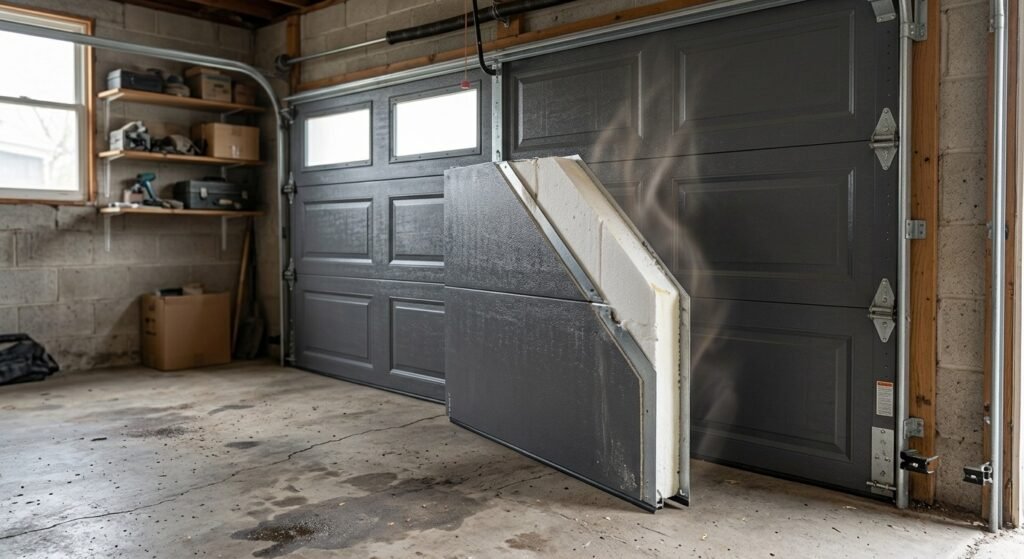
How insulation slows heat transfer
Here’s the simple way to picture it:
Outside heat or cold → garage door → insulation slows the transfer → garage temperature changes more slowly.
The insulation acts as a thermal barrier. When the sun is beating down on the door, less heat moves through the panel into the garage. During cold weather, it helps keep some of the warmer air inside from escaping through the door.
How much difference you’ll notice depends on the door itself and the garage around it. A well-insulated door can perform much better when the garage also has insulated walls, a properly insulated ceiling, and good seals. If those areas have major weak spots, heat can simply find another way in or out.
Insulation vs. air leakage: what’s the difference?
This part gets overlooked a lot.
Insulation slows heat transfer. Air sealing helps stop outside air from physically getting through gaps. They’re related, but they’re not the same thing.
For example, you could have a garage door with a good insulation rating, but if there’s a big gap around the edges, cold or hot air can still get inside.
That’s why weatherstripping matters too. Check the areas around the door, including:
- Bottom seal: Helps close the gap between the garage door and floor.
- Side seal: Helps block air around both vertical edges of the door.
- Top seal: Closes the gap along the upper edge when the door is shut.
- Garage door gaps: Small openings around panels, corners, and seals can still allow air leakage.
Good air sealing and proper insulation work better together. If you’re trying to make your garage more comfortable, don’t just look at the insulation core and ignore the seals. A door needs both a decent thermal barrier and a reasonably tight fit to perform well.
What Does an Insulated Garage Door Actually Help With?
There are a few insulated garage door benefits that you can notice in everyday use. The biggest one is usually better garage comfort. The door can help with temperature control, while also offering some improvement in energy efficiency, noise reduction, and durability.
It’s not a magic upgrade, though. How much you notice depends on your climate, the rest of your garage, and how often you use the space. Still, if your current door is thin and uninsulated, moving to a well-built insulated door can be a pretty noticeable change.
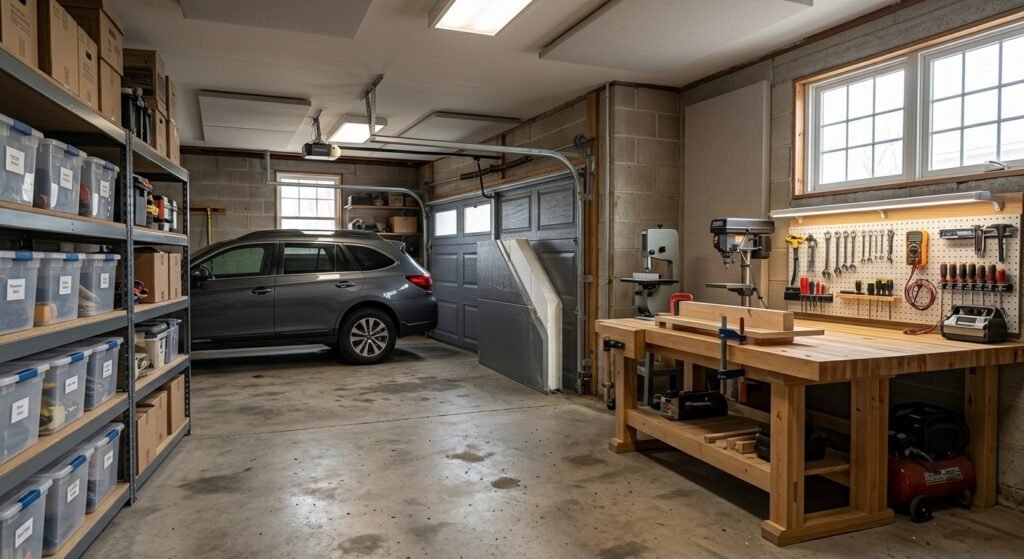
More Stable Garage Temperatures
One of the main benefits is better temperature control. An insulated door doesn’t stop outdoor temperatures from affecting the garage, but it can slow the process down.
Without much insulation, summer heat can move through a thin door fairly quickly. The same thing happens with winter cold. A better-insulated door adds more resistance to that heat movement, which can reduce sharp temperature fluctuations inside the garage.
This is where thermal performance matters. A door with a decent insulation core can help the garage hold onto its existing temperature for longer. So, if the morning is cool and the afternoon gets hot, the garage may not swing from one extreme to another quite as fast.
That can make a real difference if you use the garage as more than just a place to park your car.
Less Heat Entering in Summer
A garage can get surprisingly hot in summer, especially when the door faces direct sunlight. Dark-colored doors can absorb even more heat, and a poorly insulated panel gives that heat an easier path indoors.
A properly insulated door can help keep the garage cooler by slowing heat gain through the door panels.
That doesn’t mean your summer garage will suddenly feel like an air-conditioned room. It won’t. If the outdoor temperature is extremely high, the garage will still warm up.
The difference is that the insulated door can slow down how quickly the garage temperature rises. That’s useful if you spend time in there, store items that don’t handle high temperatures well, or simply don’t want to walk into an oven every afternoon.
Less Heat Escaping in Winter
The same basic idea works in reverse during cold weather.
If your garage is heated, an insulated door can help keep the garage warmer by slowing heat loss through the door. Even in an unheated garage, it can reduce how quickly the space responds to very cold outdoor temperatures.
The door acts as a thermal barrier, so the cold outside doesn’t move through the panel as easily.
Less Noise and Vibration
Temperature isn’t the only reason people choose insulation. Garage door noise reduction is another nice benefit.
Insulated doors often have a denser, multi-layer construction that can provide some sound dampening. The insulation can also reduce the amount of panel vibration when the door opens and closes.
You’ll still hear the opener and moving parts, of course. But a well-built insulated door can feel less hollow and rattly than a basic single-layer door.
This can be handy when there’s a bedroom, office, or living area close to the garage. It may also cut down some outside noise coming through the door.
So, if you’re looking for a quieter garage door, insulation can help, although the opener, rollers, hinges, and overall door installation also play a role.
Stronger, More Rigid Door Panels
There’s another benefit people sometimes overlook: garage door durability.
Many insulated doors use multiple layers around the insulation. That construction can make the panels more rigid than thin, single-layer panels. In everyday use, that added door strength can help the door feel more solid and less flimsy.
A stronger panel can also offer better dent resistance, which is useful in a busy garage where bikes, tools, sports equipment, or other things might bump into the door.
This doesn’t mean an insulated door can’t be damaged. It can. But rigid garage door panels generally have a more substantial feel than basic single-layer construction.
And that’s one reason multi-layer garage doors can be worth considering even when temperature control isn’t your only concern. You get insulation, but you may also get a sturdier door at the same time.
How Much Difference Can an Insulated Garage Door Make?
This is where things get a little less straightforward. If you’re wondering how much difference does garage door insulation make, there isn’t one number that applies to every home. An insulated door can improve garage temperature and overall temperature control, but the actual result depends on what’s happening around the door too.
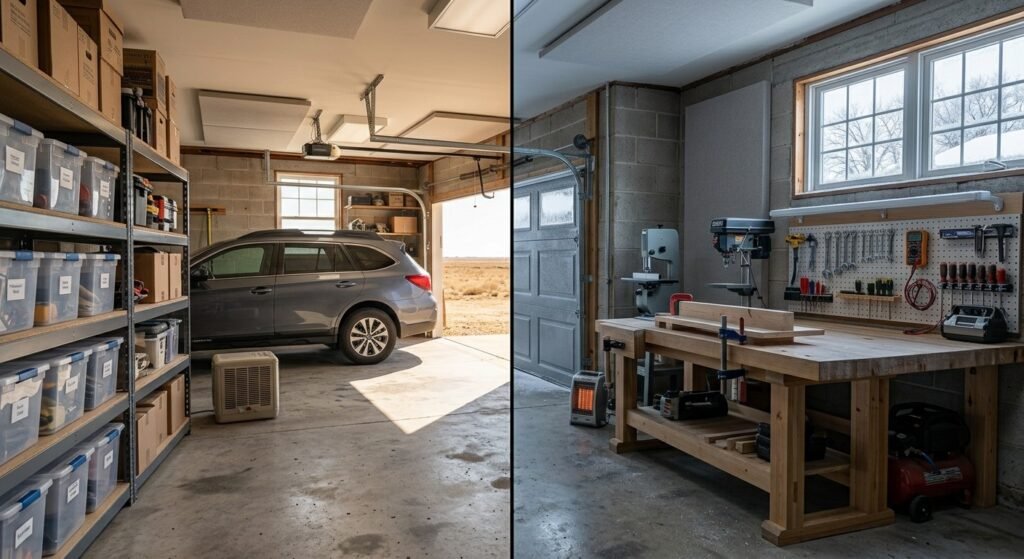
You might notice a clear improvement in one garage and only a small change in another. That’s why it’s better to look at the whole setup instead of assuming that every insulated door will perform the same.
What affects the difference you’ll notice?
Climate:
If you live somewhere with very hot summers or freezing winters, insulation can be more noticeable because there’s a bigger temperature difference between the inside and outside.
Sun exposure:
A garage door sitting in direct afternoon sun can absorb a lot of heat. Shade can make a surprisingly big difference, too.
Garage orientation:
The direction your garage faces affects how much direct sunlight hits the door during the day. A south- or west-facing door may deal with more solar heat in some locations.
Door R-value:
The R-value gives you an idea of the door’s resistance to heat transfer. Generally, a higher R-value means greater thermal performance, assuming the rest of the door is built and installed properly.
Walls and ceiling:
Here’s an important one. If the garage walls and ceiling have little or no insulation, upgrading the door alone won’t solve the whole temperature problem. Heat can still move through those areas.
Windows:
Old or poorly sealed garage windows can also become weak points. There’s not much benefit in having a well-insulated door if large amounts of heat are entering through leaky windows.
Air leaks and weatherstripping:
Gaps around the door can let outdoor air straight into the garage. Good weatherstripping and proper seals help prevent that. Insulation slows heat transfer, while sealing helps control actual air movement.
Attached vs. detached construction:
An attached garage can benefit more in some situations because it shares parts of the home’s structure. A detached garage has less direct connection to the living space, although insulation can still improve comfort if you use the garage regularly.
How often the door opens:
This one is easy to forget. If the garage door goes up and down twenty times a day, a lot of outside air can enter regardless of how well the panels are insulated.
So, how does insulated vs. uninsulated really compare?
An uninsulated door usually allows heat to move through the panels more easily. An insulated door slows that movement, so the garage may change temperature more gradually.
But don’t expect an insulated door to make an unheated garage feel like a bedroom. That’s not what it’s designed to do.
Think of it this way:
Insulated door = slows heat transfer.
Good seals = reduce air leakage.
Insulated walls and ceiling = improve the rest of the garage envelope.
When these pieces work together, that’s when you get the best overall result.
So, if you’re comparing insulated vs uninsulated garage doors, don’t focus only on the door itself. Look at the condition of the entire garage. That’s usually a much better way to judge whether the upgrade will actually be worth it for your home.
Do Insulated Garage Doors Help in Summer?
A garage can turn into a hot box pretty quickly in summer, especially when the sun hits the door for hours. An insulated garage door for summer can help slow that heat from moving inside. In other words, do insulated garage doors keep garage cooler? Yes, they can, but don’t expect the door to make the space cool on its own. The goal of summer garage insulation is mainly to slow heat gain and give you better temperature control.
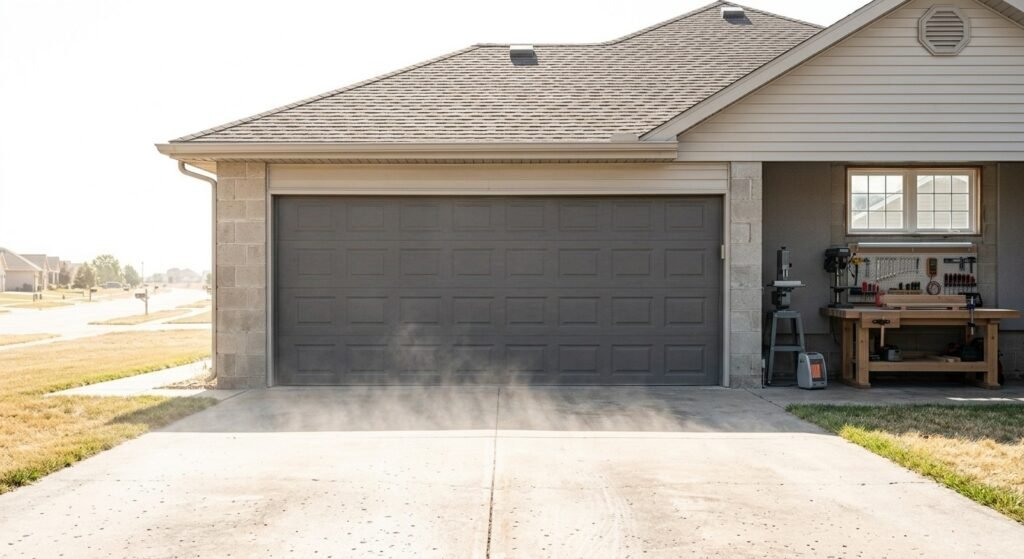
Why garages get extremely hot
A few things usually work together to create that uncomfortable garage heat.
Direct sunlight is a big one. When strong sunlight hits the garage door for several hours, the door surface can get much hotter than the air outside. That heat then starts moving through the panels.
The metal door surface can make this even more noticeable. Metal transfers heat fairly easily, so a thin, uninsulated door can warm up fast on a sunny afternoon.
Then there’s roof heat. If the garage roof or ceiling gets very hot, that heat can move down into the space. So even a well-insulated door can’t do much about a poorly insulated ceiling.
Poor ventilation can add to the problem. Hot air gets trapped inside, and without enough airflow, the garage can stay warm well into the evening.
And don’t forget air leakage. Gaps around the garage door, worn seals, or a loose bottom seal can let hot outdoor air come straight inside.
So if you’re dealing with a really hot garage, it’s usually not just the door causing it. The door is one part of the problem.
What insulation can and cannot do
Garage door insulation works as a thermal barrier. It slows the movement of heat through the door, which means the outdoor heat takes longer to reach the inside of the garage.
That’s useful, but there’s a limit.
Insulation slows heat entering. It doesn’t air-condition the garage.
If it’s 100°F outside, an insulated door won’t magically keep the garage at 70°F. The space will still warm up, especially if the roof, walls, windows, or other areas are letting heat in.
The biggest difference usually comes when you combine the door with the basics:
- Seal gaps around the garage door.
- Keep the bottom seal in good shape.
- Check the side and top weather seals.
- Insulate the garage ceiling if needed.
- Look for poorly sealed windows.
- Deal with major sources of air leakage.
So, if summer heat is your main problem, an insulated door is a useful part of the solution. Just don’t treat it as the entire solution. A garage works more like a system, and improving several weak spots usually gives you a much better result.
What About Winter? Can Insulation Keep a Garage Warmer?
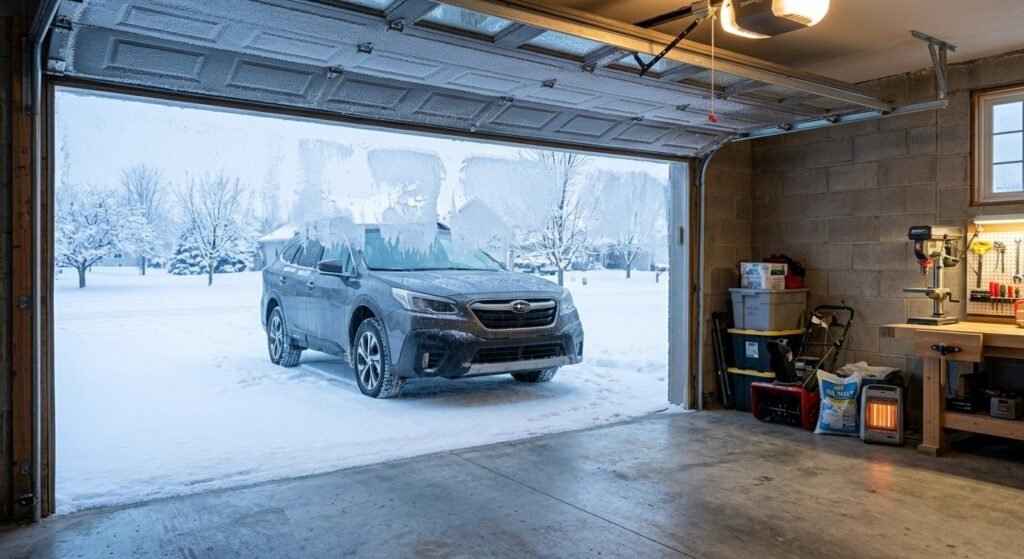
Winter can make an uninsulated garage feel almost as cold as the outdoors. A good insulated garage door for winter can help by adding more thermal resistance between the cold air outside and the garage. With proper winter garage insulation, the door can slow heat loss, reduce how quickly the space gets cold, and make the garage more comfortable to use.
How insulation helps in cold weather
An insulated door doesn’t create heat. What it does is slow heat loss through the door panels.
If your garage has a heater or shares heat with the rest of the house, that matters. Instead of warmth escaping through a thin garage door as quickly, the insulation gives it more resistance.
It can also keep the inside surface of the door from getting quite as cold. That may help the garage feel less harsh during very cold weather, especially when you’re working inside or moving between the house and garage.
Good insulation can also help stabilize the garage temperature. The space will still respond to outdoor temperatures, but the changes may happen more slowly.
And if you’re dealing with a cold garage, don’t overlook the small stuff. Gaps around the door, worn weatherstripping, and a damaged bottom seal can let cold air in even when the panels themselves are insulated.
But insulation has its limits
Here’s the part that’s easy to get wrong:
An insulated door won’t turn an unheated garage into a heated room.
If there’s no heat source, the garage will eventually get cold during winter. Insulation simply slows down the temperature change.
For better garage comfort, look at the whole space. A properly insulated ceiling, suitable wall insulation, good weather seals, and fewer air leaks can work alongside the garage door to improve the result.
So, if winter is your main concern, an insulated door is helpful, but it’s only one piece of the puzzle. The better the rest of the garage envelope is sealed and insulated, the more useful that door insulation becomes.
Can an Insulated Garage Door Lower Energy Bills?
It can, but I’d be careful with the word “savings.” An insulated garage door may improve energy efficiency by slowing heat transfer through the door, which can reduce some energy loss. In the right home, that may help with heating and cooling costs.
But don’t expect a new garage door to suddenly cut your energy bill in half. The real impact depends on how the rest of the garage is built and how much your garage HVAC system runs.
Why attached garages can matter more
An attached garage is connected directly to your home, so its temperature can matter more than that of a detached garage.
For example, if there’s a bedroom, living room, or another part of the house next to or above the garage, heat can move between these areas through the shared structure. A very hot garage in summer or a freezing garage in winter isn’t ideal when it’s sitting right next to conditioned living space.
Why you shouldn’t expect huge savings from the door alone
This is where some garage door advice gets a bit too optimistic.
If the garage door is insulated but the ceiling has no insulation, the walls have major gaps, and cold or hot air is coming through worn seals, you’re still losing a lot of efficiency.
Think of whole-garage efficiency like this:
Door + walls + ceiling + seals + house-garage separation = better overall performance
So before spending a lot just to chase lower energy bills, check the other weak spots too. Good weatherstripping, a solid bottom seal, proper wall and ceiling insulation, and fewer air leaks can all work alongside the door.
An insulated garage door can absolutely be part of a more energy-efficient garage, especially when the garage is attached to the house. Just think of it as one piece of the puzzle, not the whole solution.
Does It Matter if the Garage Is Attached or Detached?
Yes, it can make a pretty big difference. An attached garage has a direct connection to the house, so keeping it at a more stable temperature can be useful for nearby rooms and conditioned living space. A detached garage has less impact on the home, so the reason for insulating it usually comes down to how you use the space.
That doesn’t mean a detached garage doesn’t need insulation. It just means the value you get from an insulated garage door for an attached garage can be different from an insulated garage door for a detached garage.
Attached Garage
An attached garage is usually the stronger case for an insulated door.
If there’s a bedroom above the garage, for example, temperature changes in the garage can affect the space above it, especially when the ceiling and other parts of the garage aren’t well insulated.
The same goes for a living room beside the garage. A very hot garage in summer or a freezing one in winter isn’t ideal when there’s a shared wall between the two spaces.
An HVAC nearby can also make the garage’s temperature more relevant. If the garage is part of the home’s thermal envelope, improving the door can be one part of making the whole area more comfortable.
Detached Garage
With a detached garage, the situation is a little different.
If it’s used for storage only and you rarely go inside, paying extra for a highly insulated door may not be your first priority. The same can be true if you live in a mild climate where temperature swings aren’t extreme.
An insulated garage door for a detached garage can still slow heat transfer and help protect the space from big temperature changes. But you’re less likely to see a direct effect on the comfort of your home because the garage isn’t physically connected to it.
So, for a basic detached storage garage, an uninsulated door might be perfectly reasonable if your main goal is simply closing off the space.
Detached Garage Used as a Workshop
Now there’s a different story.
If your detached garage is a workshop, home gym, hobby room, or place where you spend several hours a week, insulation becomes much more useful.
You’re not just storing boxes anymore. You’re trying to make the space comfortable enough to actually use.
In that case, an insulated door can help slow the effect of summer heat and winter cold. Combine it with insulated walls and a ceiling, good weatherstripping, and proper air sealing, and the difference can be much more noticeable.
So the simple rule is:
Attached garage → insulation is often more valuable because it connects to the home.
Detached storage garage → insulation may be less important.
Detached workshop → insulation can be well worth considering because you’re using the space regularly.
What If the Garage Walls and Ceiling Aren’t Insulated?
This is an easy part to overlook. You can have a well-insulated garage door, but if the rest of the garage has large weak spots, you may not notice as much improvement as you expected.
Think of the garage as one space, not just a door. Garage wall insulation, garage ceiling insulation, windows, seals, and other areas all affect how easily heat moves in and out. This is especially important if there’s a room above the garage or a shared wall with your home.
Should You Insulate the Walls and Ceiling Too?
If you’re trying to improve garage insulation, it’s worth checking the walls and ceiling before spending a lot on a new door.
The ceiling deserves extra attention when there’s living space above it. Heat can move through that part of the structure, so poor ceiling insulation may make the room above the garage uncomfortable even if the garage door itself is well insulated.
The walls matter too, particularly when the garage shares a wall with a bedroom, living room, or another part of the house.
And don’t forget air sealing. Insulation won’t do much for a large draft coming through a gap. Sealing obvious leaks around windows, doors, and other openings can make the insulation you already have work better.
What Should You Upgrade First?
There’s no single order that works for every garage. Still, if you’re working with a limited budget, a sensible place to start is:
Air sealing → ceiling/walls → garage door → other weak points
First, look for obvious air leaks. Then check the ceiling and walls, especially around areas connected to the home. After that, consider whether upgrading the garage door makes sense for your situation.
But don’t take that order as a strict rule. If your current garage door is old, damaged, extremely thin, or has almost no insulation, replacing it could be a worthwhile upgrade on its own.
The main point is simple: whole-garage insulation works better when the different parts of the garage aren’t fighting against each other. An insulated door can help, but it’s only one piece of the overall setup.
Garage Door Insulation vs. Weatherstripping: What’s the Difference?
These two things often get mixed together, but they do different jobs. Garage door insulation helps slow heat transfer through the door panels, while weatherstripping helps reduce air leakage around the edges.
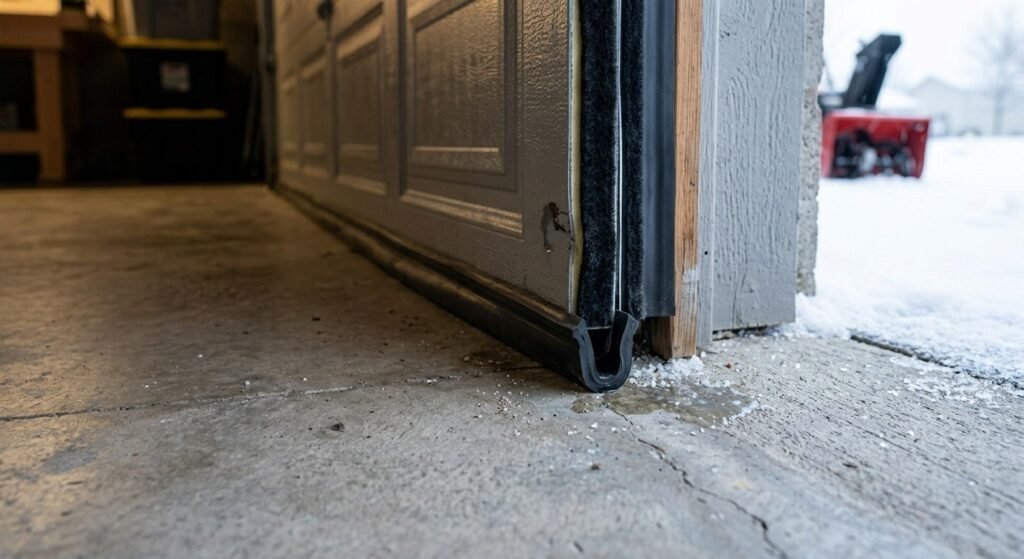
So, if your garage feels too hot in summer or too cold in winter, don’t assume insulation is the only issue. You could have a well-insulated door with gaps around it that are still letting outside air in.
What does each one do?
| Upgrade | Main job |
| Garage door insulation | Slows heat transfer through the door panels |
| Weatherstripping | Reduces air leakage around the door |
| Garage door bottom seal | Helps block drafts, dirt, and debris under the door |
| Garage door side seal | Helps close gaps along the sides |
| Top seal | Helps reduce air movement across the top of the door |
| Wall insulation | Slows heat transfer through garage walls |
| Ceiling insulation | Helps reduce heat coming through the ceiling |
Why weatherstripping matters
Look at the edges of your garage door when it’s closed. If you can see daylight around the sides or top, that’s a pretty obvious sign that air can get through too.
A worn garage door bottom seal can be another trouble spot. It may let in cold drafts during winter, hot air in summer, plus dust and even small insects.
The garage door side seal and top seal have a similar job. They close the spaces between the door and the frame so outside air has fewer ways to get inside.
This is where proper air sealing becomes important. Insulation can slow heat transfer, but it can’t stop a strong draft coming through a gap.
So, do you need both?
In many cases, yes.
An insulated garage door with poor seals isn’t getting the full benefit of its insulation. On the other hand, sealing every gap won’t give you the same thermal performance as having insulation inside the door panels.
A simple way to remember it:
Insulation controls heat movement. Weatherstripping controls air movement.
If you’re trying to improve the comfort of your garage, check both. Fixing obvious garage door gaps may be a fairly simple upgrade, while adding or replacing insulation deals with heat transfer through the panels themselves.
And honestly, this is one of those small details that’s easy to skip. People often look at the R-value of a door and forget to look at the rubber seals around it. Both matter.
What R-Value Should You Look for in a Garage Door?
When comparing garage doors, R-value is one of the numbers you’ll see pretty often. It tells you something useful about the door’s thermal resistance, but it shouldn’t be the only thing you look at.
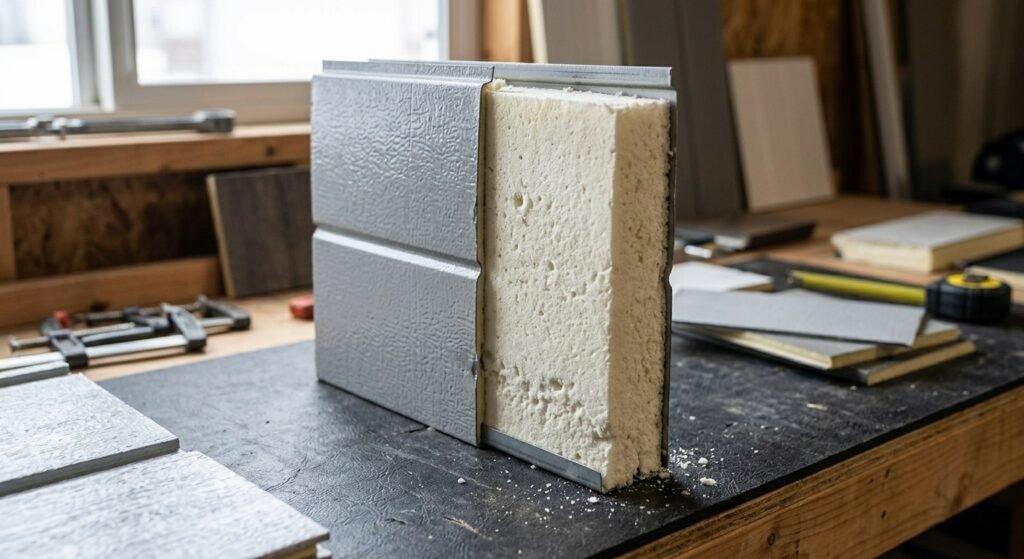
A higher garage door R-value generally means the door has more resistance to heat flow. But two doors with similar ratings can still perform differently once you consider the seals, windows, joints, and the way the door is actually installed.
What R-value means
R-value measures how well a material resists heat moving through it. In simple terms, a higher R-value usually means better resistance to heat transfer.
For a garage door, the insulation rating can give you a quick idea of how well the insulated sections may resist heat moving through them.
For example, a door rated around R-6 isn’t providing the same level of thermal resistance as one rated around R-16 or R-18.
But don’t get too hung up on chasing the biggest number you can find. The right rating depends on your climate, how you use the garage, and how well the rest of the space is insulated.
If your garage is just used for basic storage, you may not need the same level of garage door performance as someone using the space as a workshop or living area.
What U-factor means
U-factor, sometimes shown as U-value, looks at heat transfer from the other direction.
While R-value tells you how much resistance there is to heat flow, U-factor tells you how easily heat passes through the door assembly. Lower U-factor is better because it means less heat is moving through.
You may not see U-factor listed on every garage door, so R-value is often the easier number for homeowners to compare.
Still, U-factor can be useful when you’re comparing the overall thermal performance of two doors, especially when the manufacturers provide whole-door data.
Why the advertised R-value isn’t the whole story
Here’s where things can get a little tricky.
The R-value you see in a product description may refer mainly to the insulated panel or insulation material. It doesn’t always tell you exactly how the entire door assembly will perform once everything is put together.
Other parts matter too:
- Seals: Worn or poorly fitted seals can allow air to move around the door.
- Joints: Gaps between door sections can affect overall performance.
- Windows: Garage door windows can become another path for heat transfer.
- Construction: Single-, double-, and triple-layer designs don’t perform the same way.
- Installation: Even a well-rated door can perform poorly if it’s fitted incorrectly or has noticeable gaps.
So when you’re checking a garage door’s R-value, think of it as one useful piece of information, not the entire story.
A good insulation rating matters, but so does the way the door is built, sealed, and installed. That’s what gives you a better idea of real-world garage door performance.
Polyurethane vs. Polystyrene Garage Door Insulation
When you’re comparing an insulated garage door, you’ll usually come across two common materials: polyurethane insulation and polystyrene insulation. Both can improve the door’s thermal performance, but they aren’t built the same way.
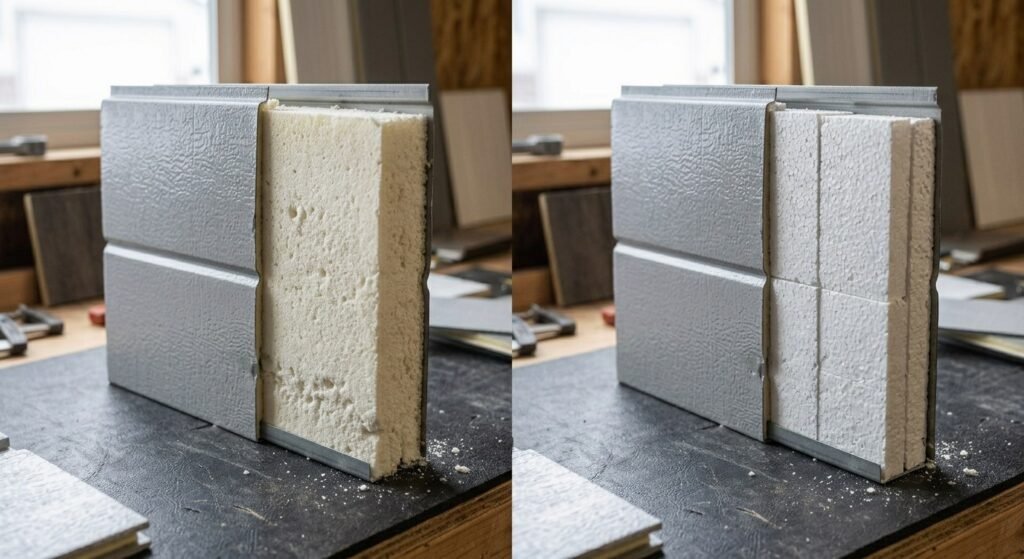
The choice between a polyurethane garage door and a polystyrene garage door usually comes down to your budget, climate, the garage door R-value you’re looking for, and how the door itself is constructed.
Polyurethane
Polyurethane insulation is a type of foam insulation that’s injected into the door sections. Once it expands, it fills the cavities between the outer layers instead of simply sitting inside as a separate panel.
Because it’s dense and fills those spaces closely, polyurethane can provide strong thermal performance without needing an extremely thick door.
Another nice thing is that the foam adds rigidity to the panels. So a polyurethane-filled door can feel more solid when you open, close, or operate it.
If you’re dealing with hot summers, cold winters, or simply want higher garage door R-value and stronger construction, polyurethane is often the more performance-focused option.
Polystyrene
A polystyrene garage door usually uses rigid panels fitted between the door’s layers.
It’s a commonly used insulation material and can be a practical choice when you want some insulation without moving into the higher cost of a premium door.
Polystyrene insulation can provide useful thermal resistance, although its performance is generally lower than polyurethane when you’re comparing similar door construction and thickness.
That doesn’t make it a bad option. For a garage that’s mainly used for parking or storage, a polystyrene-insulated door may provide plenty of improvement over a basic uninsulated door.
Which One Makes Sense?
There’s no single winner for every garage.
If your main goal is higher thermal performance, better rigidity, and you’re comfortable spending more, polyurethane can make sense.
If you’re working with a tighter budget and still want basic insulation, polystyrene may be the more practical choice.
I’d look at four things before deciding:
- Budget: How much are you comfortable spending?
- Climate: Do you deal with extreme summer heat or winter cold?
- Desired performance: Do you want basic insulation or higher thermal resistance?
- Door construction: Look at the complete door, not just the insulation material.
And one more thing: don’t choose purely by the material name. Check the actual garage door R-value, construction, seals, windows, and installation quality too. A good insulation material can’t make up for a poorly built or badly sealed door.
Single-Layer vs. Double-Layer vs. Triple-Layer Garage Doors
The number of layers in a garage door tells you quite a bit about how it’s built. If you’re comparing insulated vs uninsulated doors, this is one of the easiest places to start.
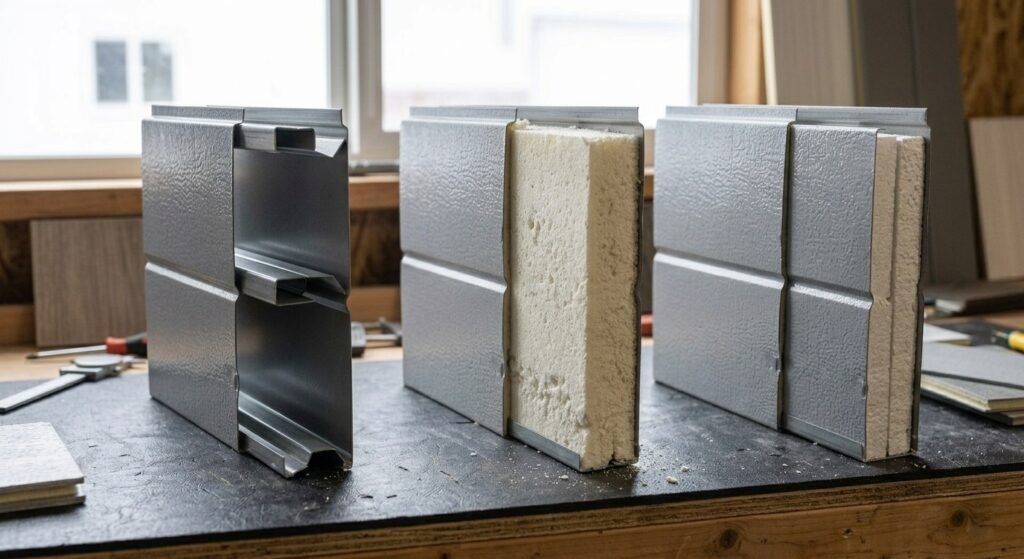
A single-layer garage door is usually the simplest option, while a double-layer garage door adds an insulated core. A triple-layer garage door goes one step further by sandwiching the insulation between inner and outer skins.
| Door type | Insulation | Best suited for |
| Single-layer | None | Basic or light use |
| Double-layer | Insulated core + outer skin | Moderate performance |
| Triple-layer | Insulation + inner and outer skins | Higher performance |
Single-Layer Garage Door
A single-layer garage door has one main layer, commonly a steel panel without an insulation core. It’s simple, lightweight, and usually one of the less expensive choices.
If the garage is mainly for parking or storage and you don’t spend much time there, this type of garage door construction may be enough.
The downside is that there’s little resistance to heat moving through the panels. So if you’re comparing insulated vs uninsulated garage doors, a single-layer door is generally the basic option.
Double-Layer Garage Door
A double-layer garage door adds insulation behind the outer skin. This gives the door more resistance to heat transfer while also making the panels feel more substantial.
It’s a middle-ground choice for homeowners who want an insulated steel door without necessarily going for the heaviest construction available.
For a garage that’s used regularly, especially in a climate with noticeable summer or winter temperatures, this can be a practical upgrade.
Triple-Layer Garage Door
A triple-layer garage door has insulation sandwiched between an outer and inner layer. That extra layer gives the door a more solid build and can improve its overall thermal and structural performance.
This type of garage door construction is often a better fit when comfort, durability, and insulation matter more than keeping the upfront cost as low as possible.
If the garage is attached to your home, used as a workshop, or exposed to extreme weather, the extra construction can be worth considering.
The simple way to look at it is:
Single-layer = basic.
Double-layer = insulation + moderate performance.
Triple-layer = more complete construction + higher performance.
You don’t automatically need a triple-layer door, though. The right choice depends on your climate, garage use, budget, and how much insulation you actually need.
Insulated vs. Uninsulated Garage Doors
If you’re stuck between an insulated garage door and an uninsulated garage door, the better choice really depends on how you use the garage. An uninsulated door can be perfectly fine for basic parking or storage, while insulation becomes more useful when you care about temperature control, comfort, noise, or durability.
Here’s a simple side-by-side look:
| Factor | Insulated Garage Door | Uninsulated Garage Door |
| Temperature | Slows heat transfer and helps reduce temperature swings | Outdoor temperatures affect the garage more quickly |
| Energy efficiency | Better resistance to heat loss and heat gain | Little resistance through the door panels |
| Noise | Usually provides better noise reduction | More sound can pass through the panels |
| Durability | Often feels stronger and more rigid | Usually lighter and less substantial |
| Comfort | Better for garages used as workshops or regular living/work spaces | Fine for garages used mainly for parking or storage |
| Cost | Higher upfront cost | Usually cheaper to buy |
| Best use | Attached garages, workshops, frequent use, or extreme climates | Basic storage, parking, mild climates, or limited use |
What do you get with an insulated door?
The main garage door insulation benefits are better resistance to heat transfer and a more solid door. In summer, the door can slow heat entering the garage. In winter, it can slow heat escaping.
You may also notice less vibration and outside noise, particularly with a heavier, multi-layer door. That can be useful when there’s a bedroom or living space close to the garage.
The added construction can also improve durability. Insulated panels tend to feel less flimsy than very thin, single-layer panels, although the exact strength depends on the door’s construction.
When is an uninsulated door enough?
An uninsulated garage door isn’t automatically a bad choice.
If your garage is mainly somewhere to park the car, store tools, or keep boxes, you may not care much about keeping the temperature stable. In a mild climate, the difference may also be less important.
Which one should you choose?
I’d look at three things first: your climate, how often you use the garage, and whether it’s attached to your home.
If the garage gets brutally hot or cold, is attached to the house, or doubles as a workshop, an insulated door is usually the more useful upgrade.
If it’s mostly a storage and parking space and you rarely spend time there, an uninsulated door may do the job just fine.
So the question isn’t really whether insulation is “good” or “bad.” It’s whether the extra cost makes sense for your particular garage.
When Is an Insulated Garage Door Worth the Extra Cost?
So, are insulated garage doors worth it? Sometimes, absolutely. But not for every garage.
The insulated garage door cost is higher than a basic uninsulated door, so the extra money makes more sense when you’ll actually benefit from better comfort, temperature control, durability, or energy savings.
For one homeowner, insulation might be a smart upgrade. For another, it could be money better spent somewhere else.
It’s Usually Worth Considering If…
An insulated door becomes more attractive when one or more of these situations apply:
- Attached garage: Temperature changes can matter more when the garage is connected to your home.
- Extreme climate: Very hot summers or cold winters make better insulation more useful.
- Room above: If there’s a bedroom or another room above the garage, improving the garage’s thermal performance can be helpful.
- Workshop: If you’re spending hours working on projects, a more comfortable garage is worth more than a basic storage space.
- Gym: Nobody wants to exercise in a freezing garage in January or a scorching one in July.
- Frequent use: The more time you spend there, the more you’ll notice temperature and comfort differences.
- Temperature-sensitive storage: Some items don’t do well with big temperature swings.
- Replacing the door anyway: This is a big one. If your old door already needs replacing, paying extra for insulation during the upgrade may make more sense than replacing a perfectly good door just for insulation.
The garage door insulation benefits aren’t only about temperature, either. A well-built insulated door can also feel more solid, reduce some noise and vibration, and offer better overall door performance.
It May Be Lower Priority If…
On the other hand, insulation doesn’t have to be at the top of your list if:
- Your garage is detached from the house.
- It’s used for storage only.
- You rarely use the space.
- You live in a mild climate without major temperature swings.
- There are major air leaks around the door or other parts of the garage.
- The garage has an uninsulated garage envelope, with poorly insulated walls and ceiling.
For example, spending extra on a premium insulated door while cold air is pouring through large gaps around the frame isn’t the best use of your budget. Fixing those obvious problems first may give you a more noticeable improvement.
The Bottom Line
The real question isn’t just “Is garage door insulation worth it?” It’s “Will I actually use and benefit from it?”
If your garage is attached, frequently used, part of a workshop or gym, or exposed to harsh weather, the extra cost can make good sense.
But if it’s a detached storage space that you barely enter, a basic door may be enough. There’s no reason to pay for performance you don’t really need.
My take: if you’re replacing the garage door anyway, I’d seriously consider insulation. If you’re keeping a perfectly good door and only thinking about insulation for the hope of lower bills, check the rest of the garage first. That’s where the decision gets more interesting.
Can You Insulate an Existing Garage Door?
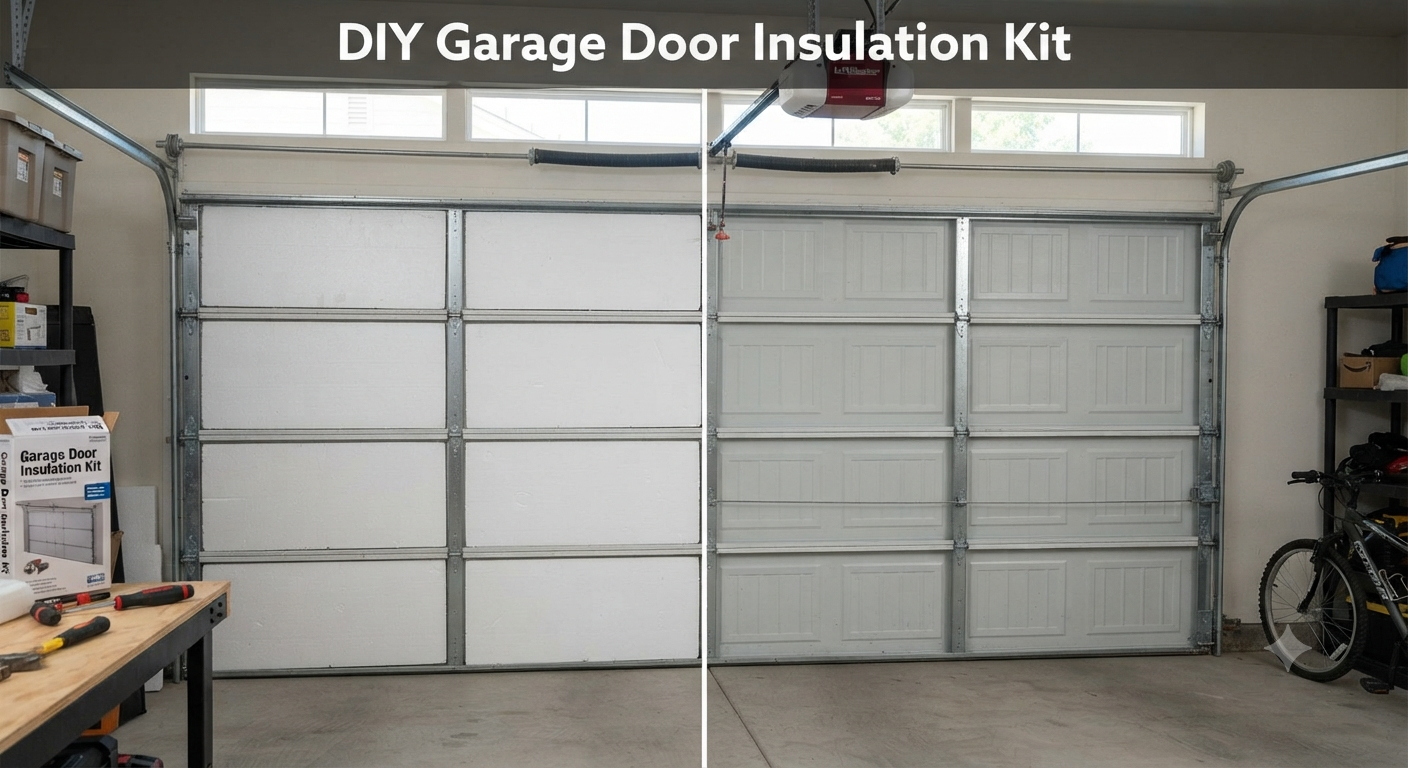
Yes, in many cases you can insulate an existing garage door instead of replacing the whole thing. A garage door insulation kit, retrofit garage door insulation, or properly fitted garage door insulation panels can add some thermal resistance to an older door.
Whether it’s worth doing depends on the condition and construction of the door. If the panels are damaged, badly worn, or the door is already near the end of its life, putting money into a retrofit may not be the best move.
Insulation Kits
A garage door insulation kit is usually the easiest option for a DIY project. Depending on the door, kits may use rigid panels, foam, or other insulation materials that fit into the existing sections.
DIY garage door insulation can make sense when the door is in good shape and you mainly want to improve its resistance to heat transfer without buying a completely new door.
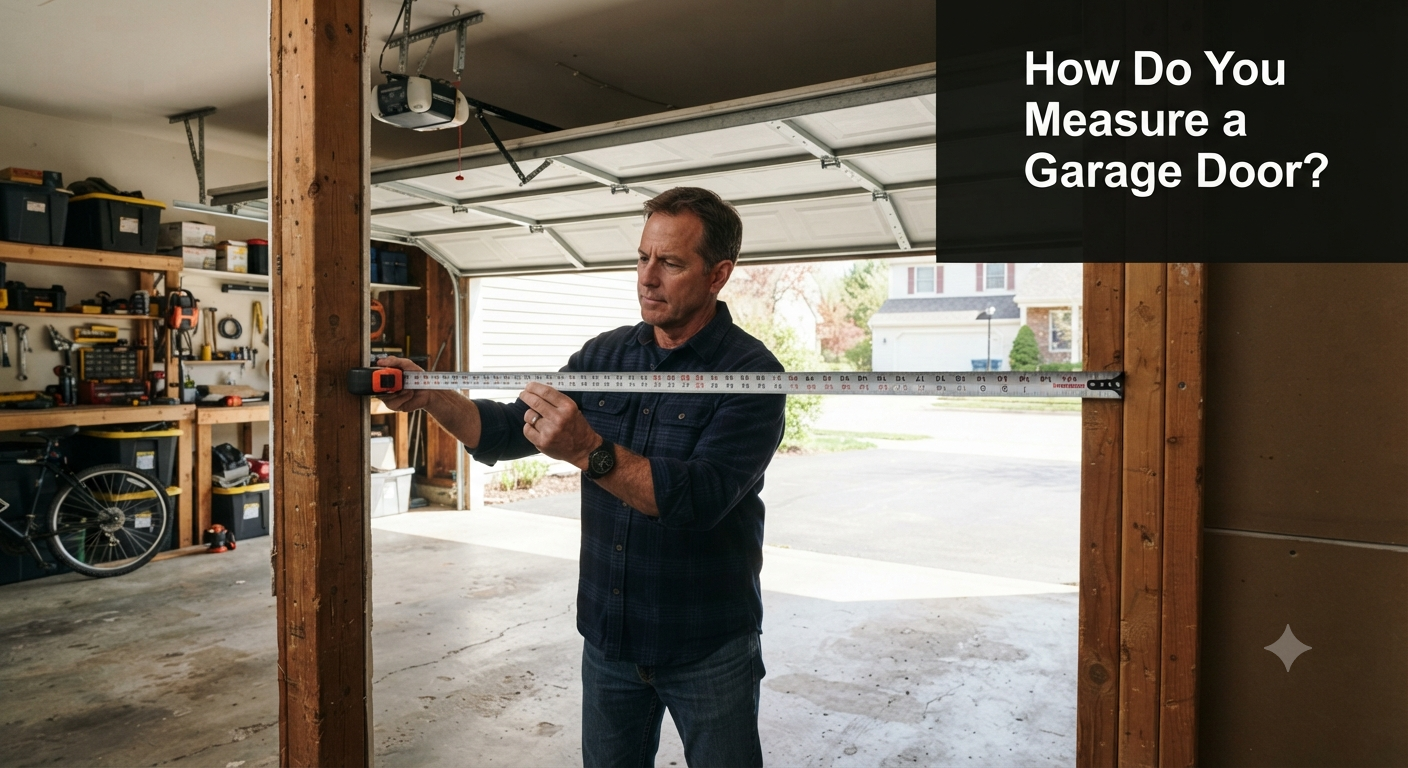
Before buying anything, measure the door sections carefully. The insulation needs to fit properly without interfering with hinges, rollers, tracks, or other moving parts.
Also, don’t forget the seals. Adding insulation won’t fix a large gap around the door.
When Replacement Makes More Sense
Sometimes retrofit garage door insulation isn’t worth the hassle.
A new insulated door may make more sense if your current door is:
- Damaged or badly dented
- Very thin and poorly constructed
- Showing signs of serious wear
- Difficult to balance
- Near the end of its useful life
- Missing proper sealing or other important components
If you’re already paying for repairs and insulation, compare that total with the price of a new insulated door. You might find that replacing it gives you better construction, better sealing, and a more reliable result.
Watch the Added Weight
This part is important and shouldn’t be skipped.
Adding insulation increases the weight of the door. Garage door springs and the opener are designed around a certain door weight, so randomly adding heavy insulation can affect how the door operates.
Don’t add heavy insulation without checking the door’s balance and the manufacturer’s guidance.
After installation, the door should still open and close properly and remain balanced. If it feels unusually heavy, drops quickly, struggles to open, or puts extra strain on the opener, stop and have the setup checked.
So yes, DIY garage door insulation can be a useful upgrade for the right door. Just don’t treat it as simply sticking some foam onto the panels and calling it done. The fit, weight, moving parts, seals, and overall condition of the door all matter.
What Else Should You Do to Make Your Garage More Comfortable?
An insulated garage door can help, but don’t stop there. If you really want a more comfortable garage, the other parts of the space need attention too. Garage insulation works best when the walls, ceiling, door, and seals are all doing their part.
A comfortable garage isn’t just about the door; properly installed insulation and air sealing work together to reduce heat flow and improve comfort.
1. Seal Door Gaps
Check the areas around the garage door for visible gaps or drafts. Good weatherstripping around the sides and top can reduce air sealing problems and keep outdoor air from coming straight inside.
If you can see daylight around the closed door, that’s a pretty good place to start.
2. Replace the Garage Door Bottom Seal
The garage door bottom seal takes a lot of abuse. It sits against the floor every time the door closes, so it can crack, flatten, or wear out over time.
A damaged seal can let in drafts, dust, water, and small insects. Replacing it is usually a much simpler fix than replacing the entire door.
3. Insulate the Garage Ceiling
If you’re serious about improving comfort, don’t ignore the garage ceiling.
This matters even more when there’s a room above the garage. Heat can move through the ceiling, so poor insulation in this area can make both the garage and the room above it harder to keep comfortable.
Good ceiling insulation can work alongside the insulated door instead of leaving another major weak spot.
4. Insulate Garage Walls Where Appropriate
Garage walls can also allow heat to move in and out, particularly when they’re connected to the house.
You don’t necessarily need to insulate every wall the same way. Pay particular attention to shared walls and areas where the garage connects with conditioned living space.
5. Seal Garage Windows
Garage windows can be another source of drafts. Check around the frames for obvious gaps, damaged seals, or places where outside air can get through.
Even if the door is well insulated, a poorly sealed window can still make air sealing less effective.
6. Address Condensation and Moisture
Temperature isn’t the only thing that affects garage comfort. Condensation and excess moisture can cause their own problems, especially during big temperature changes.
Keep an eye out for damp areas, water collecting on surfaces, musty smells, or moisture around the garage door and windows.
Good moisture control starts with finding where the water is coming from rather than simply covering up the symptom.
7. Consider Ventilation Where Needed
Sometimes better ventilation can help, particularly when heat or moisture gets trapped inside the garage.
But ventilation isn’t always the answer. In very hot or cold weather, bringing in large amounts of outdoor air can work against your temperature-control efforts.
So think about what problem you’re actually trying to solve: trapped heat, stale air, or excess moisture. The right approach depends on the garage.
Overall, an insulated door is useful, but it’s only one part of the garage. Sealing gaps, improving the ceiling and walls, managing moisture, and dealing with ventilation can all help you get more from the insulation you already have.
Who Benefits Most From an Insulated Garage Door?
Not every homeowner needs a highly insulated garage door. The people who usually notice the biggest difference are those who use their garage regularly or have a garage that’s closely connected to the home.
Here’s a quick checklist:
- Attached garage: If the garage is connected to your house, better insulation can help reduce temperature swings near the living areas.
- Workshop: If you’re spending hours working on projects, a more stable temperature can make the space much easier to use.
- Home gym: Exercising in a garage that’s freezing in winter or brutally hot in summer isn’t much fun. Insulation can improve garage comfort.
- Garage workspace: If you use the garage as an office, hobby area, repair space, or other workspace, temperature control matters more.
- Room above garage: A bedroom or other room above the garage is a good reason to pay attention to the garage’s insulation and air sealing.
- Extreme climate: Very hot summers or cold winters make insulation more useful because the temperature difference outside is much greater.
- Frequent garage use: If the door goes up and down all day, or you spend a lot of time inside, you’ll probably notice comfort improvements more than someone who only parks the car there.
The simple rule: the more you use your garage, and the more it’s connected to your home, the more useful an insulated door is likely to be.
Who May Not Need One?
An insulated garage door isn’t a must-have for every home. If you’re trying to decide whether garage door insulation is worth it, it’s worth looking at how you actually use the space instead of assuming the more expensive option is always better.
For some homeowners, the difference between insulated vs uninsulated doors just won’t matter enough to justify the extra cost.
You may not need an insulated door if:
- Detached garage: Since it’s separate from the house, temperature changes usually have less effect on your living space.
- Storage garage: If the garage is mainly for boxes, tools, or parking and you rarely spend time there, comfort may not be a big concern.
- Mild climate: If your area doesn’t get very hot or very cold, the thermal benefits may be less noticeable.
- Unheated garage: If you don’t heat or cool the garage, insulation won’t maintain a comfortable temperature by itself.
- Rarely used space: If you only open the door to park your car or grab something from storage, you may not get much value from paying extra for insulation.
Frequently Asked Questions
Do insulated garage doors really help?
Yes, they can. An insulated door slows heat transfer through the panels, which can help with temperature control, comfort, and noise. The difference is usually more noticeable in attached garages, extreme climates, and spaces that get used often.
Does garage door insulation work in summer?
It can help slow heat gain through the door, so the garage may heat up more slowly. But insulation doesn’t cool the garage like an air conditioner. Your roof, walls, windows, ventilation, and air leaks still matter.
Does an insulated garage door keep a garage warmer in winter?
It can help slow heat loss and reduce how quickly the garage gets cold. If the garage is heated, the benefit can be more noticeable. In an unheated garage, though, insulation won’t keep the space warm indefinitely.
Do insulated garage doors save money?
They can contribute to better energy efficiency, especially when the garage is attached to the home. But the savings aren’t guaranteed or the same for every house. The door is only one part of the garage’s overall thermal performance.
Are insulated garage doors worth the extra cost?
They can be worth it if you have an attached garage, extreme weather, a workshop, home gym, or another space you use regularly. For a detached storage garage in a mild climate, the extra cost may not be as important.
Is polyurethane better than polystyrene for garage doors?
Polyurethane generally provides stronger thermal performance and can add more rigidity because the foam fills the door cavities. Polystyrene uses rigid panels and can be a more budget-friendly choice. The better option depends on your climate, budget, and the door’s overall construction.
What R-value is good for a garage door?
There’s no single garage door R-value that’s right for everyone. A higher R-value generally means greater resistance to heat transfer, but climate and garage use matter. Also, check whether the advertised rating refers to the insulation material or the complete door assembly.
Can I insulate my existing garage door?
Often, yes. A garage door insulation kit, rigid insulation panels, or another retrofit method may work with some existing doors. Before adding insulation, check the door’s construction, available space, moving parts, and added weight.
Does garage door insulation reduce noise?
It can. Insulated, multi-layer doors tend to be denser and can provide some sound dampening. They may reduce vibration and outside noise compared with a thin, single-layer door, although the opener, rollers, hinges, and installation also affect how noisy the door is.
Should I insulate my garage walls and ceiling too?
If you’re trying to improve the whole garage, yes, it’s worth checking them. Garage wall insulation and garage ceiling insulation can reduce heat transfer through areas that the door can’t protect. This is especially important when there’s living space above or beside the garage.
Does an insulated garage door help a room above the garage?
It can help, but the ceiling between the garage and the room above is usually important too. An insulated door reduces heat transfer through the door itself, while proper garage ceiling insulation and air sealing address the larger connection between the garage and the room above.
Final Verdict
So, do insulated garage doors help? Yes, but how much they help depends on your garage.
The biggest insulated garage door benefits are better garage comfort, slower heat transfer, less noise, and potentially better energy efficiency. The difference can be more noticeable in an attached garage, an extreme climate, or a garage you use as a workshop, gym, or regular workspace.
But there’s one thing I’d keep in mind: garage door insulation isn’t a magic fix by itself. An insulated door works best when the rest of the garage is in decent shape too. Good weatherstripping, a solid bottom seal, insulated walls and ceiling, and proper air sealing all matter.
So if you’re upgrading an old door, an insulated option can be a smart choice. If your garage is barely used and mainly holds a car or boxes, you may not need to spend extra.
Bottom line: an insulated garage door can absolutely make a difference, but the real results come from treating the garage door insulation as one part of a properly sealed and insulated garage.