Garage door maintenance is mostly about catching small problems before they turn into expensive repairs. A quick check of the door, springs, rollers, tracks, opener, and safety features can keep everything running smoothly and safely. Regular upkeep also helps your garage door last longer, especially when it’s used several times every day. This garage door maintenance guide walks you through the simple checks and care a homeowner can handle, plus the jobs that are better left to a professional.
What Does Garage Door Maintenance Include?
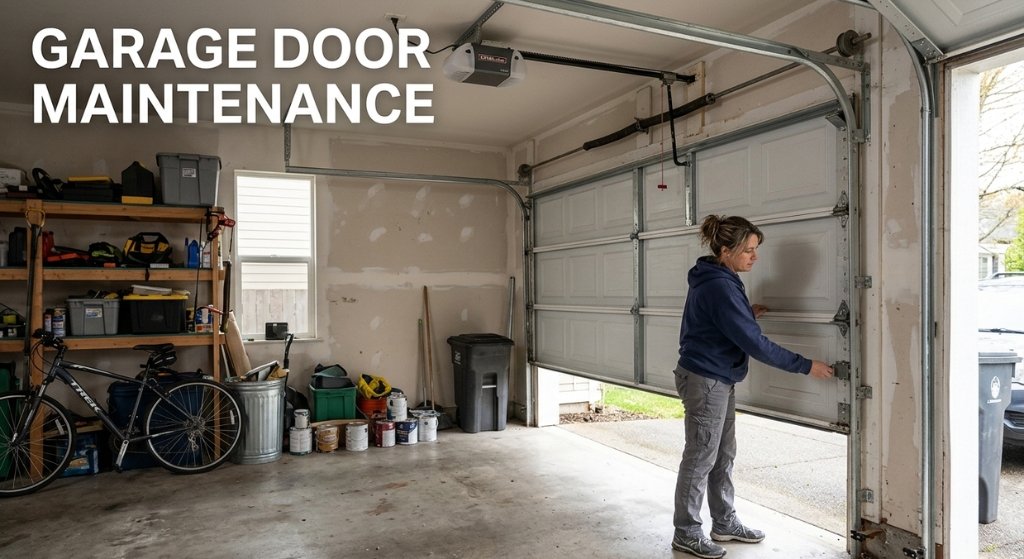
Garage door maintenance is more than just spraying lubricant on a few moving parts and calling it a day. Proper upkeep means looking over the whole system and catching small issues before they become bigger ones. A good garage door maintenance checklist should cover the door itself, its hardware, safety features, and opener.
For most homeowners, maintaining a garage door includes these basic tasks:
- Inspection: Look over the door, springs, cables, rollers, hinges, tracks, and other visible parts for wear, rust, damage, or anything that looks out of place.
- Cleaning: Dirt and debris can build up around the door and tracks. Cleaning the panels, tracks, sensors, and nearby areas helps keep the system working properly.
- Lubrication: Moving metal parts can create friction over time. Lubricating the parts recommended by the manufacturer can help reduce squeaks and unnecessary wear.
- Safety testing: Test the garage door’s auto-reverse feature and make sure the photo-eye sensors are clean and working correctly. These checks are especially important because the door is a heavy moving system.
- Hardware inspection: Check hinges, rollers, brackets, fasteners, and other hardware for looseness or visible damage. Small hardware problems can affect how smoothly the door moves.
- Opener checks: Don’t forget the garage door opener. Check its operation, remote, wall control, lights, and other visible components for anything unusual.
- Seal and weatherstrip checks: Look around the edges and bottom of the door for cracked, loose, or worn seals. Damaged weatherstripping can allow air, water, dust, or pests into the garage.
- Early problem detection: Pay attention to new sounds, shaking, jerking, slow movement, or changes in how the door opens and closes. These little changes are often worth checking before they turn into a repair.
Garage Door Maintenance Checklist
A garage door maintenance checklist makes the job a lot easier because you don’t have to remember every little part each time. You can go through these checks during your regular upkeep and note anything that looks worn, loose, dirty, or different from normal.
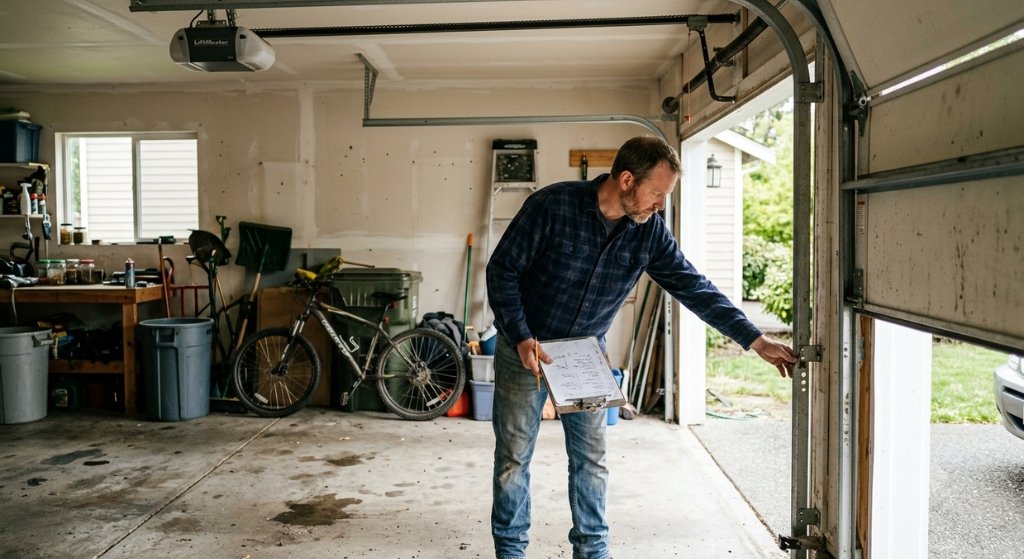
For garage door annual maintenance, this is a good basic list to keep handy:
| Check | What to look for |
| Door operation | Open and close the door. It should move smoothly without jerking, shaking, or getting stuck. |
| Springs | Look for visible rust, damage, gaps, or signs of a broken spring. Don’t try to adjust the springs yourself. |
| Cables | Check for fraying, broken strands, rust, or anything that looks out of place. |
| Rollers | Look for cracks, excessive wear, or rollers that don’t move smoothly. |
| Hinges | Check for loose hardware, cracks, or hinges that look damaged. |
| Tracks | Remove dirt and debris and look for dents, damage, or obvious alignment problems. |
| Sensors | Make sure the photo-eye sensors are clean, facing each other, and free from anything blocking them. |
| Weather seals | Look for cracks, gaps, loose sections, or worn areas around the door. |
| Opener | Run the opener and listen for unusual sounds or changes in its normal operation. |
| Safety reverse | Test the auto-reverse feature to make sure the door responds correctly when an obstruction is detected. |
Don’t Forget the Small Stuff
Some parts are easy to overlook because they don’t seem important at first. The remote battery, wall control, opener light, mounting hardware, and even small amounts of dirt around the sensors can affect how the system behaves.
Your garage door spring maintenance should mainly be a visual check unless you’re a trained professional. Springs hold a lot of tension, so repairs or adjustments aren’t a good DIY project.
The same goes for garage door roller maintenance. You can look for cracked or worn rollers and notice whether they’re making unusual noise, but don’t force a damaged part to keep working.
How to Inspect Your Garage Door
Knowing how to maintain a garage door starts with a simple inspection. You don’t need to take anything apart. Just watch and listen while the door opens and closes normally. A few minutes of paying attention can tell you a lot about its condition.
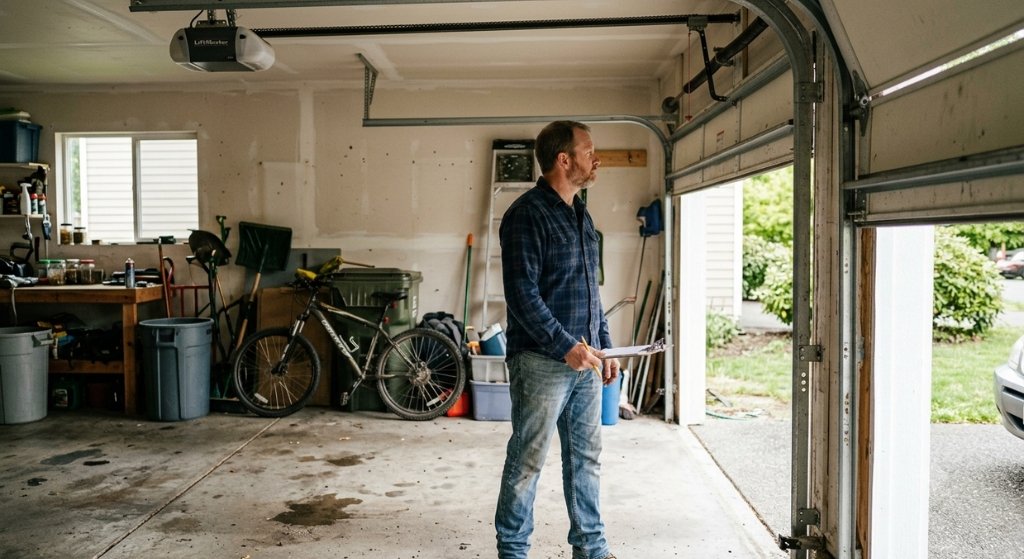
During a basic garage door inspection, look for changes in the way the door moves, sounds, or responds. These can be early signs your garage door needs maintenance, especially if something that used to feel normal suddenly starts acting differently.
Watch How the Door Opens and Closes
Start by standing somewhere you can safely see the whole door. Open and close it normally and watch the movement from beginning to end.
A garage door should generally move smoothly without sudden stops or strange movements. Pay attention if you notice:
- Jerking: The door moves in short, uneven bursts instead of one steady motion.
- Shaking: The door or certain sections visibly shake while moving.
- Uneven movement: One side appears to move differently from the other, or the door doesn’t stay level.
- Slow movement: The door takes noticeably longer than usual to open or close.
- Unusual sounds: New or louder sounds can be a reason to inspect the system more closely.
Listen for Unusual Noises
Your ears can be surprisingly useful during an inspection. Most garage doors make some noise, especially older ones, so the key is to notice changes from the door’s normal sound.
- Squeaking may come from dry or worn moving parts, such as hinges or rollers.
- Grinding can point to friction, a worn component, or another mechanical issue that needs a closer look.
- Rattling may be caused by loose hardware, panels, or another part vibrating while the door moves.
- Popping can have several possible causes, including movement in the springs or other hardware.
Check the Springs, Cables, Rollers and Hinges
Some of the most important parts of a garage door are easy to overlook because they’re not always obvious during normal use. Springs carry much of the door’s weight, while cables, rollers, hinges, and brackets help the door move properly. During routine maintenance, give these parts a quick visual inspection and look for anything that seems damaged, worn, rusty, or out of place.
Garage Door Springs
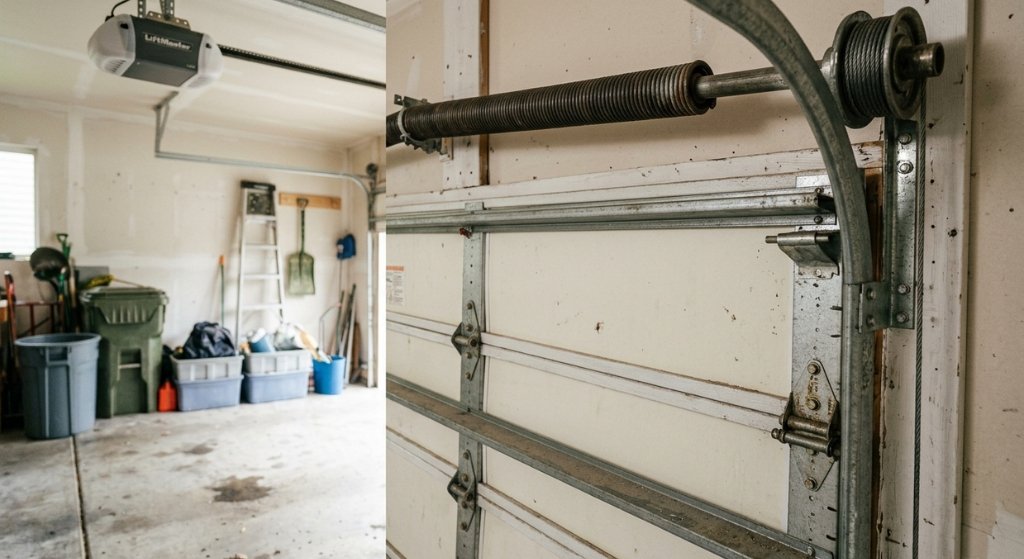
Garage door spring maintenance starts with looking, not taking things apart. Most residential doors use either torsion springs mounted above the door or extension springs positioned along the horizontal tracks.
Look for obvious signs such as:
- Rust or visible damage
- A spring that appears broken or separated
- Unusual gaps or changes in the spring
- A door that suddenly feels much heavier
- Changes in the way the door opens or closes
Regular garage door springs maintenance can help you notice a problem early, but there’s an important line here: don’t adjust, remove, or replace high-tension springs yourself. These springs can store a lot of energy, and a mistake can cause serious injury. If a spring looks broken or something seems wrong with the spring system, leave the repair to a trained garage door professional.
Garage Door Cables
Next, take a look at the garage door cables. They work with the spring system to help lift and lower the door, so they shouldn’t be ignored during a routine check.
For a basic cable inspection, look for:
- Frayed or broken strands
- Rust or corrosion
- Loose sections
- A cable that appears out of position
- Visible damage near the bottom brackets or drums
A frayed garage door cable isn’t something to keep using and hope it gets better. Don’t try to pull, unwind, or reposition a damaged cable yourself. If you notice serious wear or a cable has come loose, it’s safer to have the system inspected by a professional.
Garage Door Rollers
The garage door rollers travel inside the tracks and help the door move up and down. Worn rollers can make the door noisier and may affect how smoothly it moves.
During garage door roller maintenance, check whether the rollers:
- Have visible cracks or damage
- Look badly worn
- Shake or wobble while moving
- Make more noise than they used to
- Appear to be sitting properly in the track
If you notice worn garage door rollers, don’t ignore them just because the door still works. A damaged roller can put extra strain on other parts of the system. Some roller types are simple to inspect, but replacement can involve working around a heavy, moving door, so follow the manufacturer’s instructions or use a professional if you’re unsure.
Hinges and Hardware
Finally, look over the garage door hinges and other visible hardware. Hinges connect the door sections and allow them to bend as the door moves, while garage door brackets help hold important components in place.
Check for:
- Loose screws or bolts
- Cracked or bent hinges
- Rust
- Damaged brackets
- Hardware that appears to be shifting
- Sections that don’t seem to move normally
Clean the Garage Door and Tracks
Dirt and debris might not seem like a big deal, but they can slowly make a garage door harder to operate. As part of regular garage door maintenance, it’s worth giving the tracks and door surface a quick clean. You don’t need anything fancy, just remove the buildup and take a look at what’s underneath it.
How to Clean Garage Door Tracks
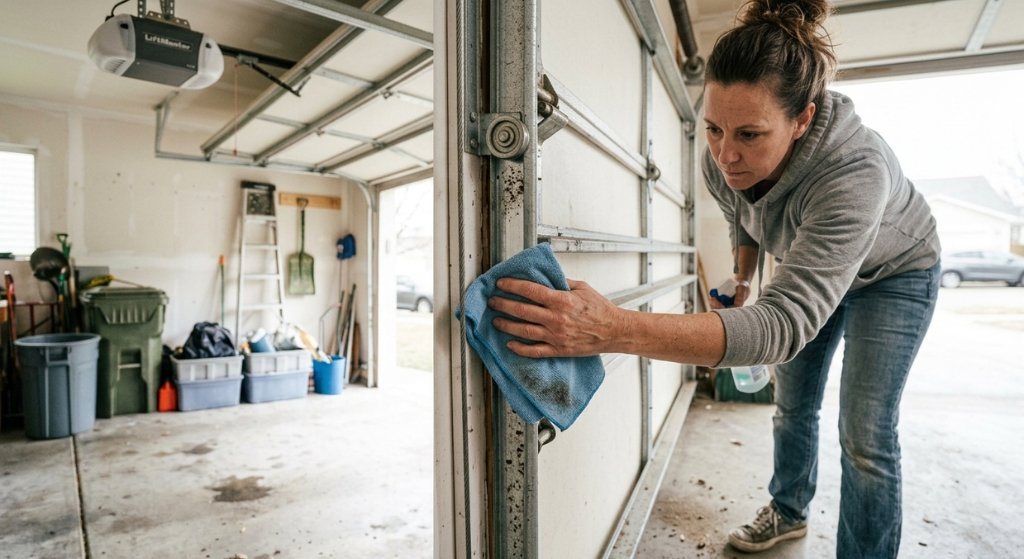
When you clean garage door tracks, start by removing loose dirt, leaves, dust, and other debris that may have collected inside or around them.
A simple approach is:
- Use a dry cloth or soft brush to remove loose dirt and debris.
- Wipe the accessible parts of the tracks with a clean cloth.
- Check for dents, bends, or other visible damage.
- Look at the tracks from top to bottom for obvious alignment problems.
- Make sure nothing is blocking the rollers from moving normally.
One thing to avoid is packing the garage door tracks with grease. The tracks guide the rollers, so adding a thick layer of grease can attract more dirt and leave you with a bigger mess.
Clean the Door Surface
The door itself deserves some attention too. When you clean garage door panels, you’re not only making them look better. Cleaning also makes it easier to notice things like rust, scratches, dents, peeling paint, or other surface damage.
Pay a little extra attention to:
- Dirt and dust: These can build up around panels, windows, and hardware.
- Salt: If your door is exposed to road salt, ice-melt products, or salty air, regular washing can help reduce corrosion.
- Rust: Check scratches, exposed metal, edges, and hardware for early signs of rust.
- Paint and finish: Look for peeling, fading, cracking, or areas where the protective finish has been damaged.
The cleaning method can also depend on the door material. Steel garage doors should be checked for scratches and rust because exposed metal can eventually corrode. Wood garage doors need a little more attention to moisture, peeling finish, cracks, and signs of deterioration.
Lubricate the Moving Parts
If your garage door has started sounding a little louder or rougher than usual, lubrication may be worth checking. The goal of garage door lubrication isn’t to cover every part in oil. It’s to reduce friction where lubrication is actually recommended and help the moving components work with less unnecessary wear.
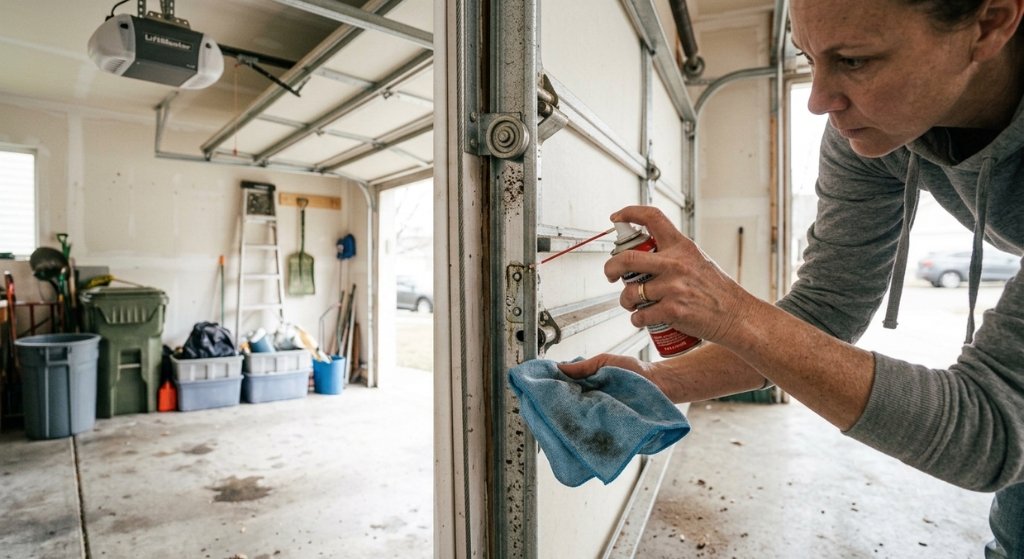
Before you lubricate garage door components, wipe away excess dirt around the area you’re working on. A small amount of the right lubricant is usually better than spraying everything in sight. Too much can drip onto the door, floor, or other parts and attract dust.
What Parts Need Lubrication?
The parts that may need attention can vary depending on the garage door and opener. In general, manufacturer instructions may recommend lubrication for certain moving points, including:
- Hinges: These move every time the door sections bend while opening and closing.
- Rollers and bearings: Some roller types have bearings or other moving points that may require lubrication.
- Springs: Some systems allow or recommend lubrication as part of garage door springs maintenance, while others may have different care instructions.
- Bearing points: Certain bearing points in the door system may need occasional lubrication depending on the design.
When doing garage door roller maintenance, don’t assume every roller should be treated the same way. Roller designs differ, and some may have sealed bearings that don’t need the same type of care.
What Lubricant Should You Use?
There’s no single lubricant that’s right for every garage door and opener. The safest choice is to check the owner’s manual or the manufacturer’s maintenance instructions before choosing a product.
Some systems may call for a garage-door-specific lubricant, while others have different requirements for particular components. That’s why it’s better to follow the manufacturer’s instructions rather than assuming a general-purpose spray is suitable for everything.
When applying lubricant:
- Clean away loose dirt from the area first.
- Apply a small amount to the recommended moving point.
- Move the door through its normal cycle if the manufacturer’s instructions allow it.
- Wipe away excess lubricant that drips or collects around the component.
- Keep lubricant away from the floor, sensors, and areas where it could attract a lot of dirt.
Test Your Garage Door Balance and Safety Features
A garage door can look perfectly fine and still have a safety problem. That’s why testing the door is an important part of regular maintenance. You don’t need to take the system apart for these checks. Just pay attention to how the door behaves and whether its safety features respond the way they should.
Test the Door Balance
A basic garage door balance test can give you an idea of whether the door is carrying its weight properly.
If your door and opener manufacturer’s instructions allow a manual balance check, disconnect the opener using the emergency release and carefully move the door by hand. The door should feel reasonably balanced and shouldn’t suddenly drop or shoot upward on its own.
If you test garage door balance and the door feels unusually heavy, falls quickly, rises by itself, or won’t stay in position, don’t try to adjust the springs to fix it. Spring tension can be dangerous, and this isn’t a good DIY repair.
Test the Auto-Reverse Feature
The garage door auto-reverse system is one of the most important garage door safety features on an automatic opener. It helps prevent the door from continuing downward when an obstruction is detected.
Follow the testing method provided by your opener manufacturer. Many systems can be tested by placing an appropriate test object in the door’s path and closing the door using the opener. The door should respond according to the manufacturer’s instructions and reverse rather than continuing to close against the object.
If the door doesn’t respond correctly, stop using the automatic opener until the problem has been checked. Don’t keep repeating the test or try to bypass the safety system.
Check the Photo-Eye Sensors
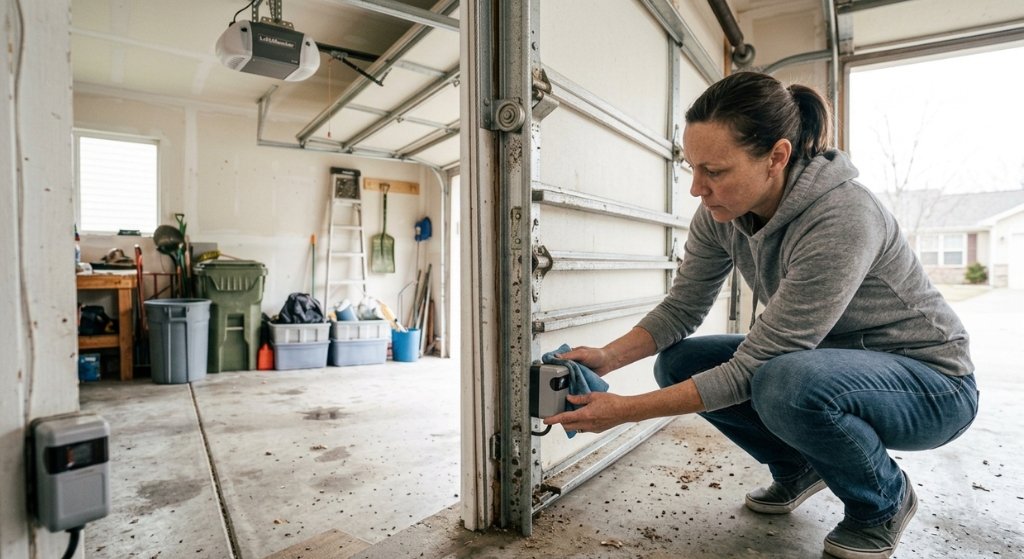
The garage door sensors, often called photo eye sensors, are usually mounted near the bottom of the door opening. They work as a pair and help detect an object in the door’s path.
For a quick check:
- Make sure both garage door safety sensors are firmly in place.
- Keep the area around them clear.
- Gently wipe the sensor lenses with a soft, clean cloth.
- Check that nothing is blocking the path between the two sensors.
- Look for visible damage or loose wiring.
If you need to clean garage door sensors, a soft cloth is usually enough for the lens. Avoid scratching the sensor surface or spraying cleaning products directly onto the sensor.
Maintain Your Garage Door Opener
The opener does a lot of work every time the door goes up or down, so it deserves a quick check during regular garage door opener maintenance. You don’t need to take the opener apart. Just watch how it operates, listen for anything unusual, and check the parts you can safely reach.
Check the Opener
Start the door and pay attention to how the opener sounds and responds. If there’s a new grinding, buzzing, rattling, or unusually loud noise, don’t just assume it’s normal wear.
Also take a quick look at:
- Mounting: Check that the opener is still securely mounted and isn’t visibly shaking or hanging differently than before.
- Rail and trolley operation: Watch the trolley as it moves along the rail. It should travel smoothly without getting stuck or making unusual movements.
- Remote: Press the remote from a normal distance and make sure the door responds consistently.
- Wall control: Check that the wall button operates the door properly.
- Keypad: If your garage has an exterior keypad, test it and make sure the buttons respond normally.
- Light: Check that the opener light works and replace the bulb if it’s burned out.
Belt-Drive Garage Door Opener Maintenance
With belt drive garage door opener maintenance, the basic idea is similar, but the drive system is different from a traditional chain-drive opener.
A belt-drive opener uses a reinforced belt to move the trolley, while a chain-drive system uses a metal chain. Belt-drive models are often chosen for their quieter operation, but that doesn’t mean they can be ignored.
Replace Batteries and Check Backup Power
Small power-related items are easy to forget until they stop working. During your maintenance check, test the garage door remote battery and replace it if the remote has become weak or inconsistent.
You can also check:
- Keypad battery: Replace it if the keypad becomes slow or stops responding reliably.
- Garage door opener battery: If your opener has a backup battery, check its condition according to the manufacturer’s instructions.
- Opener light bulb: Replace a burned-out bulb so you aren’t left in a dark garage.
- Backup battery: Test the backup system as recommended by the manufacturer, especially before severe weather or a power outage is likely.
Check the Weather Seals and Door Gaps
The seals around a garage door do more than make the edges look finished. Good garage door weatherstripping helps keep outside air, rain, dust, and small pests from finding their way into the garage. It’s worth checking these seals during routine maintenance because they can wear out without causing an obvious problem at first.
Look for Signs of Worn Seals
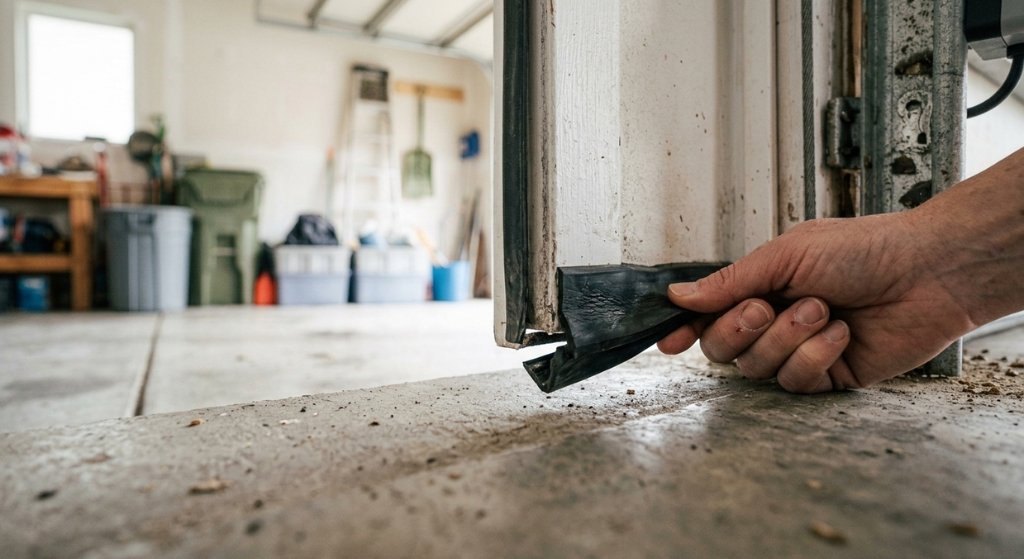
Start with a quick look around the bottom and sides of the closed door. Check the garage door weather seal for cracks, tears, hard or brittle areas, and sections that have pulled away from the door.
Pay attention to:
- Bottom seal: Look for cracks, flattened sections, gaps, or areas that no longer sit evenly against the floor.
- Side seals: Check for loose, torn, or compressed sections along both sides of the door.
- Top seal: Look for gaps or areas where the seal has become loose or damaged.
- Garage door gaps: Look for visible spaces around the edges when the door is closed.
When Should You Replace the Seal?
A little wear doesn’t always mean the entire sealing system needs to be replaced right away. But if a seal is cracked, badly compressed, torn, loose, or no longer closes the gap properly, it’s probably time to look at replacement.
The bottom seal is especially easy to wear down because it sits against the garage floor every time the door closes. Changes in temperature, moisture, dirt, and regular contact with the ground can all take a toll on it.
If you need detailed instructions for replacing a bottom seal, see our guide on [garage door bottom seal] instead of trying to cover the whole process here.
Garage Door Maintenance by Season
Your garage door doesn’t deal with the same conditions all year. Winter moisture, summer heat, road salt, dirt, and sudden temperature changes can all affect how the door and its hardware behave. That’s why a simple seasonal check can be more useful than waiting until something stops working.
Spring Maintenance
Spring is a good time to check what winter left behind. Road salt, dirt, moisture, and debris can collect around the garage door and its hardware.
Start by:
- Cleaning winter dirt and salt from the door and accessible hardware.
- Inspecting for rust, especially around exposed metal parts and areas where the finish has been scratched.
- Checking the seals for cracks, hard spots, or gaps that may have appeared during cold weather.
- Lubricating recommended moving parts according to the manufacturer’s instructions.
- Testing the safety features, including the auto-reverse function and photo-eye sensors.
Summer Maintenance
Hot weather can be tough on garage doors, especially when the garage gets direct sunlight for hours. Summer is a good time to check the door surface and the parts that protect the garage from outside conditions.
Take a few minutes to:
- Inspect the weather seals around the bottom, sides, and top of the door.
- Check the sensors and make sure nothing is blocking or disturbing them.
- Inspect the door surface for peeling paint, rust, cracks, or other visible damage.
- Watch for unusual operations, such as slower movement, shaking, jerking, or new noises.
Fall Maintenance
Fall is probably the best time to do a more complete check before colder weather arrives. You want to catch small issues while the door is still operating normally.
A fall maintenance check can include:
- A full inspection of the door, springs, cables, rollers, hinges, tracks, and visible hardware.
- Lubrication of the parts recommended by the manufacturer.
- An opener check to make sure the remote, wall control, keypad, lights, and normal operation are working properly.
- A seal check around the bottom and edges of the door.
- Safety testing of the auto-reverse system and photo-eye sensors.
Winter Maintenance
Cold weather brings its own set of problems. Ice, moisture, freezing temperatures, and snow can affect the bottom of the door and its seals.
One rule is especially important: don’t force a frozen garage door open. If the bottom seal is stuck to ice, forcing the opener or pulling hard on the door can damage the door or its components.
Instead:
- Remove ice around the bottom of the door carefully before trying to operate it.
- Check the weather seals for cracking or gaps.
- Watch for moisture getting into the garage around the door.
- Pay attention to changes in the door’s movement after freezing weather.
If you’re also trying to keep your garage warmer during cold months, our guide on garage door insulation for cold weather covers that topic in more detail. Here, the main focus is simply keeping the door and its sealing system in good working condition.
How Often Should You Maintain a Garage Door?
So, how often should you maintain a garage door? There isn’t one exact schedule that fits every home. A door that’s used several times a day may need more attention than one that’s only opened occasionally. Your local weather, the age of the door, and the condition of its parts can matter too.
For most homeowners, a simple garage door maintenance schedule can look like this:
| Frequency | Maintenance |
| Monthly | Do a quick visual and operation check. Look for unusual sounds, movement, damage, or anything that doesn’t seem normal. |
| Every 3–6 months | Clean the door and accessible tracks, check the main components, and lubricate parts when recommended by the manufacturer. |
| Twice a year | Carry out a more complete safety and maintenance inspection, including the door balance, auto-reverse feature, sensors, seals, hardware, and opener. |
| Annually | Give the whole system a more thorough review and look for wear, rust, damaged components, and changes in performance. |
| Whenever symptoms appear | Don’t wait for the next scheduled check. Inspect the door when you notice new noises, jerking, shaking, slow movement, or another unusual change. |
Why Regular Maintenance Matters
Preventative garage door maintenance is mainly about catching problems while they’re still small. A worn roller, damaged seal, loose piece of hardware, or unusual noise may seem minor at first, but ignoring it can sometimes lead to more wear or a bigger repair later.
If your door gets heavy daily use, is exposed to harsh weather, or is getting older, you may want to check it more often. On the other hand, a lightly used door in a mild environment may not need the same level of attention.
For garage door annual maintenance, don’t just focus on the door panels. Check the opener, springs, cables, rollers, hinges, tracks, sensors, safety features, and weather seals as part of the bigger picture.
Always follow your door and opener manufacturer’s maintenance schedule when it differs from the general schedule above. Different garage door systems can have different care requirements, and the owner’s manual is the best place to start.
Common Signs Your Garage Door Needs Maintenance
Garage doors don’t always fail out of nowhere. In many cases, they give you little hints first. A new sound, slower movement, or a door that suddenly behaves differently can be your first warning that something needs attention.
Here’s a simple way to look at the most common symptoms:
| Symptom | What it may indicate | What to do |
| Noisy garage door | Worn or dry moving parts, loose hardware, or another component rubbing or vibrating | Listen for where the noise is coming from and inspect the visible parts. Lubricate only where the manufacturer recommends it. |
| Squeaking garage door | Dry hinges, rollers, bearings, or other moving components | Check the moving parts for visible wear and follow the proper lubrication instructions. |
| Grinding garage door | Possible friction, damaged rollers, track problems, or another worn component | Stop and inspect the system rather than continuing to run the door repeatedly. Get professional help if the cause isn’t obvious. |
| Garage door shaking | Worn rollers, loose hardware, alignment issues, or uneven movement | Watch the door closely while it operates and have unusual shaking checked if it continues. |
| Garage door jerking | Resistance in the tracks, worn components, balance problems, or an opener-related issue | Don’t force the door. Check for obvious obstructions and unusual wear, then arrange an inspection if the movement doesn’t return to normal. |
| Slow garage door | Opener issues, increased friction, worn components, or a change in the door’s balance | Compare its movement with how it normally operates and investigate any sudden change. |
| Uneven garage door | Possible balance, spring, cable, roller, or track-related problem | Stop trying to correct it yourself if the door looks noticeably crooked or heavy. Have the system checked. |
| Garage door won’t close | Sensor obstruction, sensor issue, opener problem, or another mechanical fault | Check that the photo-eye sensors are clean and unobstructed. If the problem remains, have the system inspected. |
| Garage door won’t open | Remote or opener issue, power problem, broken spring, cable problem, or another mechanical fault | Check the obvious power and control issues first. Don’t try to force the door open or work on high-tension components yourself. |
Don’t Ignore Sudden Changes
One important thing to remember is that your garage door has its own normal sound and movement. You get used to it after a while. So when that familiar sound changes, it’s worth paying attention.
A noisy garage door that has always been a little loud isn’t necessarily an emergency. But if it suddenly starts squeaking, grinding, rattling, or shaking more than usual, that’s different.
The same goes for a slow garage door or a door that starts jerking during operation. A small change can come from something simple, but it can also be an early sign that another part is wearing out.
If your garage door won’t close, check the sensor area first and make sure nothing is blocking the photo-eye sensors. If the garage door won’t open, don’t immediately start pulling on cables, springs, or other components to make it move.
Common Garage Door Maintenance Mistakes
A lot of garage door problems don’t start with a major failure. Sometimes, they come from small maintenance habits that seemed harmless at the time. That’s why knowing the common garage door maintenance mistakes can save you some trouble later.
Here are a few things worth avoiding.
Ignoring Unusual Noises
If your door suddenly starts squeaking, grinding, rattling, or popping, don’t just turn up the radio and carry on. A new sound can be a sign that something is wearing out or rubbing where it shouldn’t.
One of the better garage door maintenance tips is pretty simple: learn what your door normally sounds like. When that changes, pay attention.
Skipping Safety Tests
It’s easy to check the door’s appearance and forget about the safety features. The auto-reverse system and photo-eye sensors are there for a reason, so they shouldn’t be left off your maintenance routine.
Using the Wrong Lubricant
More lubricant doesn’t automatically mean better maintenance. Using a product that isn’t suitable for a particular component can cause problems, and some parts don’t need lubrication at all.
Lubricating the Tracks Heavily
This one is pretty common. The rollers move inside the tracks, but that doesn’t mean the tracks need to be covered in thick grease.
Heavy grease can collect dust, dirt, and other debris. Keep the tracks reasonably clean and lubricate only the parts your manufacturer recommends.
Forcing a Frozen Door
A door that has frozen to the garage floor can be frustrating, especially when you’re already late for work. Still, forcing it open isn’t worth the risk.
Ignoring Frayed Cables
A damaged or frayed cable isn’t something to watch for another few months. Garage door cables work with a system that can be under significant tension, so don’t try to pull, reposition, or repair a damaged cable yourself.
If you notice fraying, broken strands, or a cable that has come out of position, stop and have it inspected.
Adjusting the Springs Yourself
This is one mistake I’d strongly avoid. Garage door springs can store a lot of energy, and adjusting or replacing them without the right training and tools can cause serious injury.
Pressure Washing Without Checking the Manufacturer’s Guidance
A pressure washer can make a dirty door look tempting to clean in a hurry, but it isn’t suitable for every garage door surface.
High-pressure water can damage certain finishes, wood surfaces, seals, or other components. Before using one, check the care instructions for your specific door. If the manufacturer says not to pressure wash it, don’t.
A gentle wash is usually the safer choice.
Forgetting the Opener
It’s easy to focus on the big door and completely forget the motor hanging above it. But the opener is part of the system too.
During improper garage door maintenance, homeowners often skip the remote, wall control, keypad, opener light, rail, trolley, and backup battery. Give these parts a quick check so you know they’re working when you need them.
Ignoring Damaged Weather Seals
Cracked, loose, or flattened weather seals can leave gaps around the door. That can let in water, outside air, dust, and unwanted little visitors.
Check the bottom, sides, and top seals during routine maintenance. If they’re no longer doing their job, replacing them may be worthwhile.
What Garage Door Maintenance Can You Do Yourself?
Not every garage door maintenance job requires a professional. There are quite a few things a homeowner can safely handle with basic tools and a little patience. The trick is knowing where to stop.
If you’re wondering whether you can maintain a garage door yourself, stick to tasks that don’t involve high-tension springs, cables, major structural parts, or electrical repairs. For most residential garage door maintenance, these simple jobs are a good place to start.
Safe DIY Tasks
Some routine DIY garage door maintenance tasks are fairly straightforward:
- Cleaning: Wash the door surface and remove dirt or debris from accessible areas.
- Visual inspection: Look over the springs, cables, rollers, hinges, tracks, hardware, seals, and door panels for obvious signs of wear or damage.
- Sensor cleaning: Wipe the photo-eye sensor lenses with a soft, clean cloth and make sure nothing is blocking them.
- Basic lubrication: Lubricate recommended moving parts only when your door manufacturer’s instructions call for it.
- Battery replacement: Replace batteries in the remote, keypad, or opener backup system when needed.
- Safety tests: Test the auto-reverse system and other safety features according to the opener manufacturer’s instructions.
- Checking seals: Look for cracked, loose, flattened, or damaged weather seals around the door.
What Should a Professional Handle?
Some garage door parts can be dangerous to work on without proper training and equipment. It’s better to leave these jobs to someone who works with garage doors regularly:
- Spring replacement or adjustment: Torsion and extension springs can store a lot of energy.
- Cable replacement: Damaged or frayed cables should not be pulled, repositioned, or replaced as a DIY fix.
- Serious track damage: Bent, badly misaligned, or damaged tracks may affect the entire door system.
- Major structural problems: Damaged panels, brackets, frames, or other load-bearing components may need professional assessment.
- Electrical opener repairs: Internal opener components, wiring, and electrical faults aren’t good DIY projects unless you’re properly qualified.
- Problems you can’t safely diagnose: If the door suddenly becomes very heavy, drops, gets stuck, or behaves in a way you don’t understand, don’t keep experimenting with it.
Garage Door Maintenance vs. Repair
It’s easy to mix up garage door maintenance and repair, but they’re not really the same thing. Maintenance is about preventing problems and catching wear early. Repair is about fixing something that’s already damaged or isn’t working properly.
Think of it this way: maintenance helps keep the door in good shape, while repair gets it back in shape when something goes wrong.
What Counts as Maintenance?
Preventative garage door maintenance includes the regular jobs you do before there’s a serious problem.
For example:
- Cleaning dirt and debris from the door and accessible areas
- Checking rollers, hinges, cables, springs, and visible hardware for obvious wear
- Lubricating recommended moving parts
- Cleaning and checking the safety sensors
- Testing the auto-reverse feature
- Checking weather seals for cracks or gaps
- Checking the opener, remote, keypad, and wall control
- Watching for unusual sounds or changes in movement
What Counts as Garage Door Repair?
Garage door repair starts when something has already failed, become damaged, or stopped working correctly.
Some examples include:
- Replacing a broken garage door spring
- Replacing a frayed or broken cable
- Repairing seriously damaged or bent tracks
- Fixing a garage door that won’t open or close properly
- Replacing damaged rollers or other failed components
- Repairing an opener that has stopped working
- Fixing major damage to the door or its supporting hardware
Maintenance vs. Repair: The Simple Difference
| Maintenance | Repair |
| Done regularly | Done when a problem occurs |
| Helps prevent bigger issues | Fixes an existing issue |
| Includes cleaning and inspection | May involve replacing damaged parts |
| Includes basic safety checks | Can involve complex or high-tension components |
| Usually routine homeowner care | May require a professional |
The two still work together. Good garage door maintenance repair habits don’t mean you’ll never need a repair. They simply give you a better chance of spotting wear before a small issue turns into a much bigger one.
How Maintenance Helps Extend the Life of Your Garage Door
A garage door gets used again and again, sometimes several times a day. Every opening and closing cycle puts some wear on the moving parts. You can’t stop that wear completely, but regular care can help keep small issues from turning into bigger ones.
Less Wear on Moving Parts
Clean, properly maintained components generally have an easier job than parts covered in dirt, rust, or unnecessary buildup. Checking rollers, hinges, bearings, cables, and other visible hardware can help you notice wear before it affects the whole system.
Smoother Garage Door Performance
A door that moves smoothly doesn’t have to fight through every opening and closing cycle. Regular checks can help you catch things like worn rollers, loose hardware, damaged seals, or unusual movement before they start affecting normal operation.
That’s good for garage door performance, but it also makes the door nicer to live with. A garage door that suddenly becomes loud or jerky is hard to ignore.
Catch Problems Earlier
One of the biggest benefits of maintenance is simply noticing something while it’s still small.
A quick inspection might reveal:
- A roller starting to wear
- A cable showing visible damage
- A cracked weather seal
- Rust developing on exposed metal
- Loose hardware
- A sensor that needs cleaning
- A change in how the door moves
Safer Everyday Operation
Maintenance also gives you regular opportunities to check the safety features that are easy to forget. Testing the auto-reverse function and keeping the photo-eye sensors clean can help make sure those systems are ready to do their job.
Of course, maintenance can’t guarantee that a garage door will never fail. But regular checks can help you prevent garage door problems and spot unsafe changes sooner.
Fewer Surprise Repairs
Nobody likes discovering a garage door problem when they’re already trying to leave the house. Regular attention won’t eliminate repair bills, but it may help reduce repair costs by catching certain problems earlier.
For example, noticing a damaged seal or worn roller during a routine check gives you time to deal with it. Ignoring the same problem until the door stops working can be a very different situation.
Better Protection From the Weather
Weather seals also play a part in garage door longevity. Cracked or damaged seals can leave gaps around the door, allowing water, outside air, dust, and pests into the garage.
Keeping an eye on the bottom, side, and top seals helps maintain that barrier. It’s a small part of routine care, but it can make a noticeable difference, especially in areas with harsh weather.
In the end, garage door longevity isn’t about making the door last forever. It’s about giving the system reasonable care, noticing changes early, and not ignoring the little things. A few minutes of maintenance now can save you from a much bigger headache later.
Final Garage Door Maintenance Checklist
Before you finish your garage door maintenance, run through this quick checklist. You don’t have to do everything in one sitting, but it helps make sure you haven’t forgotten one of those small things that’s easy to miss.
Garage Door Maintenance Checklist
☐ Door operation: Door opens and closes smoothly without unusual movement
☐ Noises: No new squeaking, grinding, rattling, popping, or other unusual sounds
☐ Springs: Springs visually checked for obvious damage or breakage
☐ Cables: Cables visually checked for fraying, broken strands, or visible damage
☐ Rollers: Rollers checked for cracks, wear, or unusual movement
☐ Hinges: Hinges checked for visible damage or loose hardware
☐ Tracks: Tracks cleaned and checked for obvious damage or alignment problems
☐ Lubrication: Recommended moving parts lubricated according to the manufacturer’s instructions
☐ Sensors: Photo-eye sensors cleaned and checked for proper alignment
☐ Auto-reverse: Auto-reverse safety feature tested according to the opener manufacturer’s instructions
☐ Door balance: Door balance checked using the manufacturer’s recommended method
☐ Opener: Opener checked for unusual noise, movement, mounting issues, and normal operation
☐ Remote/keypad: Remote, wall control, and keypad tested
☐ Weather seals: Bottom, side, and top seals checked for cracks, gaps, or damage
☐ Door surface: Door surface cleaned and checked for visible damage
☐ Rust/damage: Door and accessible metal components checked for rust, dents, cracks, or other damage
One Last Safety Check
If everything looks and sounds normal, that’s a good sign. But don’t treat the checklist as a reason to repair something you’re not comfortable working on.
Do not adjust garage door springs, replace high-tension components, repair damaged cables, or attempt major structural or electrical repairs yourself. If you find serious damage or the door behaves abnormally, stop using it and have the system checked by a qualified garage door professional.
Conclusion
Regular Garage Door Maintenance doesn’t have to be a big weekend project. A few simple checks can go a long way when you do them consistently.
Keep an eye on how the door opens and closes, clean away dirt and debris, lubricate the moving parts your manufacturer recommends, and test the safety features from time to time. Don’t forget the opener, weather seals, rollers, cables, and other visible hardware either. Most importantly, pay attention when something suddenly sounds or feels different. Catching a problem early is usually much easier than dealing with a broken door later.
Frequently Asked Questions About Garage Door Maintenance
How often should a garage door be maintained?
For most homeowners, a quick check every month and a more complete inspection about twice a year is a good starting point. Cleaning and lubrication may be needed every 3–6 months, depending on how often you use the door and what the manufacturer recommends. If you notice a new noise, jerking, or other unusual change, don’t wait for the next scheduled check.
What does garage door maintenance include?
Garage door maintenance usually includes inspecting the door and hardware, cleaning accessible areas, checking the springs and cables for visible damage, lubricating recommended moving parts, testing the safety features, checking the opener, and inspecting the weather seals. It’s not just about spraying lubricant and calling it a day.
Can I maintain my garage door myself?
Yes, some basic maintenance is suitable for homeowners. Cleaning, visual inspections, sensor cleaning, battery replacement, checking seals, and basic safety tests are generally reasonable DIY tasks when done according to the manufacturer’s instructions.
What parts of a garage door need lubrication?
The parts that need lubrication depend on the door and its design. Hinges, certain rollers or bearings, and other moving or bearing points may require lubrication. Some spring systems may also have specific lubrication instructions.
How do I know if my garage door needs maintenance?
Look for changes from the way your door normally works. A noisy or squeaking garage door, grinding sounds, shaking, jerking, slow movement, uneven operation, or problems opening and closing can all be reasons to take a closer look.
Should garage door springs be lubricated?
It depends on the spring system and the manufacturer’s instructions. Some manufacturers may recommend lubrication as part of garage door springs maintenance, while others may have different requirements.
How often should garage door rollers be checked?
Give the rollers a quick look during your regular maintenance checks, and include them in a more complete inspection about twice a year. Look for cracks, excessive wear, damage, or movement that seems different from normal.
When should I call a garage door professional?
Call a professional when you’re dealing with a broken or damaged spring, frayed cable, seriously bent track, major structural damage, electrical opener problem, or an issue you can’t safely identify.
How much does garage door maintenance cost?
There’s no single price for garage door maintenance. The cost can depend on your location, the type and condition of the door, how much maintenance is needed, and whether any parts need repair or replacement.
Is annual garage door maintenance necessary?
Annual maintenance is a useful minimum for many homeowners, but it shouldn’t be the only time you look at the door. A quick check throughout the year can catch changes much sooner.